Experts, residents discuss Weeki Wachee River restoration and protection efforts
Eelgrass is already spreading on the Weeki Wachee River, but officials said lasting relief still depends on sewer hookups, septic fixes and less fertilizer runoff.
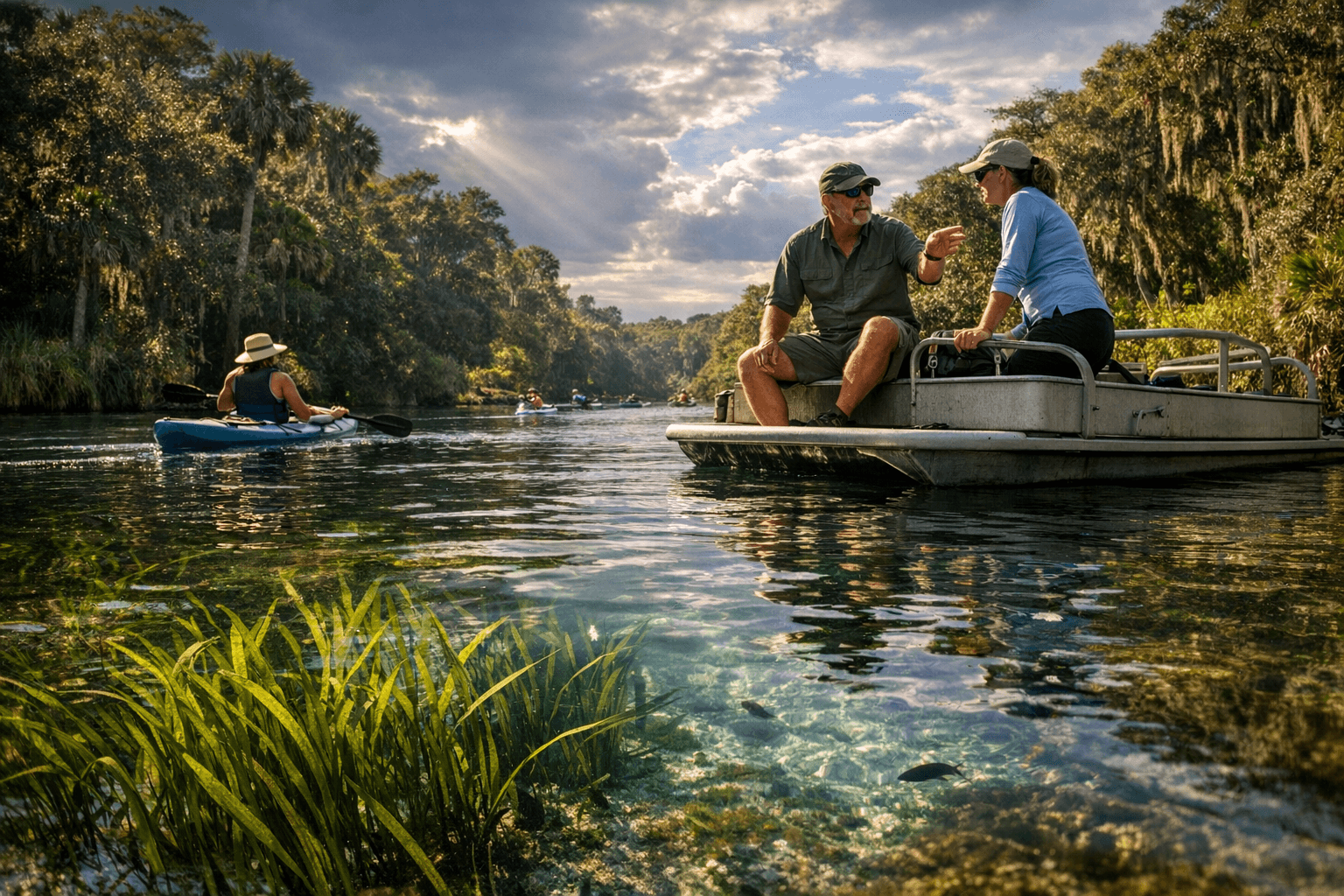
The first signs of change on the Weeki Wachee River are already showing up in the water, but the bigger fixes residents, boaters and businesses are waiting for will take longer. At a summit at Pasco-Hernando State College’s Spring Hill campus, experts said the river’s recovery depends on cutting nutrients, reducing sediment and easing pressure on a spring system that is both a tourism draw and a fragile habitat.
The Sierra Club hosted the March 27 gathering, where Bailey Koronich of Sea & Shoreline said restoration crews planted 44,610 eelgrass units under 132 protective cages across a nine-acre stretch of the river. Koronich said the grass had already shown promising early growth, with canopy heights increasing by about 65 centimeters in the first two months and spreading as much as five feet beyond the cages. Eelgrass helps stabilize sediment, filter nutrients and provide habitat for manatees and other wildlife.
Speakers said the river’s challenges are tied together. Southwest Florida Water Management District describes Weeki Wachee as a first-magnitude spring system with four main challenges, including reduced historic flows and elevated nitrate levels. The Florida Department of Environmental Protection’s 2025 Weeki Wachee Basin Management Action Plan covers 200,474 acres across southern Hernando County, including part of Brooksville, and northern Pasco County. The plan says excessive nitrate is the primary pollutant contributing to impairments. SWFWMD also says sedimentation can smother submerged aquatic vegetation and reduce passage for manatees and other animals.
Madison Trowbridge of SWFWMD said excess nutrients are largely tied to fertilizers, agriculture and septic systems. She urged residents to connect to sewer systems when possible, inspect septic tanks every two to three years, limit fertilizer use and use native landscaping and irrigation tools to reduce runoff and overwatering. Hernando County says its Septic to Sewer Conversion Plan responds to a state-mandated onsite sewage treatment and disposal system remediation requirement for Weeki Wachee Springs.
Manatee protection also drew attention. Tiare Friderich of Save the Manatee Club said human disturbance can push animals away from warm-water refuges. Brittany Scharf, Hernando County’s IFAS extension agent, said a stewardship program using volunteers along the river changed behavior in 79% of 890 recorded interactions. The river’s importance is hard to miss: Weeki Wachee Springs first opened its underwater show on Oct. 13, 1947, and Florida State Parks says the spring releases more than 100 million gallons of groundwater per day. For Weeki Wachee, the next phase of restoration will be judged by whether the water clears, the habitat holds and the crowding pressure begins to ease along the 7.5-mile run to the Gulf of America.
This article was produced by Prism’s automated news system from verified source data, official records, and press releases, then run through automated quality and moderation checks before publishing. The system is built and supervised by the people who set the standards it runs under. Read our full AI policy.
Did this article answer your question?