Columbus site marks Pancho Villa raid that changed border history
Camp Furlong still gives Columbus its public face: a National Historic Landmark where the 1916 raid, the Punitive Expedition, and park programs shape border memory today.
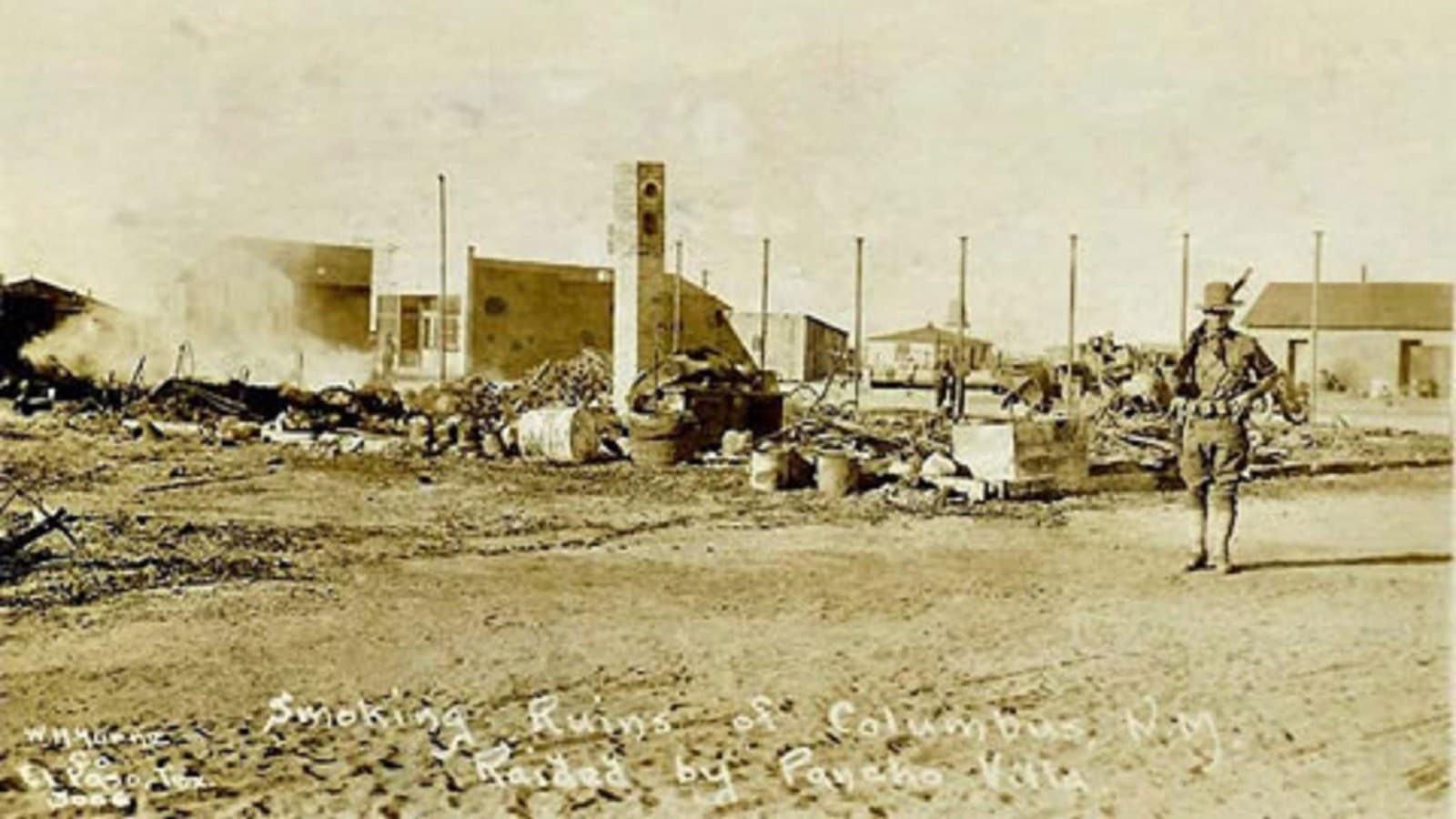
Camp Furlong is where Columbus stopped being just another border village and became a place people still come to read the borderlands. The Village of Columbus and the adjoining Army post hold National Historic Landmark status, and Pancho Villa State Park keeps that history visible through exhibits, historic structures, and annual commemorations that draw visitors into the site rather than past it.
Why Columbus still matters
The National Park Service identifies the Village of Columbus and Camp Furlong as a National Historic Landmark in Columbus, New Mexico, and National Register materials place the historic district in Luna County. That designation matters because it marks Columbus as more than a local stop in southern New Mexico. It is a nationally significant border place where settlement, military response, and cross-border conflict all converged in one small community.
Pancho Villa State Park, run by the New Mexico Energy, Minerals and Natural Resources Department, interprets the story on the ground today. The park keeps the focus on the relationship between the village and the Army post, which is the key to understanding why the site still resonates: Columbus was a real community, not simply a battlefield, and Camp Furlong gave that community its military context.
March 9, 1916, and the raid that rewrote the border
The history that defines the site begins with Pancho Villa’s raid on Columbus on March 9, 1916. Villa’s forces attacked the town and pushed it into the national spotlight in a single morning. Army history sources say Villa’s scouts believed only about 50 soldiers were stationed at Camp Furlong, but more than 300 men actually manned the post.
That mismatch shaped the raid’s outcome and its memory. National Guard and Army history sources say the attack killed ten civilians and eight soldiers of the 13th U.S. Cavalry. The casualties, combined with the shock of the raid itself, turned Columbus into one of the most closely remembered places along the U.S.-Mexico border.
The site’s importance comes not only from the fighting but from what the attack revealed about the border at that moment. Columbus was small enough that the Army presence could be underestimated, yet important enough that the consequences of the raid echoed far beyond Luna County.
What the Punitive Expedition changed
The raid led directly to the U.S. Punitive Expedition into Mexico, the military response that followed Villa’s attack. National Archives records say that campaign lasted until February 1917, when the last U.S. troops recrossed the border from Palomas, Chihuahua, Mexico. That closing movement marked the end of a major American military response and fixed Columbus in the larger story of U.S.-Mexico relations during the Mexican Revolution.
The Library of Congress describes the Columbus raid as a turning point in those relations, which helps explain why the site still carries national weight. The village was not just the scene of a frontier clash. It became the trigger for a cross-border military campaign that linked a local attack to federal policy, military planning, and diplomacy.
That is also why Camp Furlong remains central to the interpretation. The Army post provides the military frame for the story, while the village shows what was at stake on the civilian side. Together, they preserve the full setting of a border incident that changed how the United States viewed security along the line.
How the site is interpreted today
Visitors now encounter the story at Pancho Villa State Park, where the exhibit hall and historic structures help explain the raid, Camp Furlong, and the border community that grew up around them. The park gives the landmark a present-day use: it turns a place of conflict into a place of learning, memory, and heritage tourism.
The setting also matters. Columbus is compact and easy to interpret as a place, which makes the relationship between the village and the Army post clearer than it would be in a larger town. That physical scale helps visitors understand how a small border community came to sit at the center of a national crisis.
Local commemoration keeps the story active as well. Camp Furlong Day is an annual event at Pancho Villa State Park, with tours, historian talks, and Cabalgata Fiesta de Amistad festivities. Those programs do more than mark an anniversary. They keep the site in public view and make the landmark part of community memory rather than a static exhibit.
Why the stop still draws attention
For travelers interested in border history, Columbus offers something rare: a place where the built environment, the military record, and the historic landscape still connect. The village setting explains why the site mattered in the first place. Camp Furlong explains the Army response. The state park keeps both stories visible in a way that supports preservation and visitor interest at the same time.
That is why the Village of Columbus and Camp Furlong remain important now, not only as a historic event but as a living part of border identity. The landmark status confirms national significance, while the park and annual programs keep that significance rooted in local pride and public memory.
This article was produced by Prism’s automated news system from verified source data, official records, and press releases, then run through automated quality and moderation checks before publishing. The system is built and supervised by the people who set the standards it runs under. Read our full AI policy.
Did this article answer your question?