Hidalgo County observatory draws astronomers to Animas dark skies
Animas’ dark skies are already an economic asset, drawing research astronomers, visitors and local pride while making light pollution a real county issue.
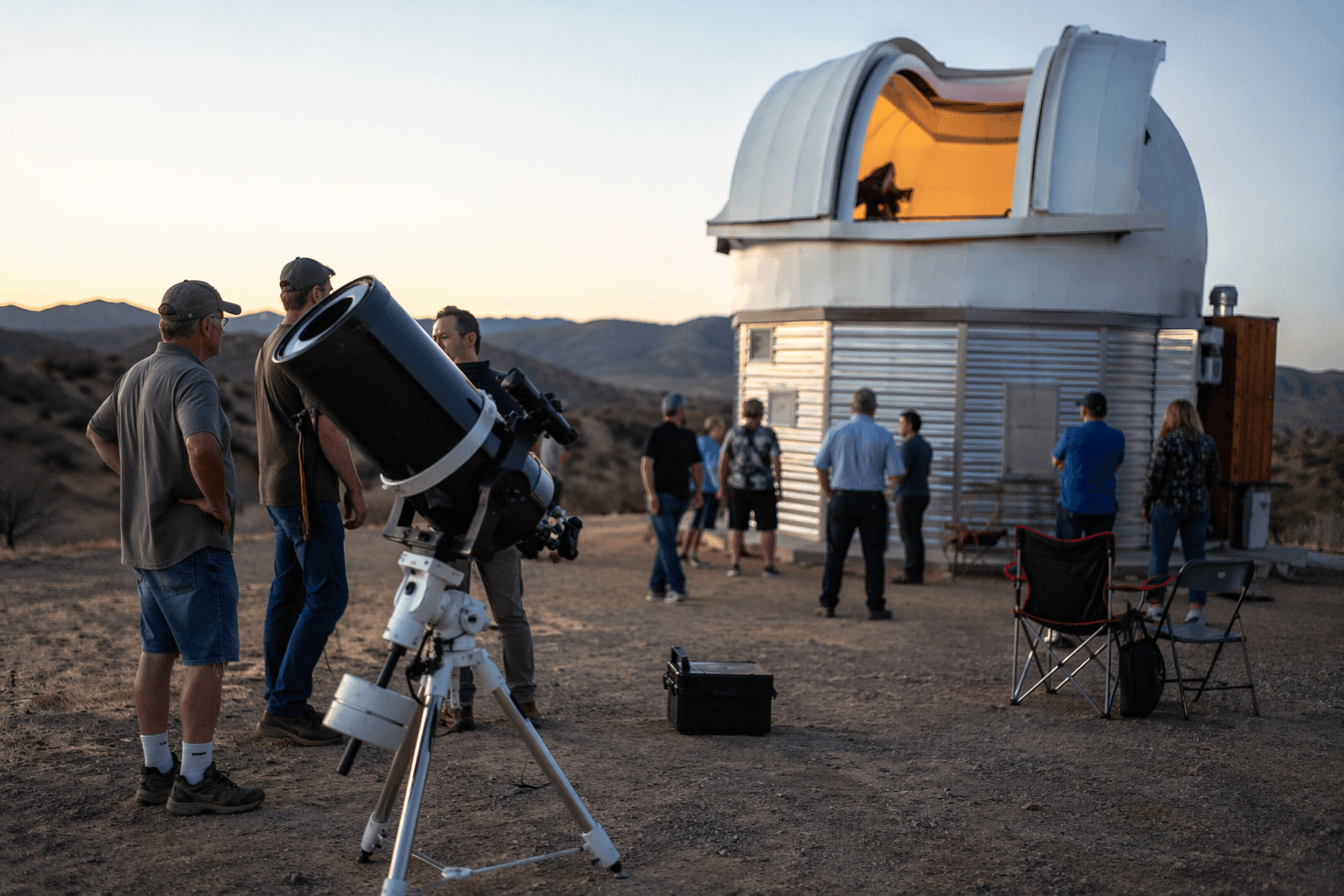
Hidalgo County’s most valuable night asset sits just three miles south of Animas, where the University Dark Sky Astronomy Consortium Field Observatory uses a 40-acre high-desert valley plateau for serious observing. In a county with barely more than one person per square mile, the darkness is not just scenic, it is infrastructure, and it has become something residents can lose or build on.
Why Animas works for astronomy
The observatory’s setting explains the draw. Dark Sky New Mexico places the site in the eastern foothills of the Peloncillo Mountains at 4,406 feet, in a remote corner of southwestern New Mexico where open horizons and low light make the sky unusually stable and usable. The facility describes its conditions as Bortle 1, the darkest end of the scale used by observers, and says it offers more than 275 viewing nights a year.
Those numbers matter because they are the difference between occasional stargazing and a functioning astronomy base. Dark Sky New Mexico lists 21.78 mag per square arcsecond darkness, 53 piers, and 20 roll-off roof observatories, which signals a site built for repeated use rather than one-time tourism. Bernard Miller, in a testimonial posted by the organization, says he moved his imaging system to a robotic observatory near Animas in 2016 after growing tired of driving outside town to image with a mobile setup. That is the clearest sign that the sky around Animas is not only dark enough for visitors, but good enough to keep serious users coming back.
What the county stands to gain
Hidalgo County’s case for dark-sky tourism starts with geography and scale. The county had 4,178 residents in the 2020 Census and an estimated 3,929 on July 1, 2025, spread across 3,438.6 square miles of land. That kind of low-density landscape creates the quiet, wide-open conditions that visitors seek when they are looking for a place to watch the Milky Way, host a telescope, or simply stay somewhere without glare and congestion.
That makes Animas useful in more than one way. Stargazers and astrophotographers come for the sky, but the same conditions also support on-site lodging, longer stays, and a quiet base in the bootheel. For local businesses, the upside is not abstract growth talk. It is the possibility that visitors who would otherwise pass through southwestern New Mexico will stop, sleep, eat, and spend money in a place that already has a rare asset in hand: darkness.
New Mexico Tourism’s dark-sky promotion gives that local advantage broader context. The state already markets observatories, star parties, and International Dark Sky Week programming, which means Animas fits a statewide travel story that has room for remote communities with strong skies and limited development. In that setting, Hidalgo County is not competing as a generic desert stop. It is offering one of the few experiences that cannot be manufactured after sunset.
What residents could lose
The same conditions that attract astronomers also make the area vulnerable. Light pollution is the obvious risk, but neglect matters too. A landscape that stays useful for remote observatories and sky watchers needs basic rural infrastructure that does not suddenly become brighter, louder, or more congested in ways that erode the very darkness people come to see.
That is why the story is about local ownership as much as tourism. If lights expand carelessly, the county gives up a resource that cannot be easily restored. If the area is maintained and protected, residents keep the benefit of a place that draws outside attention without needing an urban footprint to support it. In a county as sparsely populated as Hidalgo, preserving that balance is part of protecting the local economy and the local sense of place.
A landscape with a long memory
Animas did not become a dark-sky destination by accident. The Animas Museum’s timeline places the Baker Party’s arrival in 1860, the Brunot Agreement in 1874, and the plat filing for Animas City on September 6, 1876. Those dates point to a place long shaped by distance, travel routes, and settlement on the edge of the borderlands.
That history helps explain why the observatory feels native to the landscape rather than imposed on it. This corner of Hidalgo County has always been defined by openness and remoteness, and the astronomy economy now grows out of those same traits. The modern appeal is not separate from the old frontier logic. It is a new use for the same terrain.
The policy backdrop behind the sky
New Mexico’s dark-sky policy gives local observatories a stronger foundation. The state passed the Night Sky Protection Act in 1999, and New Mexico DarkSky became an active chapter of DarkSky International in June 2023. The organization is now working to strengthen lighting rules as LED lighting becomes more common, which matters because lighting technology can either help preserve dark skies or erase them quickly.
That policy backdrop is important for Hidalgo County because it turns a local attraction into a protected asset. A site like the UDSAC Field Observatory depends on more than weather and elevation. It depends on rules, habits, and public awareness that keep the horizon dark enough for science and tourism to coexist. In Animas, the night sky is part of the county’s identity, and the case for preserving it is as practical as the case for promoting it.
This article was produced by Prism’s automated news system from verified source data, official records, and press releases, then run through automated quality and moderation checks before publishing. The system is built and supervised by the people who set the standards it runs under. Read our full AI policy.
Did this article answer your question?