Hidalgo County's place on the historic Butterfield Overland Trail
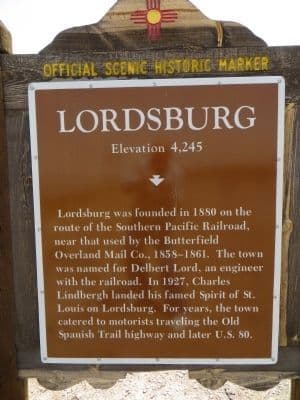
Hidalgo County sits on the Butterfield route’s New Mexico spine, where Lordsburg, Steins Pass and Shakespeare still mark a corridor built for mail, freight and movement.

The Butterfield Overland Trail still shapes Hidalgo County because it was never just a trail. It was a corridor built to move people, mail and freight through difficult country, and the same geography that carried stagecoaches later carried rail lines and highways through Lordsburg and Steins Pass. For travelers passing through now, that history is still visible in the map, the place names and the local institutions that keep the story in public view.
A corridor built for the long haul
John Butterfield won the federal contract in 1857 to establish an overland mail route to the Far West, and stagecoaches began running in 1858. The route stretched about 3,300 miles across seven states, from Missouri through Arkansas, Oklahoma, Texas, New Mexico, Arizona and California before heading north to San Francisco. The National Park Service describes it as a historic corridor, not a clearly marked hiking trail, because it passed through communities, urban areas, public lands and wilderness.
That distinction matters in Hidalgo County. The Butterfield line was designed for movement, not recreation, and its southerly sweep earned it the name Oxbow Route. That route was chosen because it allowed year-round service, a practical advantage in the Southwest’s harsher seasons. The stage line carried passengers, freight and mail, which made it a transportation system as much as a mail contract.
Where Hidalgo County enters the story
The New Mexico station list places Hidalgo County squarely on the Butterfield network. One station stood near Lordsburg, and Stein’s Pass Station is also part of the New Mexico sequence. The same list places those stops within a longer chain that included Frontera, or Cottonwoods Station, Fort Fillmore, Mesilla, Picacho Station, Rough and Ready Station, Goodsight Peak Station, Fort Cummings, Cooke’s Spring, Murphy’s Station, Cow Spring Station and Soldier’s Farewell Station near Deming.
The City of Lordsburg adds another local marker: the Butterfield Stage Route passed through Mexican Springs, now Shakespeare. That detail gives the county more than a point on a federal trail map. It ties the route to a specific landscape that residents still know by modern and historic names.
Butterfield’s company was an enormous operation for its time. The city’s history account says it used up to 250 coaches, 1,000 horses, 500 mules and about 800 employees. Those numbers help explain why the line needed a string of stations instead of a single road stop. Hidalgo County was one of the places where that system had to work.
What still remains visible today
You will not find a neatly marked Butterfield footpath cutting through the county. What remains is more layered, and in some ways more revealing. The old route survives in place names, in the alignment of transportation corridors and in the way travelers still move through the county on roads that inherited the same function the stage line once served.
What you can still see today includes:
- Lordsburg, the county seat that grew as a travel stop
- Steins Pass, the mountain passage tied to the stage line
- Shakespeare, the modern name for Mexican Springs
- The broader corridor toward Mesilla, Fort Fillmore and Deming
- The highway system that later concentrated traffic through the same region
The Butterfield story is visible here because the old line was never erased all at once. It was absorbed into new systems. First came the stage route, then the railroad, then the highways.
From stage line to railroad town to interstate stop
Lordsburg’s transportation identity did not end with Butterfield. The City of Lordsburg says the town grew after the Southern Pacific Railroad arrived in 1880, and later became a major stop at the junction of highways 70 and 80, the Broadway of America Highway and eventually Interstate 10. That sequence tells the county’s larger story: each new mode of travel reinforced the same role, a place where long-distance movement had to funnel through southern New Mexico.
That is why the Butterfield corridor still matters to residents. It is not only a reminder of who passed through long ago. It explains why the county developed as a transportation crossroads in the first place. The stagecoaches disappeared, the railroad took over, and then the interstate absorbed the traffic, but the county’s position in the desert corridor remained.
The museum as a local anchor
The Lordsburg-Hidalgo County Museum keeps that layered history in one place. It is a nonprofit museum, operated in part by volunteers, and the exhibits are built in part from donations by area citizens. Its collection includes railroad history, mining artifacts, military history and material related to the Lordsburg internment and POW camp.
That mix makes the museum more than a repository for nostalgia. It is a civic archive that connects the Butterfield era to the county’s later transportation and wartime history. For visitors, it offers a place to stop and understand the landscape they are driving through. For residents, it preserves the county story in a form that can be carried into classrooms, family memory and community identity.
The National Park Service also maintains an interactive map and a places-to-go index that point to museums, interpretive centers, historic sites and original trail segments. In Hidalgo County, that larger interpretive network gives local history a practical use. A drive through Lordsburg, past Steins Pass and toward Shakespeare is not just a lesson in the past. It is a reminder that the county was built on movement, and that movement still defines how people encounter it today.
This article was produced by Prism’s automated news system from verified source data, official records, and press releases, then run through automated quality and moderation checks before publishing. The system is built and supervised by the people who set the standards it runs under. Read our full AI policy.
Did this article answer your question?