Historic Downtown Millersburg anchors Holmes County with shops, history, civic life
Millersburg’s downtown still concentrates the courthouse, shops, lodging, and civic life in one walkable square mile, with roots that reach back to 1815.

Millersburg’s downtown still concentrates the courthouse, shops, lodging, and civic life in one walkable square mile, with roots that reach back to 1815. The district works as Holmes County’s everyday center, where residents, courthouse traffic, and visitors all converge around the square. Its value today is practical as much as historic: it is where the county’s commercial, civic, and tourism functions overlap.
A county seat built around one square
The first town plat for Millersburg was laid out in 1815, and the downtown was replatted in 1824 with 194 lots arranged around a public square. That design still defines how the place works, because the Holmes County Courthouse remains the anchor on the same site where the county has now had three courthouses. The current courthouse was completed in 1885, giving the square a long-running government presence that still pulls daily foot traffic into the center of town.
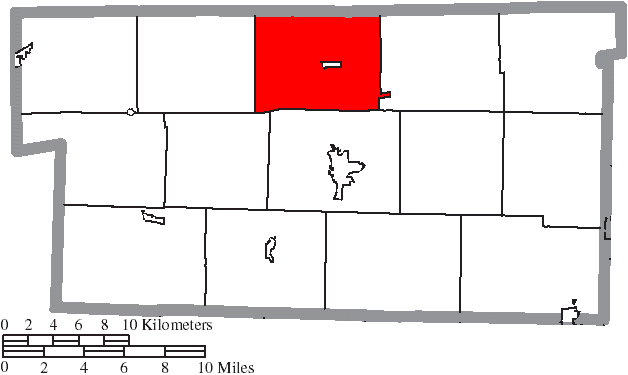
Holmes County itself was formed in 1824 and organized in 1825, and Millersburg has served as its county seat through that entire arc. The scale matters: Holmes County had 44,223 residents in the 2020 Census, while Millersburg had 3,151. That means downtown is not just a neighborhood commercial strip, but the compact civic core for a much larger county.
What shoppers find on the square-mile footprint
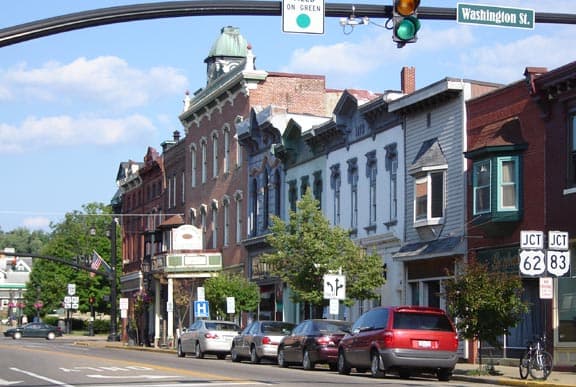
Historic Downtown Millersburg says most of its member businesses sit within a walkable square mile of the courthouse, which is one reason the district functions as a practical shopping and dining stop rather than a scattered attraction. The mix includes independent shops, family-run restaurants, historic hotels, Holmes County wineries, museums, and recreation stops, all close enough to make a short stay feel full without a long drive between stops.
Specific businesses and categories show the range clearly. The district highlights Jackson Street antiques, boutique clothing stores, an old hotel established in 1847, and casual food stops that run from ice cream to cider to chocolate. The Holmes County Trail also gives the downtown a transportation and leisure connection, and tourism materials describe it as Ohio’s only companion buggy trail. That linkage helps explain why downtown is useful to both local shoppers and visitors who want a central place to start or end a day in Amish Country.
The calendar that brings people back
The downtown is not kept alive by storefronts alone. Historic Downtown Millersburg says the Amish Country Farmers Market runs on the first and third Saturday of every month from June through October, giving the square a recurring seasonal draw that adds fresh traffic for nearby businesses. The events calendar also points to regular community magnets such as First Fridays, Thunder Over Holmes County, and the Holmes County Art Festival.
Those recurring events matter because they turn the square into a meeting place, not just a pass-through. For merchants, they create dependable spikes in foot traffic. For property owners and civic leaders, they help sustain the case for upkeep and reinvestment in a downtown that has to serve both local errands and tourism spending.
Preservation as a business strategy
Historic Downtown Millersburg was founded in 2007 to preserve, grow, and continue the evolution of the historic district, and its mission centers on “Preserving Heritage, Inviting Exploration.” The district is recognized through Heritage Ohio and Main Street America, and visitor and chamber materials describe it as listed on the National Register of Historic Places. That formal structure matters because it gives downtown Millersburg a preservation framework while still treating the square as an active business district.
The building stock adds weight to that framework. One historical marker source says more than 120 buildings are listed in the downtown inventory, and the Hotel Millersburg is described as one of the oldest continuously operating hotels in Ohio. The Holmes County Historical Society deepens that civic presence with the Holmes County Cultural Center, housed in an authentic Victorian home in Millersburg and dedicated to preserving, collecting, and archiving county history. Together, those institutions make downtown feel less like a museum piece and more like a place where heritage is organized, interpreted, and used.
Why downtown still carries countywide importance
Holmes County’s tourism economy gives downtown Millersburg a reach that extends well beyond the village limits. The county is strongly associated with Amish Country tourism, and the downtown’s mix of shops, restaurants, lodging, and trail access makes it a logical staging area for visitors who want one central stop instead of a scattered itinerary. The Village of Millersburg also describes downtown as a Heritage Ohio Main Street Community and says revitalization efforts continue there.
That combination of history, commerce, and public life is the real measure of downtown’s momentum. The old street plan still guides the county seat, the courthouse still draws daily business, the market and festivals still bring people back, and the business mix still fits the square-mile footprint around the square. In Holmes County, that is what a working downtown looks like.
This article was produced by Prism’s automated news system from verified source data, official records, and press releases, then run through automated quality and moderation checks before publishing. The system is built and supervised by the people who set the standards it runs under. Read our full AI policy.
Did this article answer your question?