Casa Blanca marks layers of Spanish, ranching history in Jim Wells County
Casa Blanca is a lost townsite, but its post-office past, ranching routes, and family memory still mark Jim Wells County’s layered history.

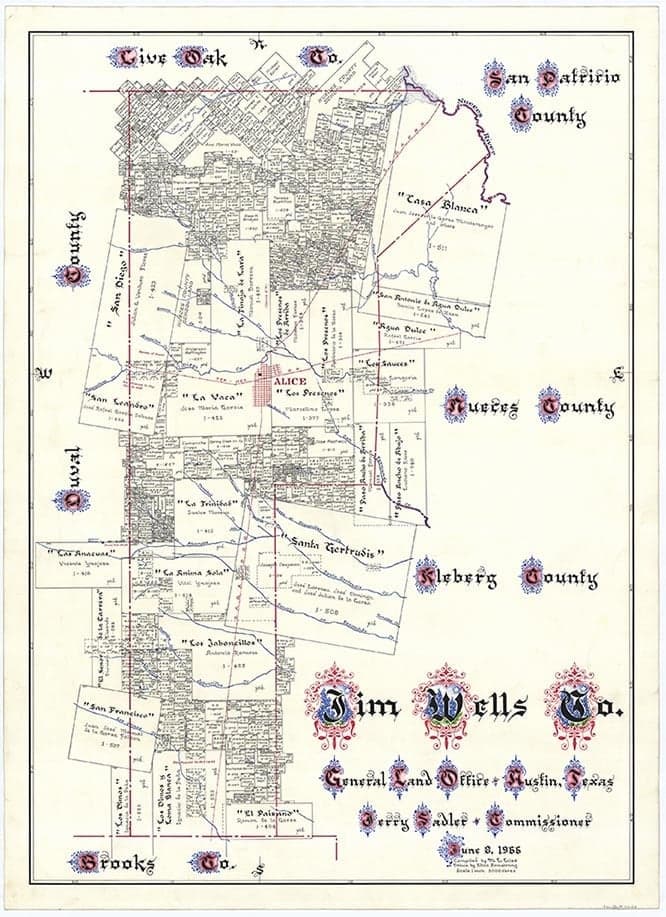
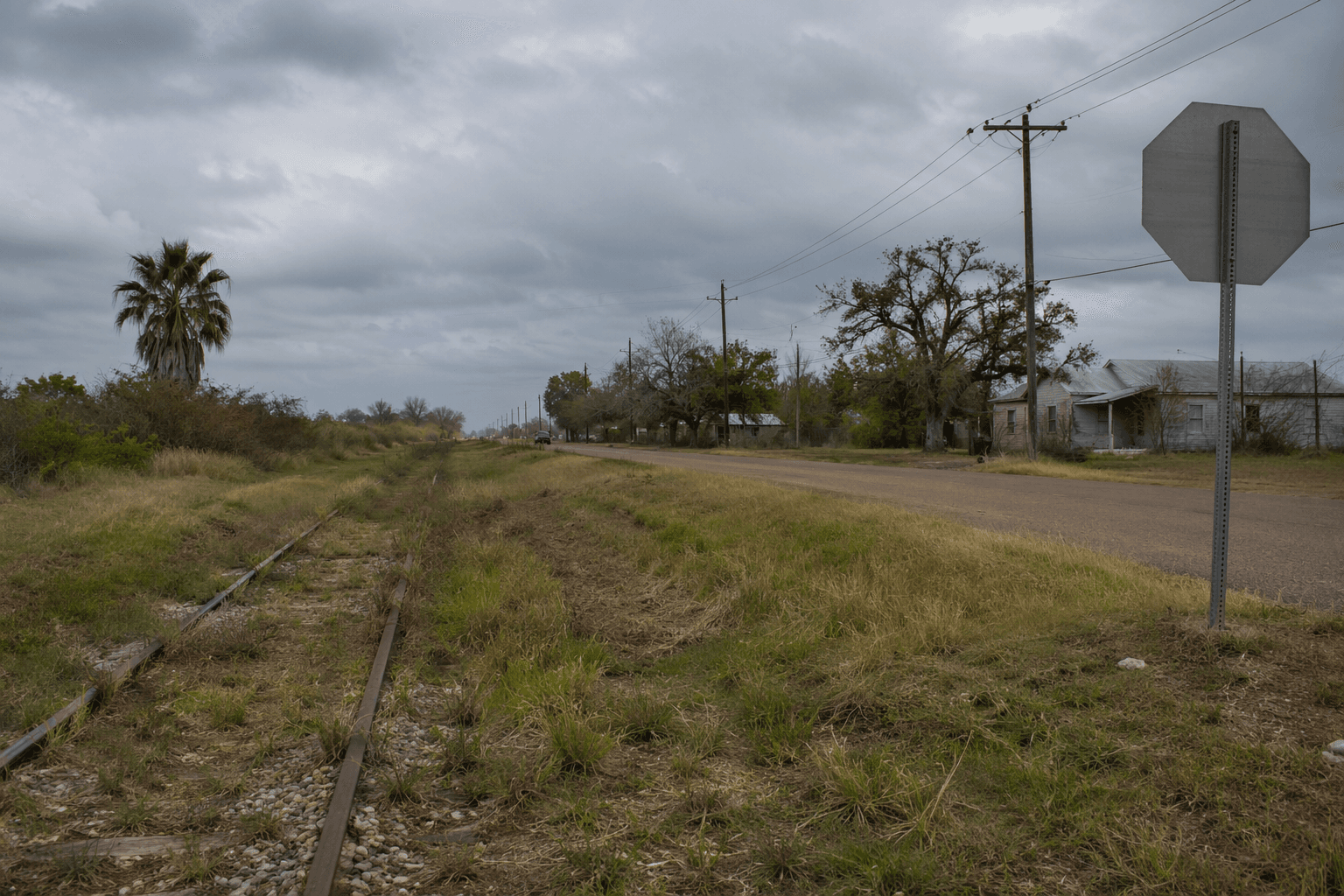
Casa Blanca is easy to miss, but it is one of the clearest places in Jim Wells County to read how the county’s history was built in layers. The site sits two miles southwest of Sandia and twenty miles northeast of Alice, on land in the Rio Grande Plain that has seen human habitation for perhaps 11,000 years. What survives there is not a busy town center, but a record of Spanish settlement, ranching, post-office life, and the way one place can be absorbed into another without disappearing from memory.
A place built on older ground
Long before Casa Blanca took shape, the land that is now Jim Wells County held Paleo-Indian artifacts, Archaic-era occupation, and later Coahuiltecan groups. Spanish expeditions crossed the area in the early 18th century, but permanent European settlement did not take hold until around 1754, when Tomás Sánchez de la Barrera y Gallardo, captain of Laredo, was ordered to find a suitable site for a new settlement. He chose a spot on Peñitas Creek, and the first structure there was a white house built from caliche blocks known as ciares.
The old house was more than a residence. It was square, arranged around a central courtyard, and the courtyard held a well that also served as the end of a tunnel leading out of the building. Those details matter because they show Casa Blanca as a working borderland structure, shaped for defense, water access, and daily life in a landscape where settlement depended on practical design as much as royal authority.
The land grant that fixed the site in place
In 1807, the Spanish crown granted the land to Juan José de la Garza Montemayor and his sons, Agustín, Perfecto, and Manuel. The Montemayor family and their heirs occupied the property until 1852, giving the site a long run as a ranching and household center after its earliest mission-era use in the late 18th century. The Casa Blanca grant is also identified as the first Spanish land grant in what is now Nueces County, which helps explain why the site sits inside a broader South Texas settlement pattern rather than a single-county story.
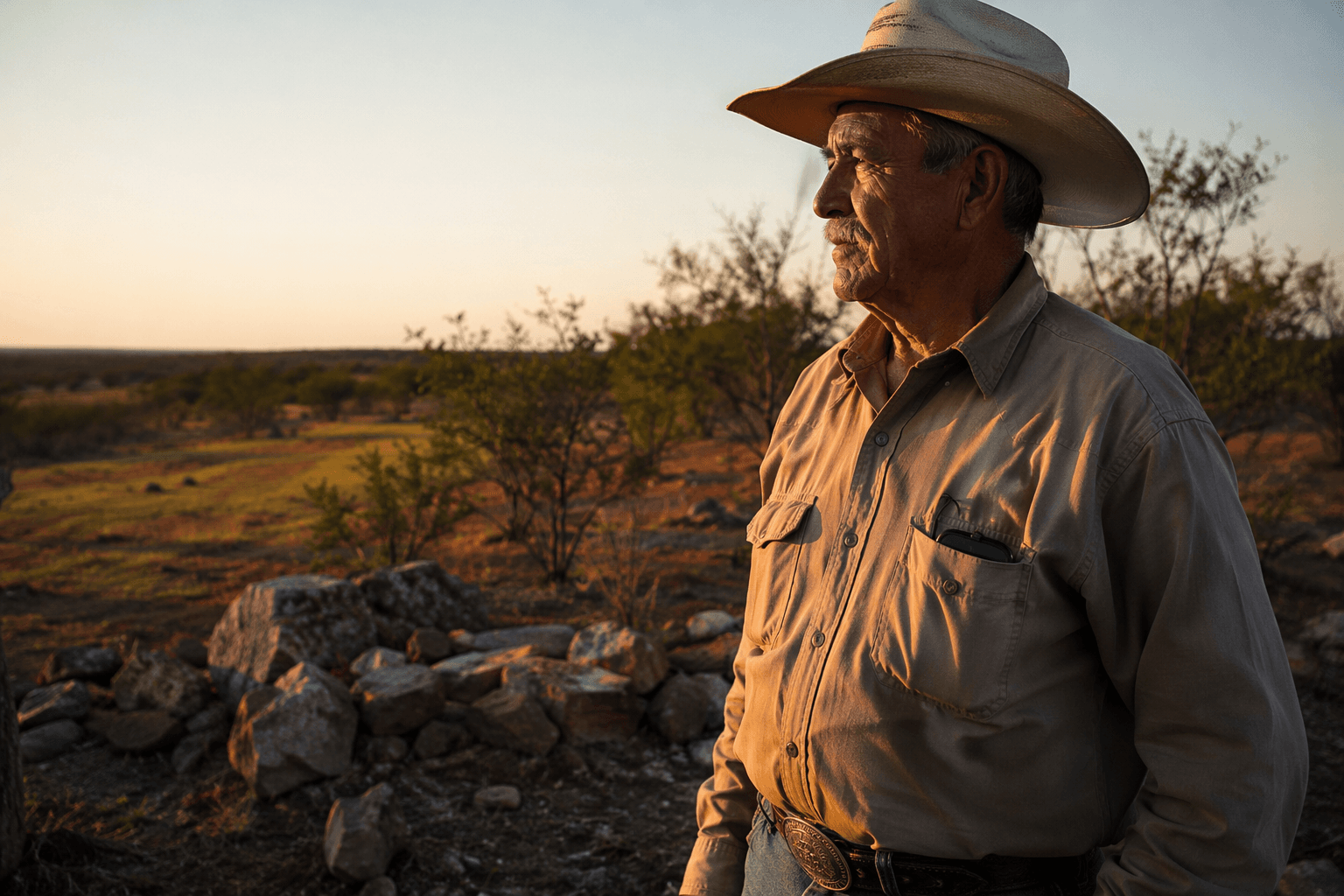
That overlap is the key to understanding Casa Blanca today. Spanish colonization did not simply replace earlier life on the land; it sat on top of older occupation, then became a ranch house, then a local stopping point, then a place whose exact location still anchors county memory. In Jim Wells County, where the modern county covers 845 square miles, Casa Blanca shows how land use changed while the landscape itself kept its continuity.
Post office, townsite, and the brief rise of Wade City
Casa Blanca’s mid-19th-century history gives the site a more familiar small-town arc. The post office operated from 1860 to 1866, then reopened in 1893, giving the area a formal public identity even as settlement remained thin. In 1896, John L. Wade bought the land and founded Wade City beside Casa Blanca, platting streets and setting aside land for stores and churches.
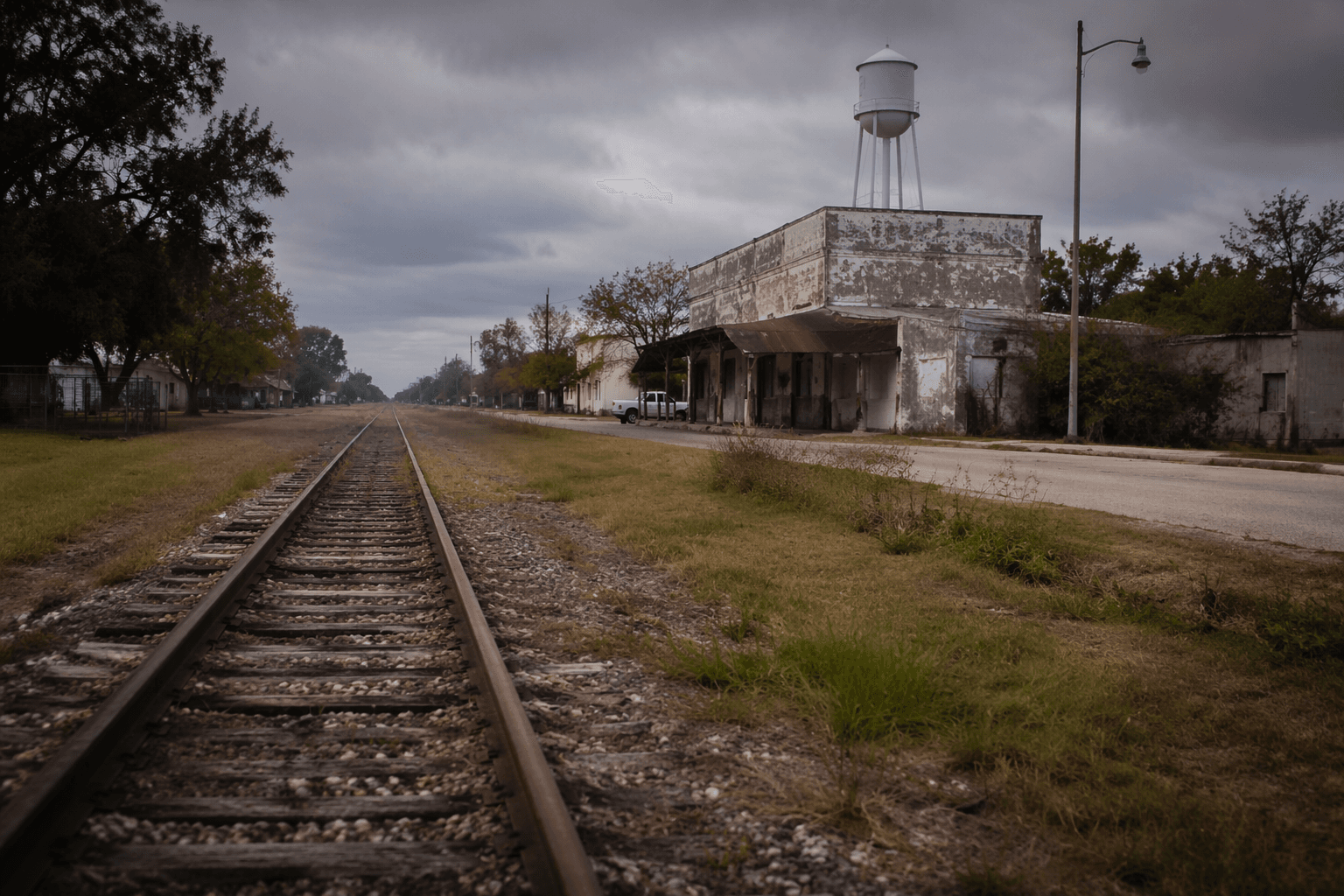
That same year, the combined Casa Blanca-Wade City population was estimated at 150. The community included a Methodist church, a general store, a gin, and a lumberyard, a small but complete local economy for a ranching outpost. By 1914, the population had fallen to 35, a sign of how quickly South Texas townsites could shrink when commerce, transportation, and land use shifted elsewhere.
Why some places survive and others fade
Casa Blanca’s final chapter is what makes it especially useful for understanding Jim Wells County now. Around 1936, Wade’s heirs petitioned to have the site revert to ranchland, arguing that the town had never really developed and that the land would be more valuable in pasture. The petition was granted, Wade City returned to ranch use, and by 1945 only ruins remained of Casa Blanca itself.
Nearby Sandia offers the sharpest comparison. After Wade’s death, his heirs divided the ranch, and one heir sold to Joseph B. Dibrell, who assigned Fennell Dibrell and Max Starcke to found Sandia in 1907. Sandia began with only one building when its streets were platted, yet it grew into a lasting community while Casa Blanca and Wade City faded. That contrast shows how two places on the same broader land-grant landscape could diverge so completely.
What remains now
What remains of Casa Blanca is not a standing townsite, but a pattern of evidence that still matters in Jim Wells County. The post office history, the ranching route, the Montemayor grant, the Wade City plat, and the family decision to return the land to ranch use all explain how a place can lose its buildings and keep its imprint. In a county shaped by deep time, Spanish settlement, and ranch economy, Casa Blanca is not just a vanished stop on the map. It is a reminder that the county’s present still runs through older ground.
This article was produced by Prism’s automated news system from verified source data, official records, and press releases, then run through automated quality and moderation checks before publishing. The system is built and supervised by the people who set the standards it runs under. Read our full AI policy.
Know something we missed? Have a correction or additional information?
Submit a Tip