La Gloria evolved from rail stop to enduring Jim Wells County community
La Gloria was built on mail, rail, farm trade, and school life, and it still holds a place on the map west of U.S. 281 in Jim Wells County.
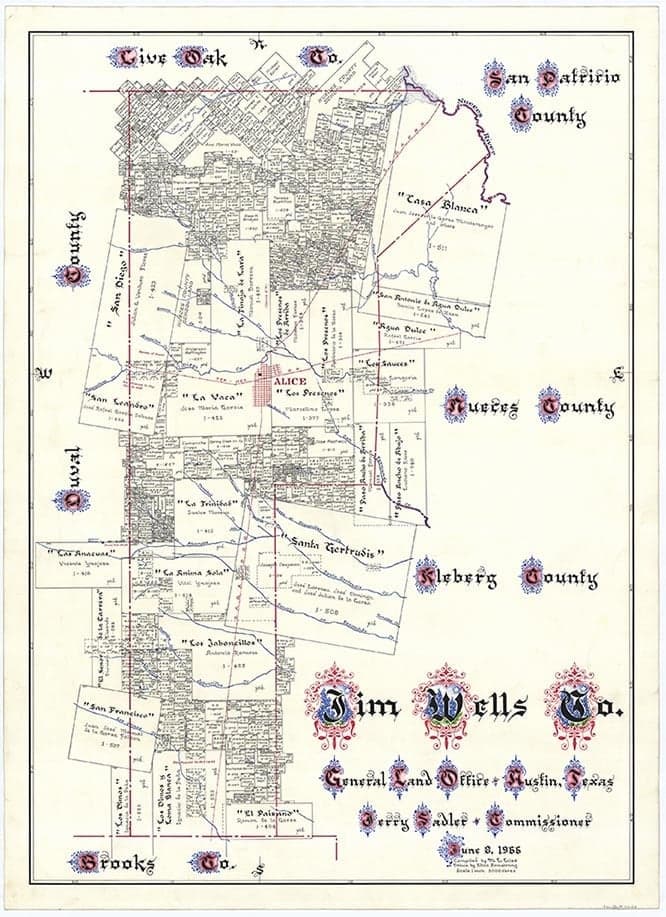
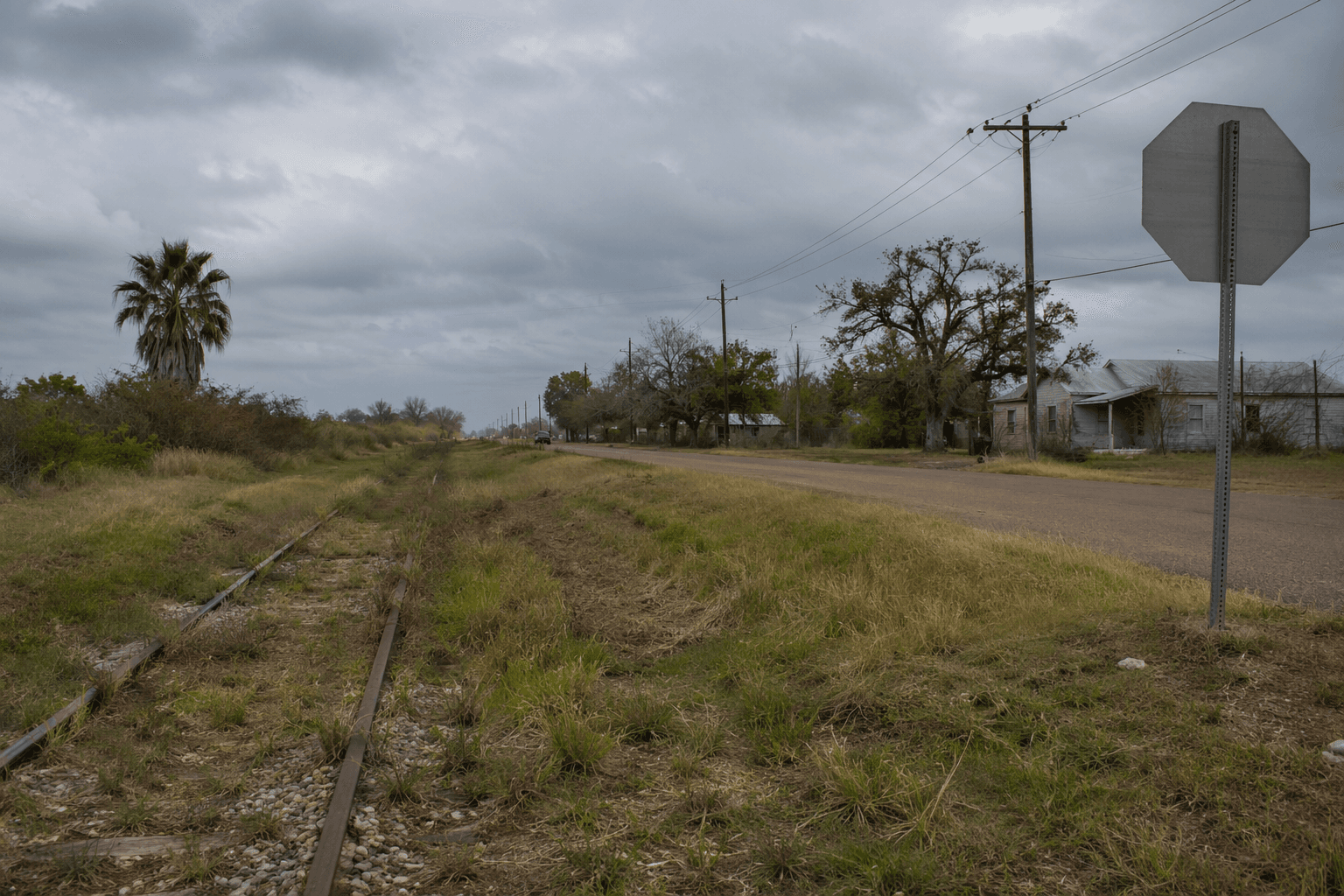
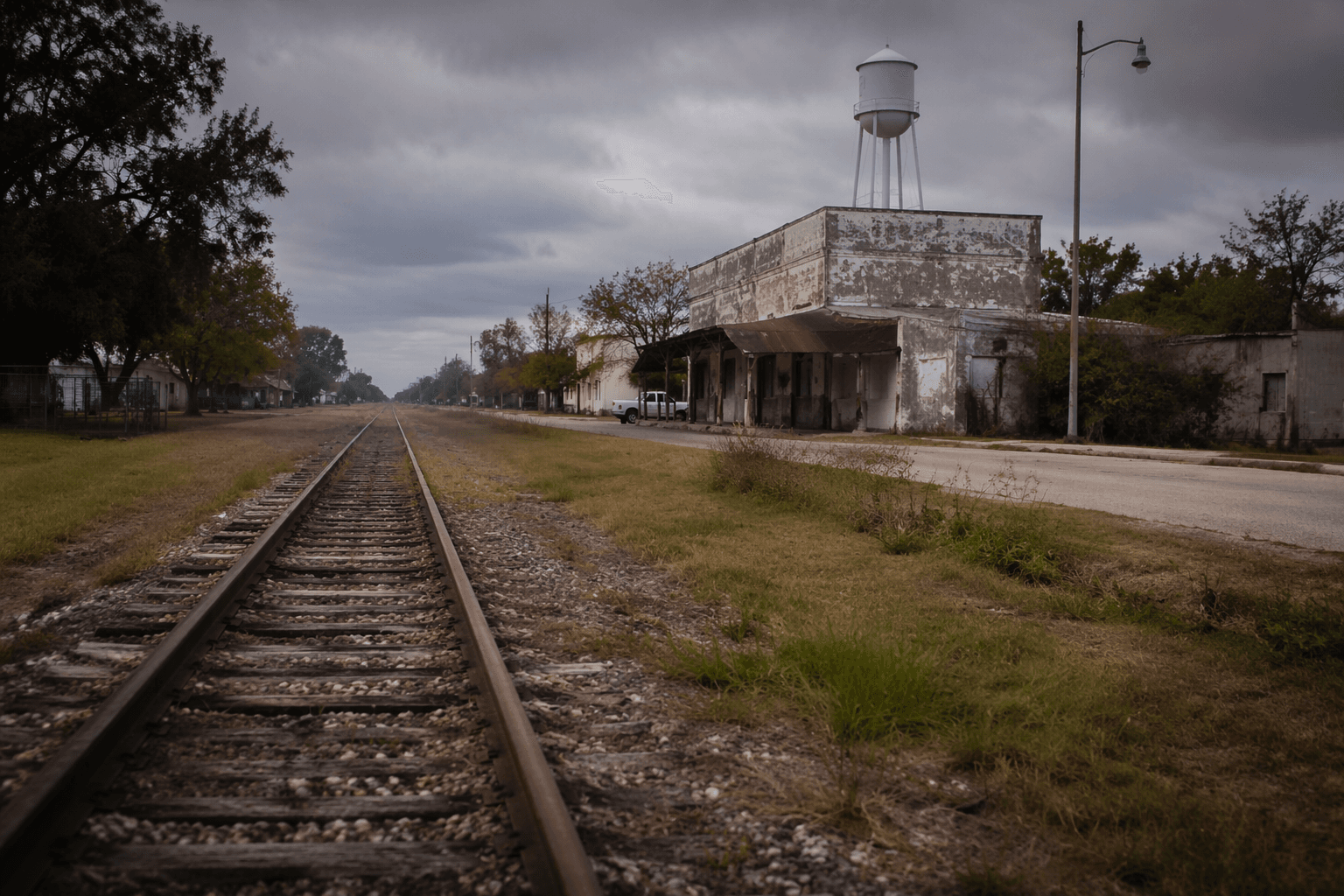
La Gloria grew around the essentials that kept a South Texas settlement moving: a post office, a rail stop, a cotton gin, a general store, telephone service, and a school that gave families a reason to stay tied to the place. A mile west of U.S. Highway 281 and four miles north of Falfurrias, it still sits in southern Jim Wells County as an unincorporated community, small in population but heavy with the footprint of older daily life.
A rail stop and a working village
The post office opened in La Gloria in 1908, which meant mail, notices, and official business no longer had to be routed through a distant town. By 1914, the community had about 50 residents, and that modest head count still supported a cotton gin, a general store, and telephone service. In practical terms, that combination meant local farmers could bring in cotton, families could buy staples without making a long trip, and people could stay connected across the scattered ranchland and farm roads of south Jim Wells County.
Rail service deepened that role in the same year. The San Antonio and Aransas Pass Railway built a stop at La Gloria in 1914, tying the settlement to a broader transportation network that moved crops, supplies, and people through the region. For a community of only a few dozen residents, a rail stop was not a decorative detail. It was the link that made the gin useful, the store profitable, and the settlement legible on the map.
From commercial stop to scattered settlement
La Gloria’s early commercial center did not last forever, but the place did not vanish when the storefront era faded. The post office closed in 1918, and by 1936 the community had become a school with scattered dwellings and farms. That shift tells the story of many South Texas rural places: the formal service point disappears, but the land, the school, and the family patterns remain.
The built landscape kept changing after that. By 1963, La Gloria still had a school, a water tank, and an oil refinery. That mix of uses says a great deal about how the settlement adapted. Water infrastructure and energy development joined education and farm life, while the old commercial center gave way to a more dispersed pattern of living. La Gloria remained a dispersed community in 1993, and TSHA lists a population of 70 in 2009. The place is still unincorporated, and TSHA places its coordinates at 27.28143020° N, 98.13333780° W.
Why the land around La Gloria mattered
La Gloria makes more sense when set against Jim Wells County itself. The county covers 845 square miles, lies on U.S. Highway 281 west of Corpus Christi, and sits in a landscape shaped by caliche, industrial sand, oil, and gas. TSHA also says between 41 and 50 percent of the county is considered prime farmland, a figure that helps explain why agricultural services like a cotton gin mattered so much in places such as La Gloria.
That farm base is the key to understanding the community’s early shape. Cotton required processing, supplies, transportation, and a place to transact business, and La Gloria had all of that by 1914. The general store, telephone line, and rail stop were not separate stories. They were part of the same system, one that let a small settlement function as a daily-life hub for families working the surrounding land.
The same corridor also produced other settlements whose growth followed rail and agricultural lines. Premont, another Jim Wells County community, reached a population of 1,000 by 1914, the year the San Antonio and Aransas Pass Railway built a stop there. That comparison shows La Gloria was part of a wider South Texas pattern, where the railroad could turn a rural point on the map into a service center, even if the scale was much smaller than nearby towns.
The school that kept the name in use
If the post office and rail stop explained how La Gloria worked as a commercial place, the school explains why the name endured. La Gloria Common School District No. 21 automatically became La Gloria Independent School District No. 906 on September 1, 1978, and the district continued to invest in its facilities after that. A Library and Computer Learning Center was added in 1997, a third room was completed by 1999, and a multipurpose gym was finalized in 2002.
The district’s roots reach back farther still. One school history places the start of La Gloria School District No. 28 on October 9, 1909, when it was established in Nueces County, and says a brick school building was built on Block 5 in 1910. Whether viewed through the district’s later history or its earliest footprint, the school stands out as the institution that kept La Gloria anchored after the post office closed and the commercial core thinned out.
That school-centered continuity gives La Gloria its present-day meaning. The settlement may no longer look like a bustling rail village, but the land still carries the old pattern: a named place on the county road grid, a school with a long institutional memory, and a geography shaped by farming, rail, and energy. In Jim Wells County, that is often how endurance looks.
This article was produced by Prism’s automated news system from verified source data, official records, and press releases, then run through automated quality and moderation checks before publishing. The system is built and supervised by the people who set the standards it runs under. Read our full AI policy.
Know something we missed? Have a correction or additional information?
Submit a Tip