Railroad helped build Collins, then left the town behind
Collins grew on a rail line, then lost its traffic when the San Antonio and Aransas Pass Railway moved west. That shift built Alice and left Collins behind.
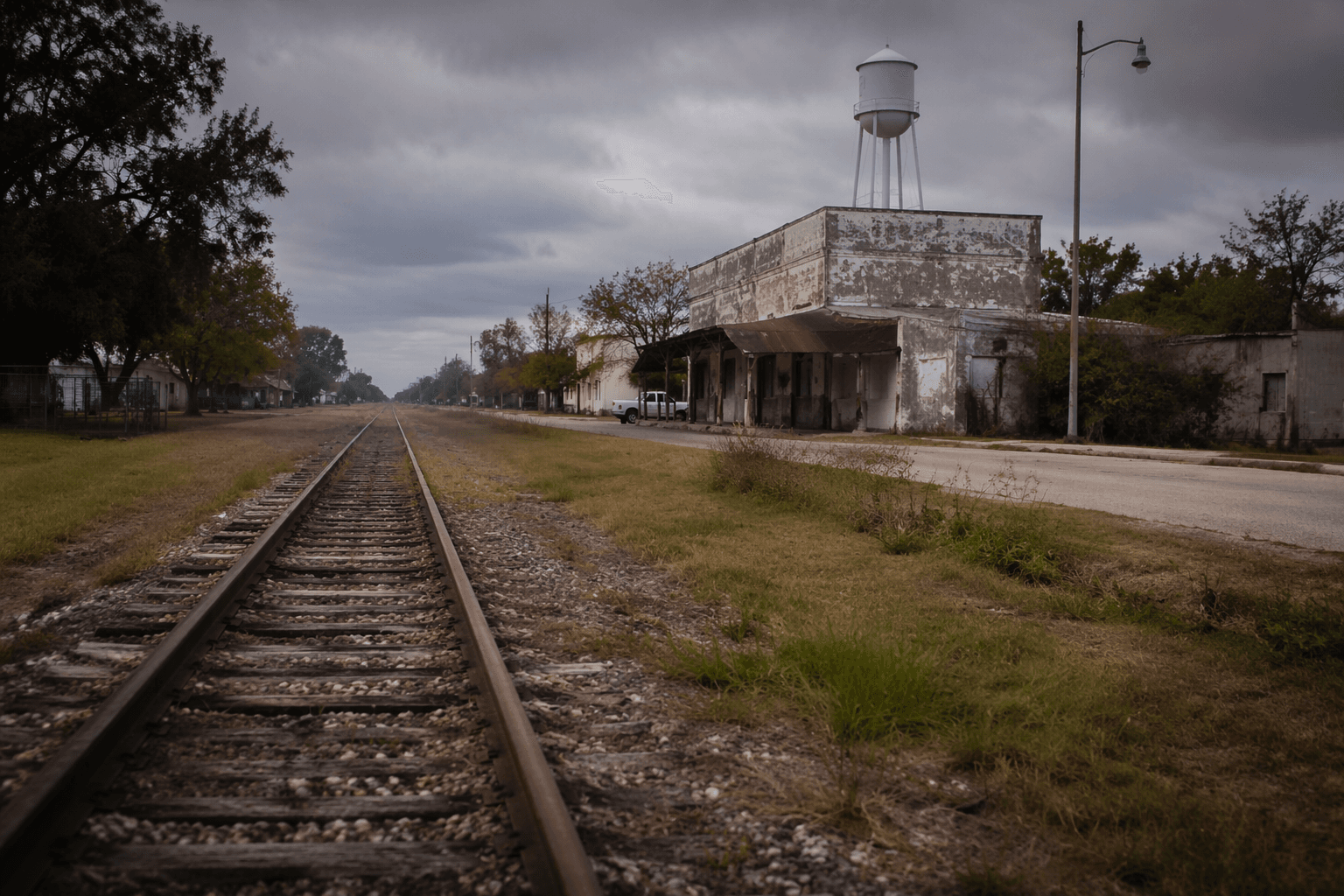
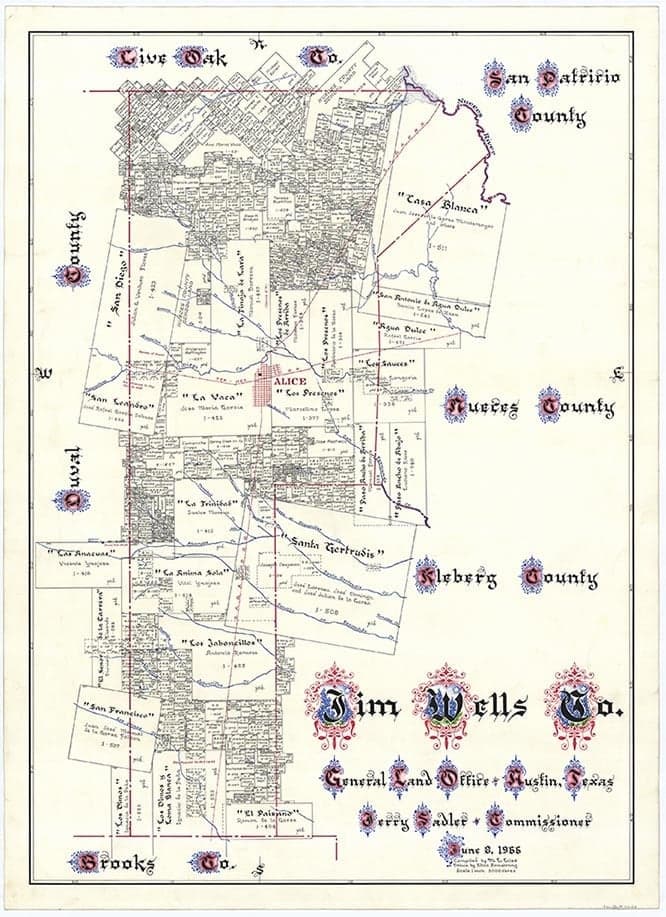
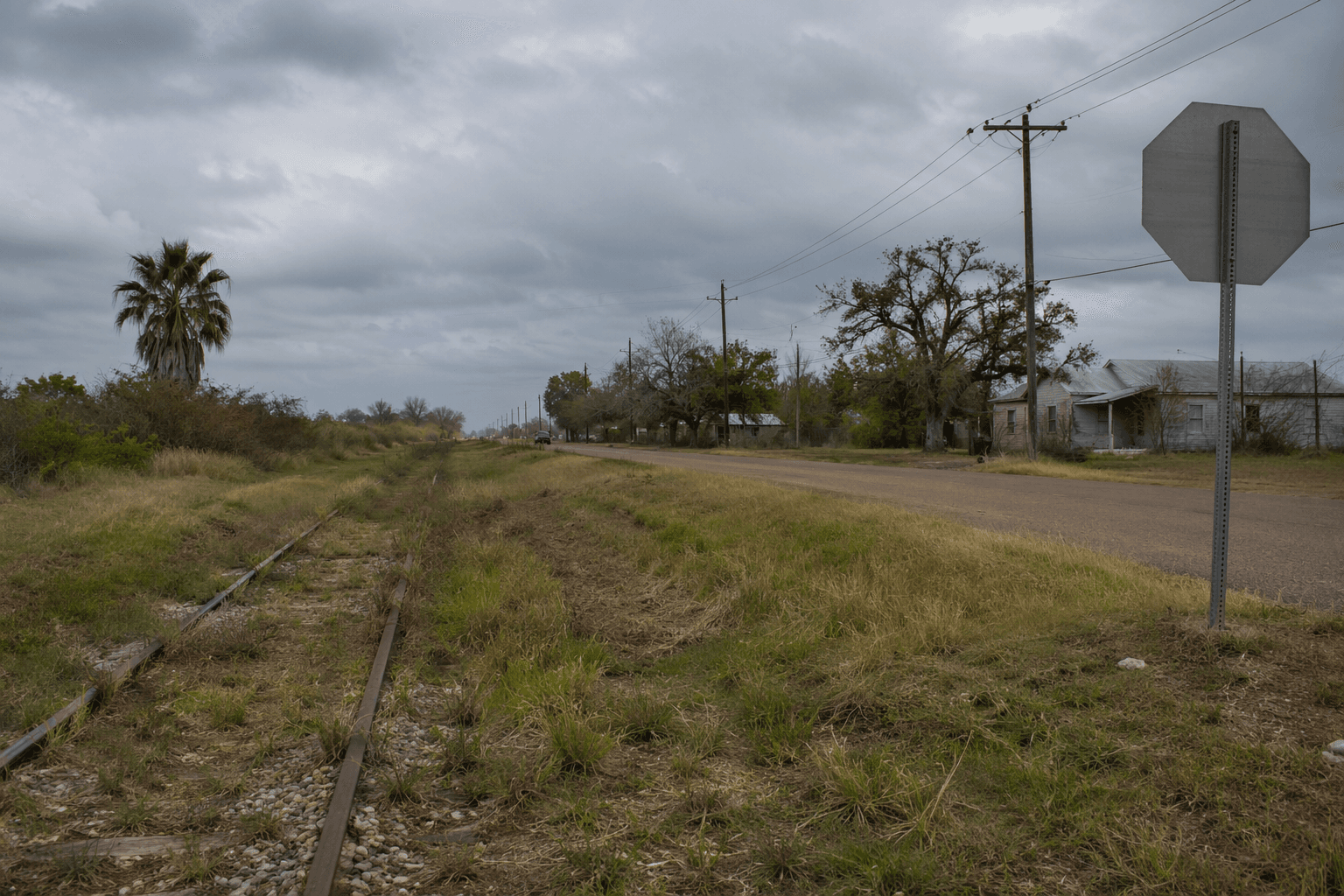
Collins is where the county map changed direction. A railroad stop that once handled mail, freight, and ranch traffic in what is now Jim Wells County was bypassed, replaced, and eventually emptied out, while Alice rose at the new junction and became the center people know today.
Collins before the bypass
Collins was established in 1878 on the Los Preseños grant after N. G. Collins bought the northwest portion and platted a townsite across San Fernando Creek from Los Preseños. Late that same year, the Corpus Christi, San Diego, and Rio Grande Narrow Gauge Railroad ran through the new townsite, giving the place the traffic it needed to grow. The town sat about 40 miles west of Corpus Christi, then in Nueces County and now in Jim Wells County.
By 1880, Collins had about 500 residents, a railroad station, a two-story hotel, several stores and eating places, and a few houses and barns. It also served as a shipping and mail center for ranchers between Agua Dulce and San Diego, which made the town more than a dot on a rail map. Phil Hobbs’s store held the post office, and Hobbs served as postmaster, tying the town’s daily business directly to the railroad economy.
The people who made the place work
The first Collins was built by people who filled the gaps left by distance. Oscar Staples taught school there, Mrs. E. D. Sidbury ran a lumberyard near the Becham House, and Father Bard almost singlehandedly built the Catholic church. Those names matter because they show how a small rail settlement became a functioning community: not just a stop, but a place with a school, supplies, worship, and trade.
That local network depended on the line that served it. The tracks brought mail, passengers, and freight; the store, church, and school turned those stops into routines. Collins prospered because the railroad made it useful to the surrounding ranch country, and ranch country made it worth serving.
How the rail line moved west
The turning point came when the San Antonio and Aransas Pass Railway bypassed Collins in 1888 and joined the Texas-Mexican Railway three miles west on King Ranch land. The railroad had tried to build through Collins around 1880, but townspeople would not sell land, so it shifted the route. That decision redirected traffic away from the original townsite and toward a new junction.
The railroad depot first took the name Bandana, then the growing settlement was renamed Alice in honor of Alice Gertrudis King Kleberg. Alice opened its post office in 1888, but the Collins post office remained for a time because postal authorities refused to grant a Kleberg post office. The Catholic church from Collins was moved to Alice in 1889, and the remaining residents followed the commercial pull of the new town.
That shift did not happen on paper alone. The first school in Alice opened in 1888 with only nine students, a sign that the town was still small even as it drew people away from Collins. The old community lost its center of gravity because the railroad had put one more station and one more junction in a different place.
Alice took the traffic, then the county role
Once the route changed, Alice began stacking up the institutions that make a town dominant. By 1892, it had a hotel, two saloons, two general stores, a weekly newspaper called the Alice Reporter, and a cotton gin. By 1894, it had become the busiest shipping point in South Texas, a title that explains why merchants, farmers, and ranchers started treating it as the place to do business.
The town kept building on that advantage. By 1896, Alice had an estimated population of 885, a library, a bank, the Episcopal Church of the Advent, another weekly newspaper called El Eco, and the first telephone exchange in Alice. The growth was not accidental. It followed the rails, then the freight, then the people who needed both.
Surviving local-history accounts differ on Collins’s peak size. One Texas State Historical Association entry places Collins at about 500 people in 1880, while another describes roughly 2,000 inhabitants around 1880. Both accounts agree on the larger point that matters for Jim Wells County: once the San Antonio and Aransas Pass Railway shifted west, Collins stopped being the center and Alice took its place.
What remains of Collins now
Collins did not vanish without leaving a trace. The Old Collins Cemetery, also listed as Collins Cemetery, remains in Alice at 135 S. Flournoy Rd. The Texas Historical Commission’s atlas record shows about 1,000 graves and burial dates running from about 1887 to 2012, which means the ground stayed in use long after the town itself disappeared.
A 2004 historical marker adds another layer to the story. It says Frederic B. Nayer helped sell lots at the rail intersection for the townsite that became Alice and donated land for the burial ground in 1903. The marker also says the Alice Cemetery Association formed in 1925, with Martha Fawcus as its first president, and that members planted 100 oak trees there in 1952. The cemetery is still active, which makes it one of the few places where the old and new towns overlap in the same landscape.
That is why Collins still matters in Jim Wells County. It shows how one transportation decision can create a boom town, drain it of traffic, and move the county’s commercial center a few miles away. Alice grew where the rails met; Collins became the town that taught the county how much power a railroad route could have.
This article was produced by Prism’s automated news system from verified source data, official records, and press releases, then run through automated quality and moderation checks before publishing. The system is built and supervised by the people who set the standards it runs under. Read our full AI policy.
Know something we missed? Have a correction or additional information?
Submit a Tip