Kauai officials seek public help after new coqui frog sightings
Seven suspected coqui sightings on Kauai this month have set off a rapid-response warning. Officials say the loud invasive frog must be reported immediately before it re-establishes.

Kauai Invasive Species Committee officials said they received seven reports of suspected coqui frog sightings this month, and the reports were spread across multiple locations on the island. That pattern has raised concern that the invasive frog is not confined to one pocket and could begin building a foothold again if residents do not report it quickly.
KISC says its coqui program is built to stop that from happening. The committee identifies the species as Eleutherodactylus coqui and says it is currently controlled by KISC, with new introductions met quickly to prevent the frog from becoming re-established on Kauai. On its coqui page, the committee tells the public to “REPORT IF SEEN.”
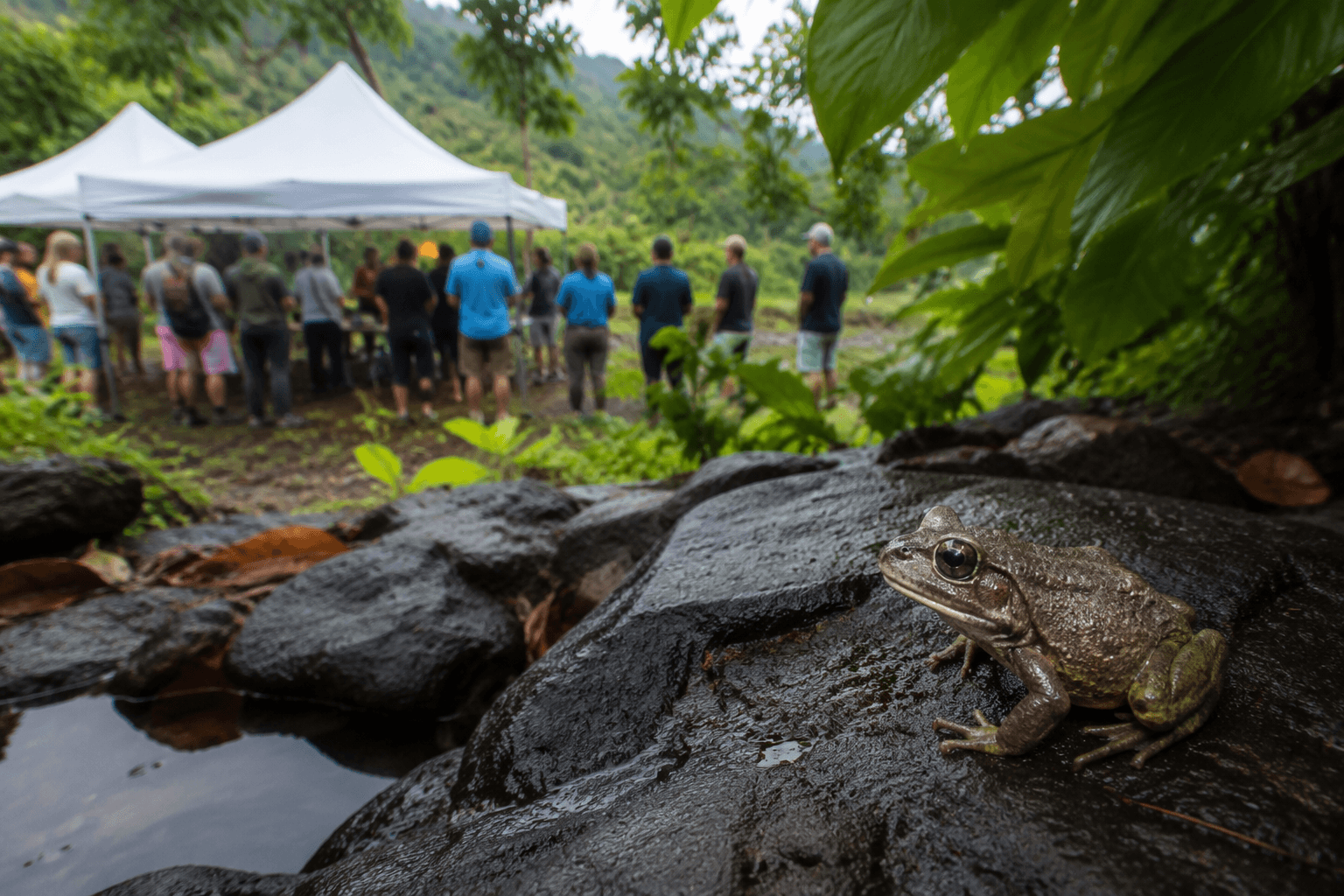
The warning matters because coqui are not hard to notice once they start calling. They are known for a loud nighttime call that can turn into a neighborhood nuisance and, if a population spreads, create years of control work for land managers. The frogs can also hitchhike in potted plants, landscaping material and other moved goods, which makes nurseries, gardeners and homeowners part of the island’s first line of defense.
Kauai has beaten back coqui before. Island Conservation said the frog was removed from Kauai after eradication efforts, which is why any fresh reports now are being treated as a serious early warning rather than a routine wildlife sighting. The broader invasive-species picture in Hawaii has stayed active as well, with coqui frogs, coconut rhinoceros beetles and little fire ants among the pests that have kept the Hawaii Department of Agriculture busy.
Residents who hear the frog’s call at night or suspect a sighting can reach KISC at 808-821-1490 or email kisc@hawaii.edu. The statewide 643-PEST hotline, 808-643-7378, is another reporting option. Fast reports give crews a chance to verify the frog, map where it is turning up and move before a small cluster becomes a permanent island problem.
This article was produced by Prism’s automated news system from verified source data, official records, and press releases, then run through automated quality and moderation checks before publishing. The system is built and supervised by the people who set the standards it runs under. Read our full AI policy.
Did this article answer your question?