ASU Professor: Arizona Faces Uncompensated Water Cuts Without Upper Basin Reciprocity
An ASU law professor warns a federal plan could slash Central Arizona Project water by nearly 60% while Upper Basin states accept zero cuts.
Arizona stands to absorb deep, one-sided water cuts from the Colorado River unless Upper Basin states agree to matching reductions, according to Rhett Larson, the Richard Morrison Professor of Water Law at Arizona State University's Sandra Day O'Connor College of Law and chief legal counsel for the Arizona Municipal Water Users Association.
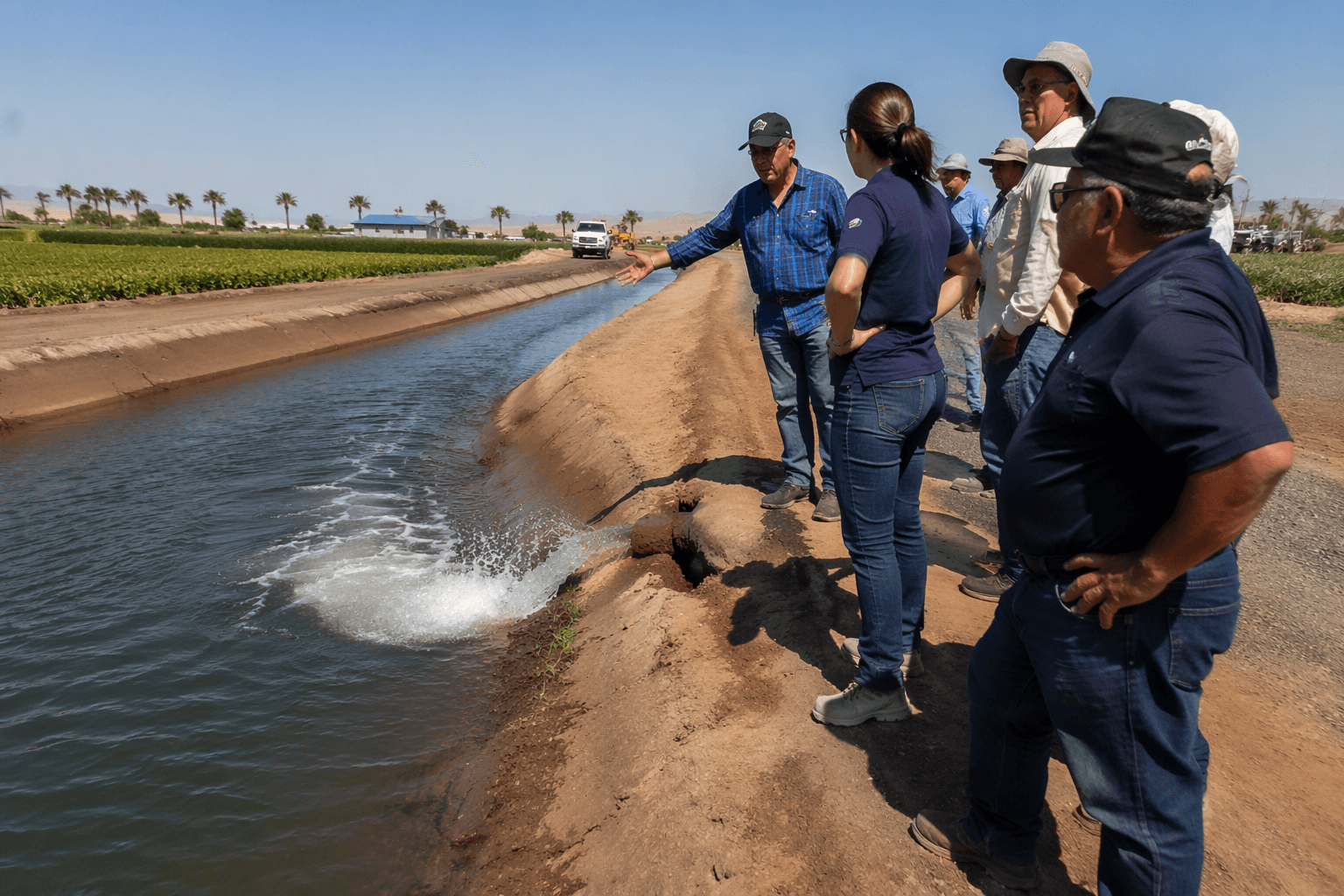
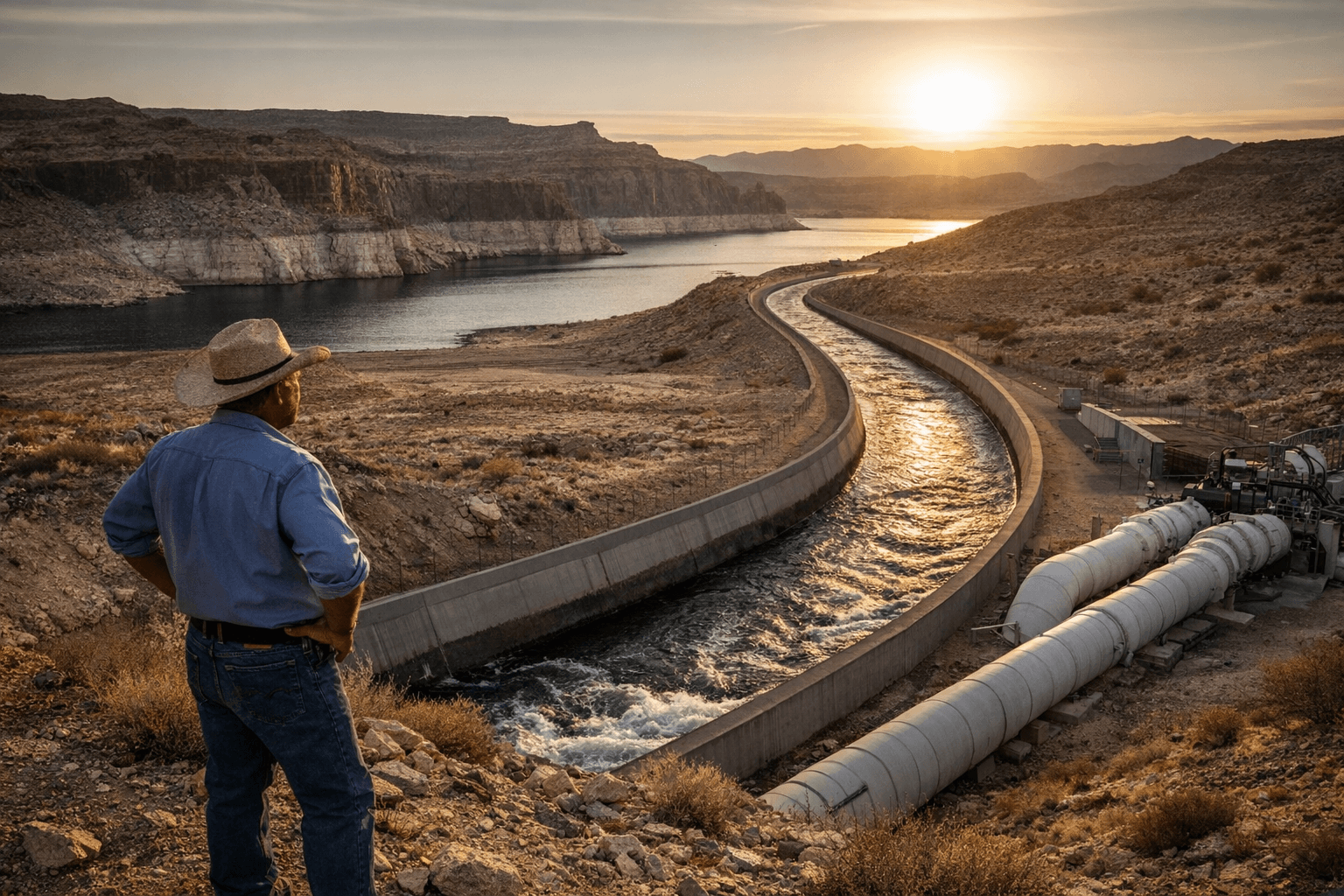
The warning carries direct weight for La Paz County. The Central Arizona Project, which draws Colorado River water from Lake Havasu just outside Parker and carries it 336 miles through central and southern Arizona, faces potentially severe reductions under plans being developed by the federal government following the collapse of multi-state negotiations.
"A deadline without a consequence is just a date," Larson said after seven basin states missed a February 14 federal deadline to finalize post-2026 operating rules for the river. One federal option, which could realistically go into effect, would cut water to the Central Arizona Project by nearly 60%, according to Larson.
The collapse of talks exposed a fundamental imbalance. The four Upper Basin states of Colorado, New Mexico, Utah, and Wyoming, and the three Lower Basin states of Arizona, California, and Nevada were unable to reach agreement by the deadline. A primary stumbling block was a refusal on the part of the Upper Division states to accept specific delivery cutbacks, even during periods of serious drought-inspired shortages.
Representatives of the Lower Basin states had offered to respond to river shortages with substantial cuts to their Colorado River allocations: 27 percent for Arizona, 17 percent for Nevada, and 10 percent for California. Arizona has already shouldered an outsized share of the conservation burden: Buschatzke noted that Arizona has already performed the heavy lifting, providing nearly half of the water surrendered to stabilize Lake Mead over the last decade.
Larson, who is representing Arizona in the agreement, said there is a proposal on the table where the upper basin states would shift the way the water is measured to align more closely with reality. "There have been some promising breakthroughs, but it could also collapse into litigation," he said.
Litigation is no longer a remote possibility. Arizona hired a high-powered law firm in March 2026, and Larson has noted there is "a decent chance the states of the basin will sue each other in the United States Supreme Court." Meanwhile, CAP General Manager Burman underscored the gravity of the situation, noting that a breach of the 100-year-old compact is a looming possibility by 2026 or 2027 if current trends continue.
Arizona could lose up to 40% of its water supply under the worst-case scenarios being modeled, a figure that would reshape municipal water budgets, agricultural operations, and long-term planning across La Paz County. Larson estimates water prices could increase significantly if Arizona cannot reach an equitable and sustainable agreement with its basin partners.
This article was produced by Prism’s automated news system from verified source data, official records, and press releases, then run through automated quality and moderation checks before publishing. The system is built and supervised by the people who set the standards it runs under. Read our full AI policy.
Did this article answer your question?