Sen. Gallego's La Paz County Visit Sparks Water Policy Criticism
Sen. Gallego toured La Paz and Mohave counties pledging water security, but activists say his support for laws redirecting farm groundwater to urban developers tells a different story.
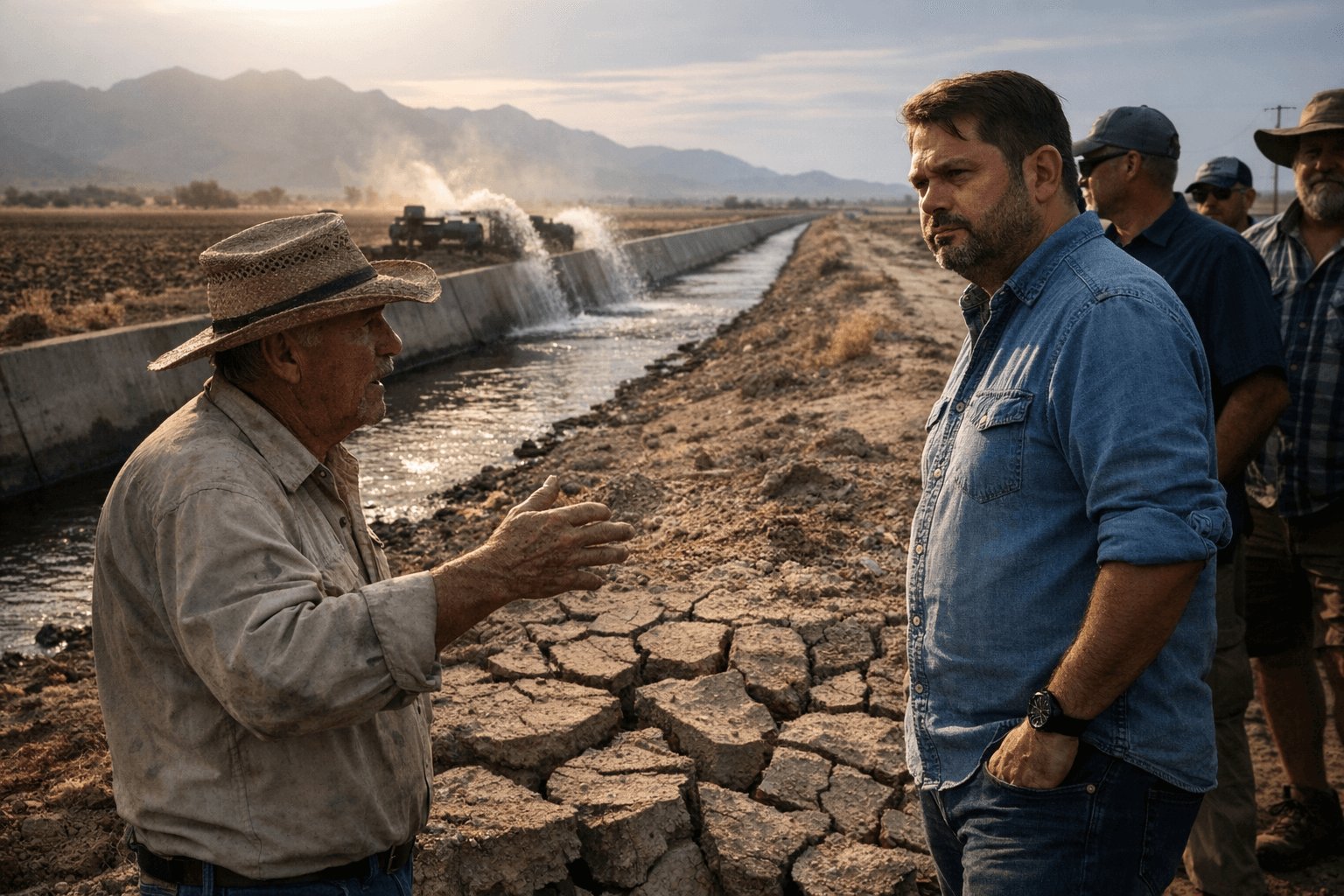
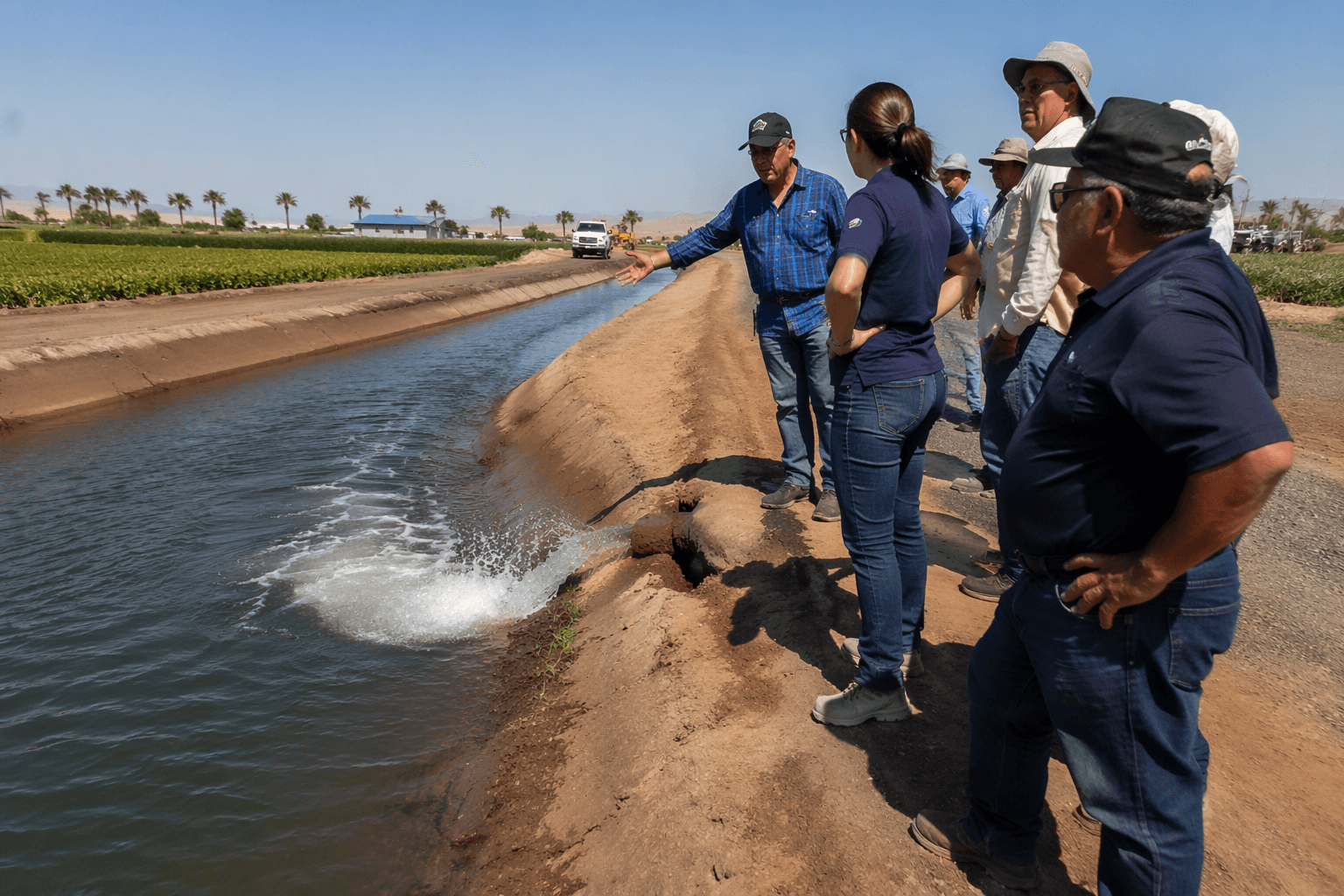
Sen. Ruben Gallego visited Parker and made stops across La Paz and Mohave counties Wednesday, pledging water security to rural communities whose relationship with the Colorado River defines nearly every aspect of daily life. The Democratic senator met with leaders from the Town of Parker, the Colorado River Indian Tribes and La Paz County at Parker Town Hall, where talks centered on Colorado River water allotments, upgrades to the Colorado River Indian Tribes' canal system, and the long-overdue need for investment in the Colorado River Sewage System Joint Venture.
But even as Gallego sat with Parker Mayor Randy Hartless and tribal officials to discuss the region's water future, water rights activists were sharpening their criticism of the senator's record on the very issue he came to champion.
At the center of the dispute is Arizona's "Ag-to-Urban" groundwater law, passed by the state legislature in June 2025 and signed by Gov. Katie Hobbs. The law allows landowners to retire irrigation rights on actively farmed land and convert that water into credits usable for residential construction. Up to 400,000 acres of farmland across Arizona could qualify under the program, potentially enabling construction of as many as one million homes. Critics say the math favors developers and Phoenix-area growth at the direct expense of rural farming communities.
The concern escalated in March 2026 when two additional bills, House Bills 2757 and 2758, were introduced in the Arizona Legislature. Those measures would allow groundwater from McMullen Valley and Butler Valley in western Arizona to be sold to large cities including Phoenix. Investment group Water Asset Management owns thousands of acres in both valleys. For La Paz County residents who rely on groundwater for their farms and livelihoods, the bills represent a threat that no amount of water security messaging can paper over.
Activists argue that Gallego's alignment with the broader Democratic coalition backing these measures contradicts the water protection promises he delivered in Parker. The ag-to-urban framework, they contend, does not conserve water so much as relocate it, stripping rural counties of an agricultural identity built over generations while accelerating displacement of the farmers and rural tenants who depend on irrigated land for their income and housing.
Supporters of the Ag-to-Urban program, including the governor's office, point to the first approved application under the law, which generated enough water credits for 825 new homes while saving over 437 million gallons per year compared to the land's prior agricultural use. The Arizona Department of Water Resources is required to finalize program rules by June 30, 2026.
For La Paz County, the stakes extend well beyond any single bill. The county's agricultural sectors, river-dependent economy and rural character all hinge on whether water policy decisions made in Phoenix and Washington serve the communities along the Colorado, or simply route their resources elsewhere.
This article was produced by Prism’s automated news system from verified source data, official records, and press releases, then run through automated quality and moderation checks before publishing. The system is built and supervised by the people who set the standards it runs under. Read our full AI policy.
Did this article answer your question?