Oxford, Taylor and Abbeville define Lafayette County’s community identity
Oxford, Taylor and Abbeville shape Lafayette County’s daily life, from university-linked services in Oxford to Abbeville’s small-town core and Taylor’s compact rail-era footprint.

Lafayette County runs on three very different communities, and each one answers a different daily need. The Oxford Lafayette Chamber of Commerce lists Oxford, Taylor and Abbeville as the county’s major communities, while the rest of the county fills in the rural and unincorporated spaces between them. If you are deciding where to live, shop or spend a weekend, the real question is not which place is biggest, but which one matches the pace and access you want.
The county’s deeper frame
Lafayette County was founded in 1836, shortly after treaties forced most of the native Chickasaw population from the area, and it was named for the Marquis de Lafayette. The Mississippi Encyclopedia places the county at the center of northern Mississippi’s educational and literary life, identifying it as the site of the University of Mississippi and the home of William Faulkner. That history still shapes how the county works on the ground: one community is built around a university, another around a small-town civic structure, and another around a compact rail-era footprint.
The county’s population was estimated at about 59,600 in 2025 by USAFacts, and the Oxford-Lafayette Economic Development Foundation describes it as a “thriving & growing community.” That combination matters because growth in a county like this does not spread evenly. It concentrates around institutions, services, and the roads that connect the towns to one another.
Oxford: the county’s institutional anchor
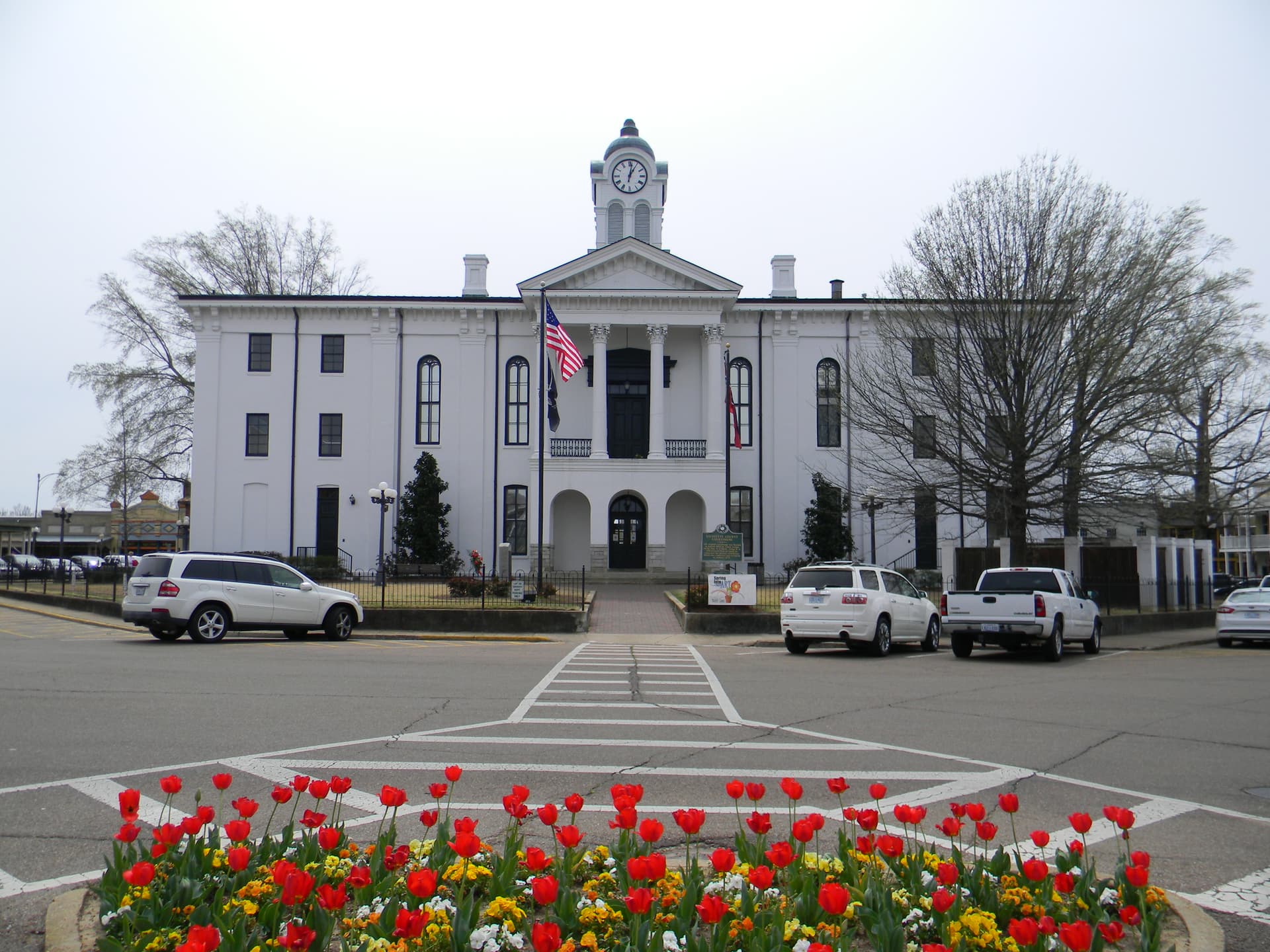
Oxford began with little more than a few stores and a vision of becoming the home of Mississippi’s first state university. The city’s official history ties that origin to the Chickasaw Indian Cession of February 9, 1836, which helps explain why Oxford became the county’s civic center rather than just another courthouse town. The place was built around a deliberate institutional goal, and that is still visible in the way it functions today.
Oxford’s city government website lists Mayor Robyn Tannehill and a broad range of departments and services, giving the city a level of administrative depth that the smaller communities cannot match. For newcomers, that means Oxford is the place to start when county life requires a city hall, a more developed public-service network, or proximity to the University of Mississippi. Its role in education is not just symbolic; it is part of the county’s day-to-day economy and identity.
Oxford also offers the clearest example of how Lafayette County blends public services with commercial activity. The town’s original mix of stores and a university mission still echoes in the way business, government and campus life overlap there. If your routine depends on the broadest set of services in the county, Oxford is where those systems are most tightly concentrated.
Abbeville: a small town with a direct local government
Abbeville sits on State Highway 7 and describes itself as a small, quaint town in Lafayette County. Founded in the early 1800s by pioneers from South Carolina, it has about 450 citizens, and its residents work in fields ranging from the medical field and education to banking, construction and farming. That mix gives Abbeville a more varied local economy than its size might suggest, while still preserving the feel of a tightly scaled town.
The town government is easy to pin down and easy to reach. Scott Fricker is the mayor, and the Mayor and Board of Aldermen meet on the first Thursday of every month at 7 p.m. in the Boardroom of Abbeville Town Hall, 8 Business 7 South. Ginger Kesler is listed as the town clerk, and the town hall phone number is 662-259-2878. Those details matter because they show a community where local government is not abstract or distant, but visible and scheduled.
Abbeville has also taken steps that matter for housing and land use. Its recent town information says zoning ordinances have been put in place to protect constituents and their homes, which is a concrete sign that the town is managing growth rather than waiting for it to happen on its own. A 2024 audit filed with the Mississippi Office of the State Auditor says the Town of Abbeville has no component units, a detail that underscores how compact the town’s public structure remains.
For anyone who wants a quieter base with direct highway access and a town government that is still close to daily life, Abbeville stands apart from Oxford’s institutional density. It is the place in Lafayette County where small-town scale is still the defining fact.
Taylor: compact, historic and positioned between larger centers
Taylor covers a little more than four square miles in the hills of north Mississippi and sits approximately halfway between Oxford and Water Valley in the Yocona River delta. That geography gives Taylor a different function from the other named communities: it is small enough to feel intimate, but central enough to sit between larger places that many county residents already move through. The town’s footprint is one reason it remains a recognizable part of Lafayette County’s identity rather than just a pass-through.
Its history is unusually layered for such a small place. Historical sources place John Taylor’s settlement of the community in 1832, the railroad’s arrival in 1858, and the town’s incorporation as Taylor’s Depot in 1873. Taylor is also the only place name William Faulkner did not change in his novels, which gives it a literary permanence that few small Mississippi towns can claim.
Taylor also appears in practical county planning. A Flood Insurance Study for Lafayette County and its incorporated areas lists Taylor, Oxford, Abbeville and the unincorporated areas as participating communities in the National Flood Insurance Program. For homeowners and anyone comparing places to live, that is not a footnote. It is the kind of detail that affects insurance, mitigation planning and the way the county manages flood risk over time.
The smaller county pieces still matter
The Chamber of Commerce’s breakdown into Oxford, Taylor and Abbeville is useful because it captures the county’s major anchors without pretending those are the only places that matter. The flood study’s inclusion of the unincorporated areas makes clear that part of Lafayette County’s daily life operates outside town limits, but still within the same planning and insurance framework. That is one reason the county can feel both compact and spread out at once.
Lafayette County’s identity is not built on a single downtown or one dominant suburb. Oxford concentrates government and university life, Abbeville preserves small-town administration and highway access, and Taylor carries the county’s historic middle ground. Together, those communities explain how Lafayette County works every day, and why its future will keep being shaped by the way those different places share the same county map.
This article was produced by Prism’s automated news system from verified source data, official records, and press releases, then run through automated quality and moderation checks before publishing. The system is built and supervised by the people who set the standards it runs under. Read our full AI policy.
Did this article answer your question?