St. Peter’s Cemetery links Faulkner, Lamar and Oxford’s history
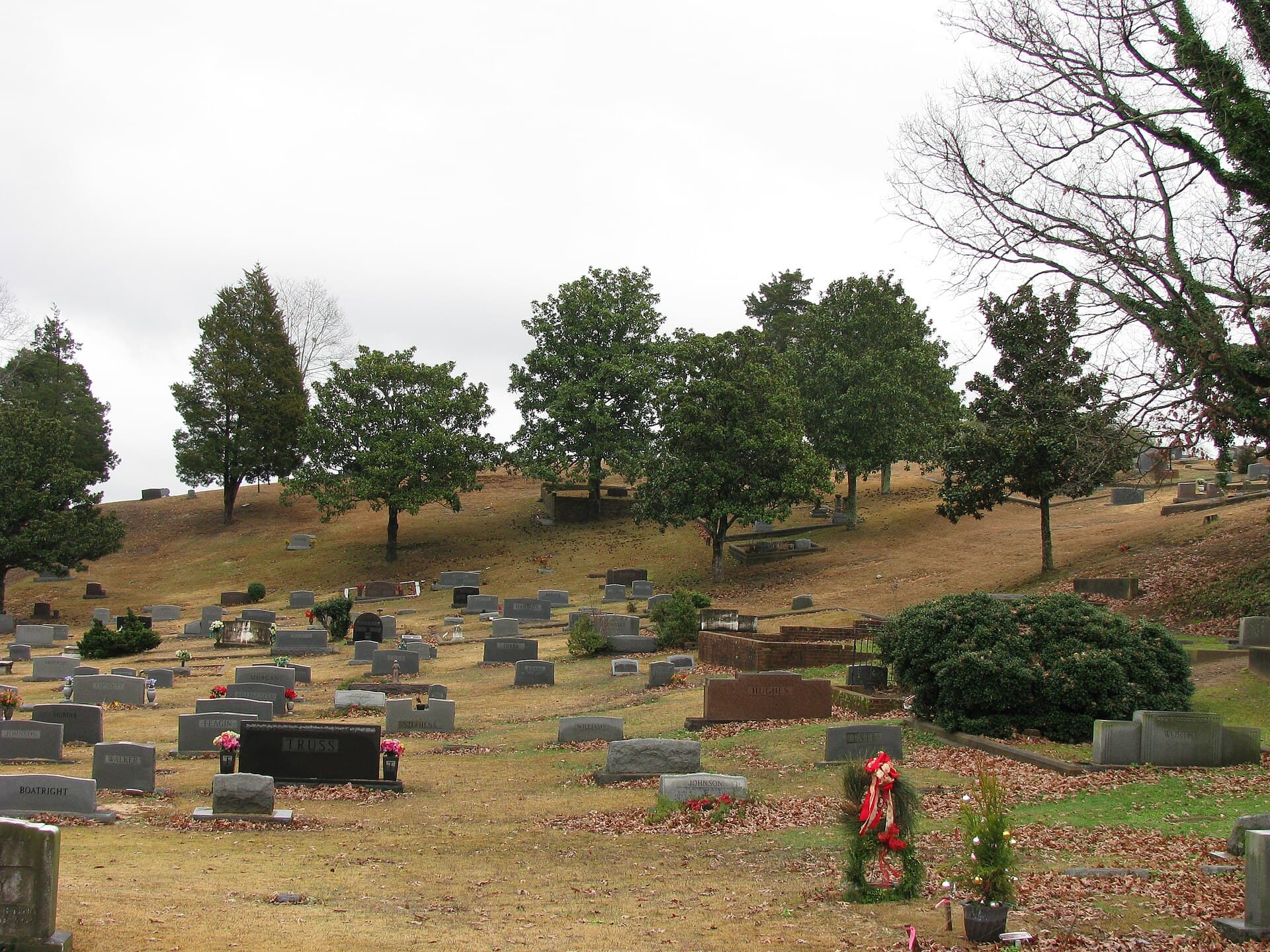
St. Peter’s Cemetery puts Faulkner, L.Q.C. Lamar and a Revolutionary War veteran a few blocks from the Square, making Oxford’s history an easy drivable loop.

St. Peter’s Cemetery gives Lafayette County one of its most compact history outings: a few blocks northeast of the Square, it gathers William Faulkner, L.Q.C. Lamar and a Revolutionary War veteran into a single stop. Visit Oxford’s walking-tour materials say the cemetery loop can be driven, which makes it practical for a Saturday visit, a short resident outing or a broader Oxford history circuit.
St. Peter’s Cemetery as the anchor
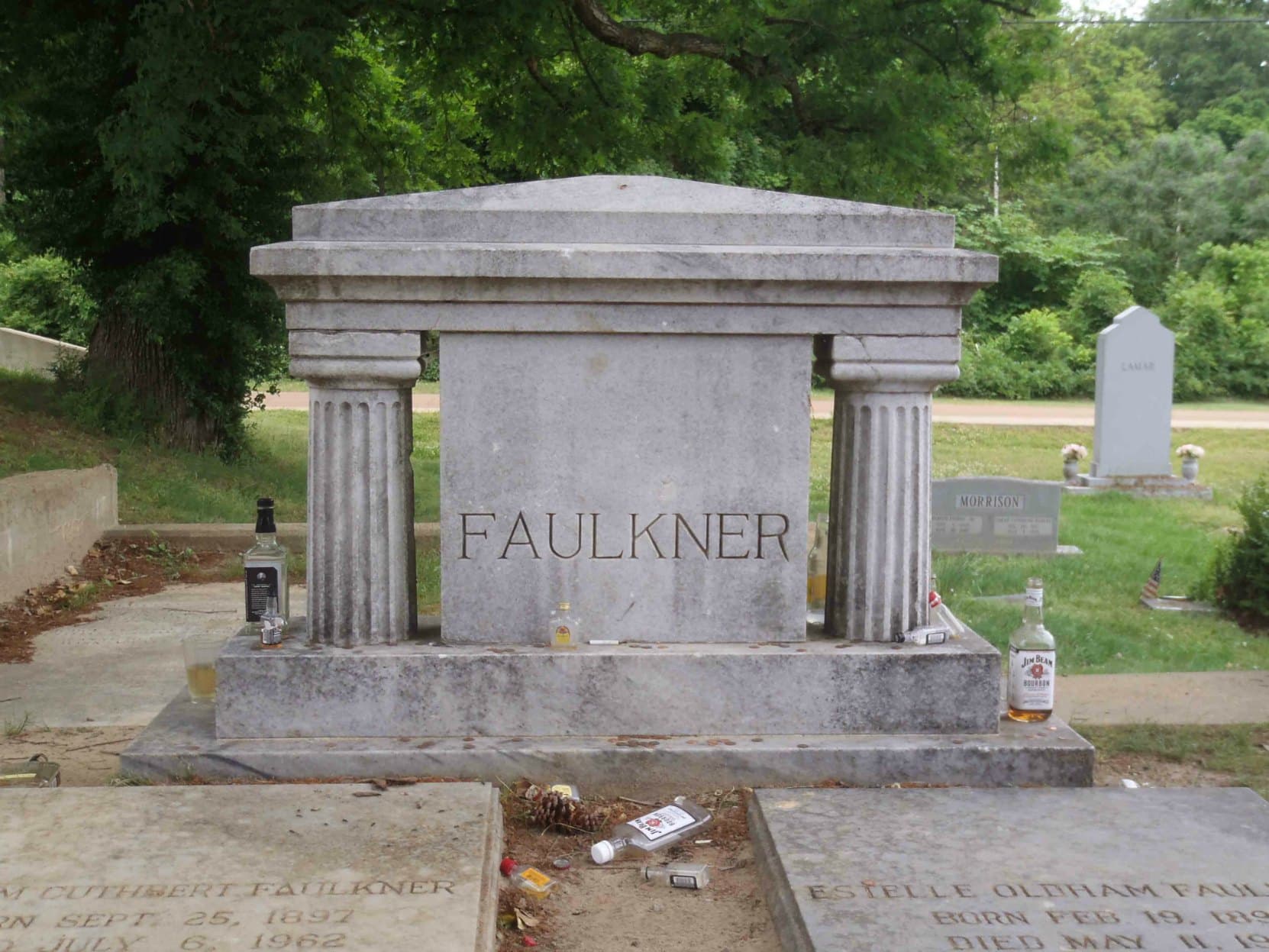
Mississippi Hills National Heritage Area describes St. Peter’s Cemetery as the old Oxford cemetery, and that description fits its role in the town’s public memory. The site is not just a burial ground for a famous novelist. It is a place where Oxford’s literary reputation, its national political reach and its older military lineage sit side by side in one walkable space.
Faulkner’s grave draws many visitors first, but L.Q.C. Lamar gives the cemetery a second major thread. Lucius Quintus Cincinnatus Lamar served as a U.S. congressman, U.S. secretary of the interior under President Cleveland and a U.S. Supreme Court justice. The cemetery also includes a Revolutionary War veteran burial, which stretches its historical span back to the founding era of the United States and anchors Oxford’s later celebrity in something much older.
A self-guided route that works in one compact trip
Visit Oxford frames the cemetery as part of a set of self-guided walking tours that cover the town’s history from its origins through wartime hardships and into the 20th-century literary era. That matters because the route is not built around one monument or one personality. It is designed to connect sites that explain how Oxford became Oxford, and St. Peter’s sits close enough to the Square to make that story feel immediate rather than scattered.
The north-of-the-Square route becomes especially useful because it links St. Peter’s to Rowan Oak, one of the two National Historic Landmarks on that route. Rowan Oak was Faulkner’s home from 1930 to 1962, so the cemetery and the house create a direct literary connection without requiring a long cross-town drive. For readers trying to see the essentials in a single outing, that pairing turns Oxford’s history into a practical circuit instead of a list of isolated addresses.
College Hill deepens the older story
The heritage loop becomes richer when it includes College Hill Presbyterian Church. Mississippi Hills says the sanctuary, built in 1844, is the oldest Presbyterian structure in North Mississippi and the oldest church building of any denomination in the Oxford area. Those two claims give the walk a firm architectural and religious starting point, long before Oxford’s literary fame came to dominate outside attention.
College Hill adds a different texture from the cemetery and from Faulkner’s home. It shows that Oxford’s historic landscape is not only about graves and manuscripts, but also about the institutions that rooted the town’s civic life. In a compact itinerary, that matters because it lets visitors move from burial history to worship history to domestic history without leaving the same part of town.
The Lamar House Museum adds politics to the route
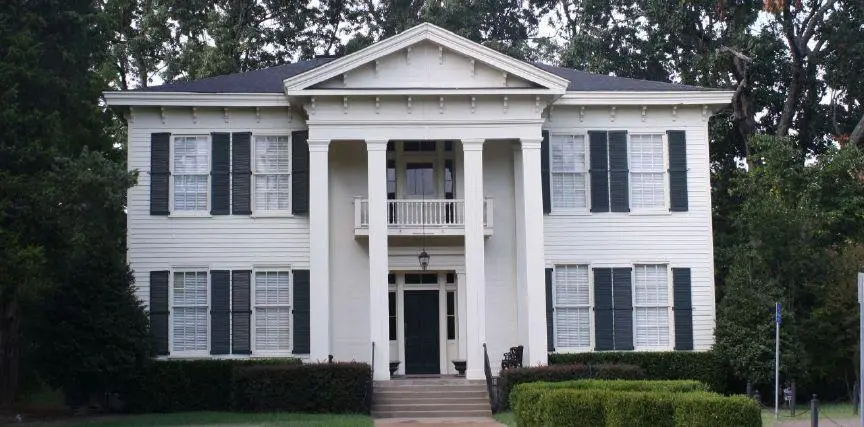
The L.Q.C. Lamar House Museum expands the story in another direction. Mississippi Hills says the house was designated a National Historic Landmark in 1975, and Visit Mississippi says it was established by the Oxford Lafayette County Heritage Foundation and restored to its original Greek Revival elegance. The museum sits at 616 North 14th Street in Oxford and centers on the politics of slavery, secession and reunion.
That subject matter gives the route sharper institutional meaning. Lamar’s house is not presented as a decorative stop. It is a place for confronting the arguments that shaped the country and the region, then and later. The museum’s timeline page preserves Lamar’s April 27, 1874 House speech in one line that still carries weight: “My Countrymen! Know one another, and you will love one another!”
Why the route still works for Oxford today
Oxford’s history makes the route especially coherent. The town was incorporated in May 1837 and was built on land that had once belonged to the Chickasaw Indian Nation. That means the walk moves across multiple layers of local memory, from indigenous land to antebellum religion, from national political power to twentieth-century literature.
What makes St. Peter’s Cemetery such a strong starting point is how much it compresses. In a short drive or walk, you can stand at the grave of Faulkner, connect to Lamar’s public career, and see a Revolutionary War burial that reaches back before Oxford was incorporated. Add College Hill Presbyterian Church, Rowan Oak and the Lamar House Museum, and the route becomes a practical heritage itinerary that explains why Oxford’s historic sites still matter to Lafayette County’s identity and to the town’s place in Mississippi history.
This article was produced by Prism’s automated news system from verified source data, official records, and press releases, then run through automated quality and moderation checks before publishing. The system is built and supervised by the people who set the standards it runs under. Read our full AI policy.
Did this article answer your question?