Lake County records office traces property history back to 1856
Lake County's vaults reach back to 1856, and the tract index, plats, and online records can help spot title gaps before a sale, permit, or boundary fight.
A deed on a Two Harbors cabin, a boundary dispute near the Lake Superior shore, or a shoreline project in one of the North Shore communities can turn on a record buried in the Lake County Recorder’s Office. The county keeps official copies of real estate documents recorded since Lake County was organized in 1856, and it uses tools that can help buyers, heirs, builders, and longtime owners verify what a parcel has carried through time.
How Lake County organizes property history
Lake County does not rely on a single name search. The Recorder’s Office maintains a blind Tract Index as the backbone of its recording system, along with a Numerical Index, dates of recording, Grantor/Grantee references, and Certificates of Title. Property can be a shoreline lot, a forest tract, or a platted community parcel with a long paper trail that reaches back more than a century and a half.
The office also changed the way records are stored. In 2004, Lake County discontinued keeping paper copies of documents and converted to electronic images stored on its server. Older title work can still involve more than one format, especially when a file has to be checked against the county’s historical indexing system.
What you can search online, and what still belongs in the office
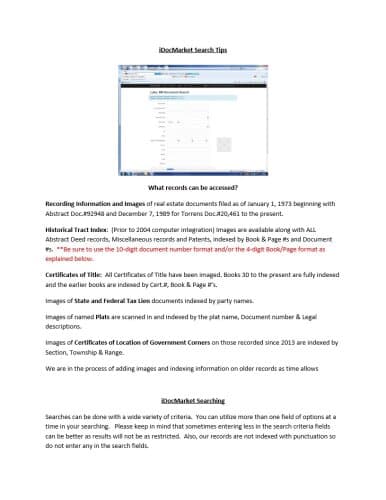
Lake County uses iDocMarket for online real estate records access after free initial registration. Users can choose among subscription tiers. Data availability and search tips should be reviewed before assuming the online system will meet every need. For a buyer checking a deed before closing, a lender tracing a chain of title, or an heir trying to confirm an old transfer, the online portal is a practical first stop.
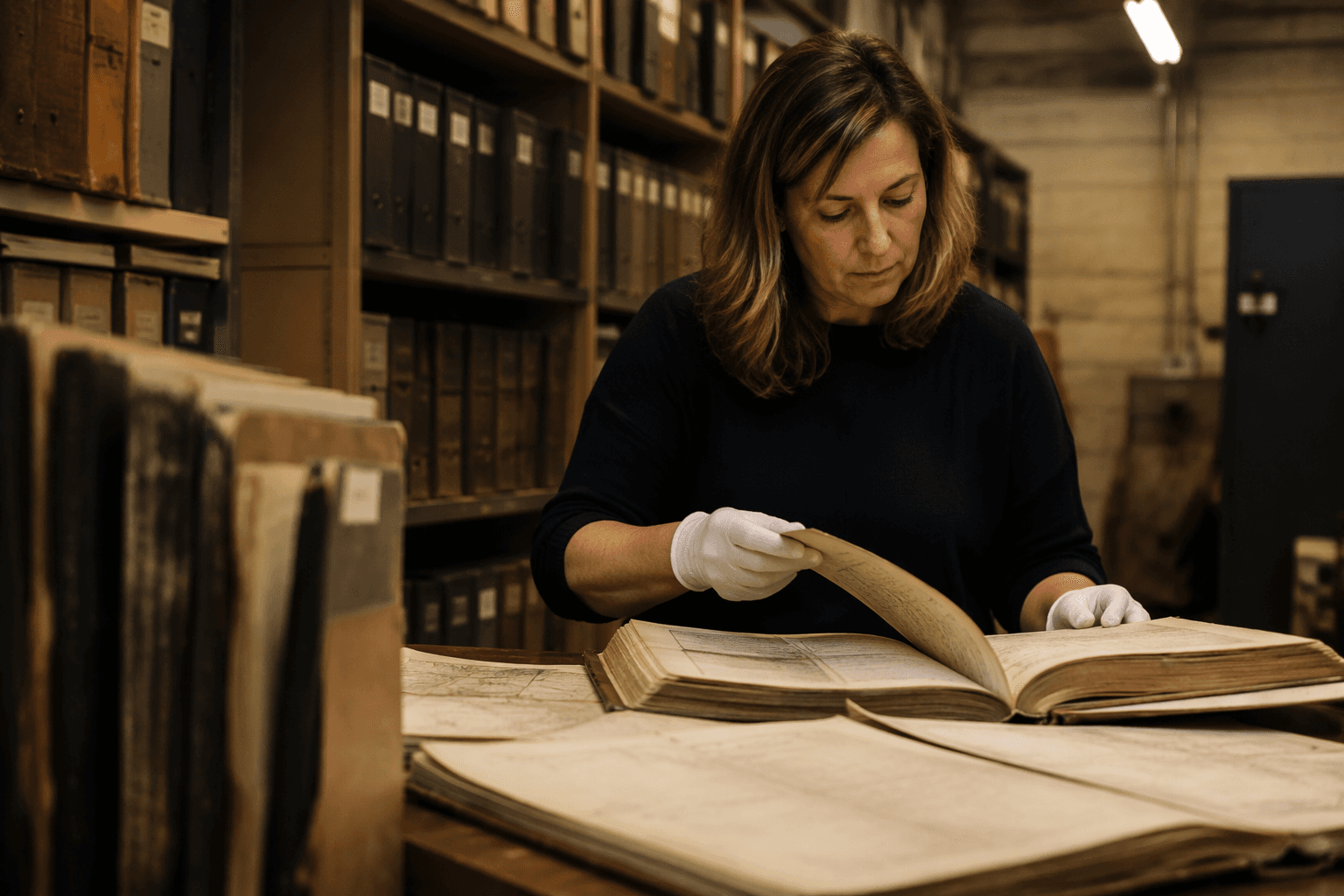
Real estate records are open to the public in the Recorder’s Office, where a public terminal powered by Document Pro software can be used alongside the blind Tract Index and older paper records. Staff can give a brief tutorial on how the records are kept, but they do not have time or staff to conduct full searches for the public, so anyone who needs a complete title trail should plan on doing some of the legwork or bring in a title professional.
A useful way to approach the search is to move from broad to specific:
1. Start with the parcel or name in the online system and note what appears in the dates of recording and grantor-grantee references.
2. Check the tract index in the office if the online search leaves gaps or if the parcel has been transferred more than once.
3. Pull the related document images and compare them with any plat, survey, or certificate of title attached to the file.
4. If the parcel is part of a Torrens file or a registered land matter, confirm whether an examiner review is required before the record can be relied on for closing or filing.
A missing deed can hold up a closing, a lender may want proof of a release, and a buyer may discover that the seller’s name is not the only way the parcel is indexed.
Plat maps, surveys, and Torrens records can settle boundary questions
The Recorder’s Office also keeps original recorded subdivision plats, registered land surveys for Torrens properties, some government surveys, some recorded plats without official names, Minnesota Department of Transportation right-of-way plats, and certificates of location of government corners. People often need those records when a fence line, driveway, lot split, or road setback turns into a boundary question.
Torrens is a land registration system in which a court may direct issuance of a Certificate of Title that is kept in the Registrar of Titles office. For Torrens or registered property filings, documents may need review and approval by the Torrens Examiner of Titles under statutory requirements. That review can affect a permit, a transfer, or a financing package.
An abstract of title can also be part of the picture. It is a condensed history of deeds, mortgages, and other documents relating to a specific piece of land, beginning with the legal description and the original patent. It can serve as a road map for anyone buying, inheriting, or refinancing property where the chain of ownership needs to be understood before money changes hands.
A local example: tracing a Lake Superior shore parcel before closing
Consider a family preparing to sell a cabin near the Lake Superior shore. The first check is the recorded deed history, which can show whether the parcel moved through a trust, an estate, or a prior owner whose name no longer matches the current tax record. The next step is to review the plat or survey for the lot line, any recorded right-of-way, and the government corner information that controls where the property actually begins and ends.
If the parcel is Torrens or registered land, the file may also need the Certificate of Title from the Registrar of Titles office and, if a filing is involved, approval by the Torrens Examiner of Titles. If the buyer’s lender or title company sees an unresolved lien, an old mortgage, or a mismatch in the legal description, closing can slow down until the record is clarified. A missed boundary note can create a dispute later, and a missing right-of-way or corner reference can affect a permit application long after the offer is signed.
Regional abstract companies and surveyors still play a role here. The county’s records can show where to start, but a surveyor can help interpret the ground, and an abstract company can help assemble the chain of title into a usable file for a sale, refinance, or estate transfer.
Use Document Alert to watch a parcel after the search is done
Lake County offers a free Document Alert service. The service sends automated email alerts any time a document is filed in the Recorder’s Office using a person’s name or a property’s parcel number. Those alerts can include title transfers or deeds, mortgages, liens, or other documents containing the owner’s name or parcel code.
Current owners, heirs managing inherited land, and longtime residents can use it as an early warning if something unexpected is recorded.
This article was produced by Prism’s automated news system from verified source data, official records, and press releases, then run through automated quality and moderation checks before publishing. The system is built and supervised by the people who set the standards it runs under. Read our full AI policy.
Did this article answer your question?