Logan County Families Can Join 4-H, FFA, and the County Fair and Rodeo
Logan County youth can plug into 4-H, FFA, and the annual Fair & Rodeo through programs that build real skills and community ties.
Growing up in Logan County comes with a built-in advantage: a network of youth programs that have been shaping young people into capable, community-minded adults for generations. Whether your family is rooted in agriculture, interested in hands-on learning, or simply looking for a way to get more involved in county life, 4-H, FFA, and the Logan County Fair & Rodeo offer structured pathways to do exactly that.
Getting started with Logan County 4-H
4-H is open to youth across Logan County regardless of whether they live on a farm. The program covers an enormous range of project areas, from livestock and horticulture to cooking, photography, robotics, and public speaking. Members work on projects throughout the year, developing skills they then demonstrate at events like the county fair.
To enroll, families should contact the Logan County Extension Office, which serves as the local hub for all 4-H programming. Extension staff can walk new families through enrollment, explain which clubs are active in their area, and outline the project deadlines that correspond to fair entry requirements. Enrollment typically opens in the fall for the following program year, so reaching out early gives families the most options. Youth can join as young as five years old in the Clover Bud program before transitioning into full project-based membership.
Volunteer leaders are the backbone of local 4-H clubs. Adults with skills in any area, from welding to baking to financial literacy, are encouraged to consider becoming a club leader or project helper. The Extension Office provides training and support, so prior experience with youth programs is not required.
FFA: connecting classroom agriculture to real careers
FFA, formerly known as Future Farmers of America, operates through Logan County's high school agriculture education programs. Unlike 4-H, which is open to all youth, FFA membership is tied to enrollment in an agricultural education class at the local high school. Students who take ag classes automatically become eligible to join their school's FFA chapter.
The FFA experience is built around three pillars: classroom instruction, supervised agricultural experience (SAE) projects, and leadership development through the FFA organization itself. SAE projects are individualized, meaning a student might raise market steers, operate a small business, conduct agricultural research, or work at a local farm or agribusiness. These projects directly connect coursework to career readiness.
FFA members compete in Career Development Events (CDEs) that cover skills ranging from livestock judging and soil evaluation to agricultural communications and farm business management. At the state and national level, strong performance in these events can open doors to scholarships and recognition. Locally, FFA members are a consistent presence at the Logan County Fair & Rodeo, where their SAE projects and livestock entries are often among the most competitive in the show ring.
Families interested in FFA should speak with their student's high school agriculture teacher, who serves as the chapter advisor and primary point of contact for all program activities.
The Logan County Fair & Rodeo
The Logan County Fair & Rodeo is the centerpiece event of the local agricultural calendar, bringing together 4-H members, FFA students, open-class exhibitors, and the broader community for a multi-day celebration of county life. The fair typically includes livestock shows, static exhibits, carnival attractions, food vendors, and rodeo performances.
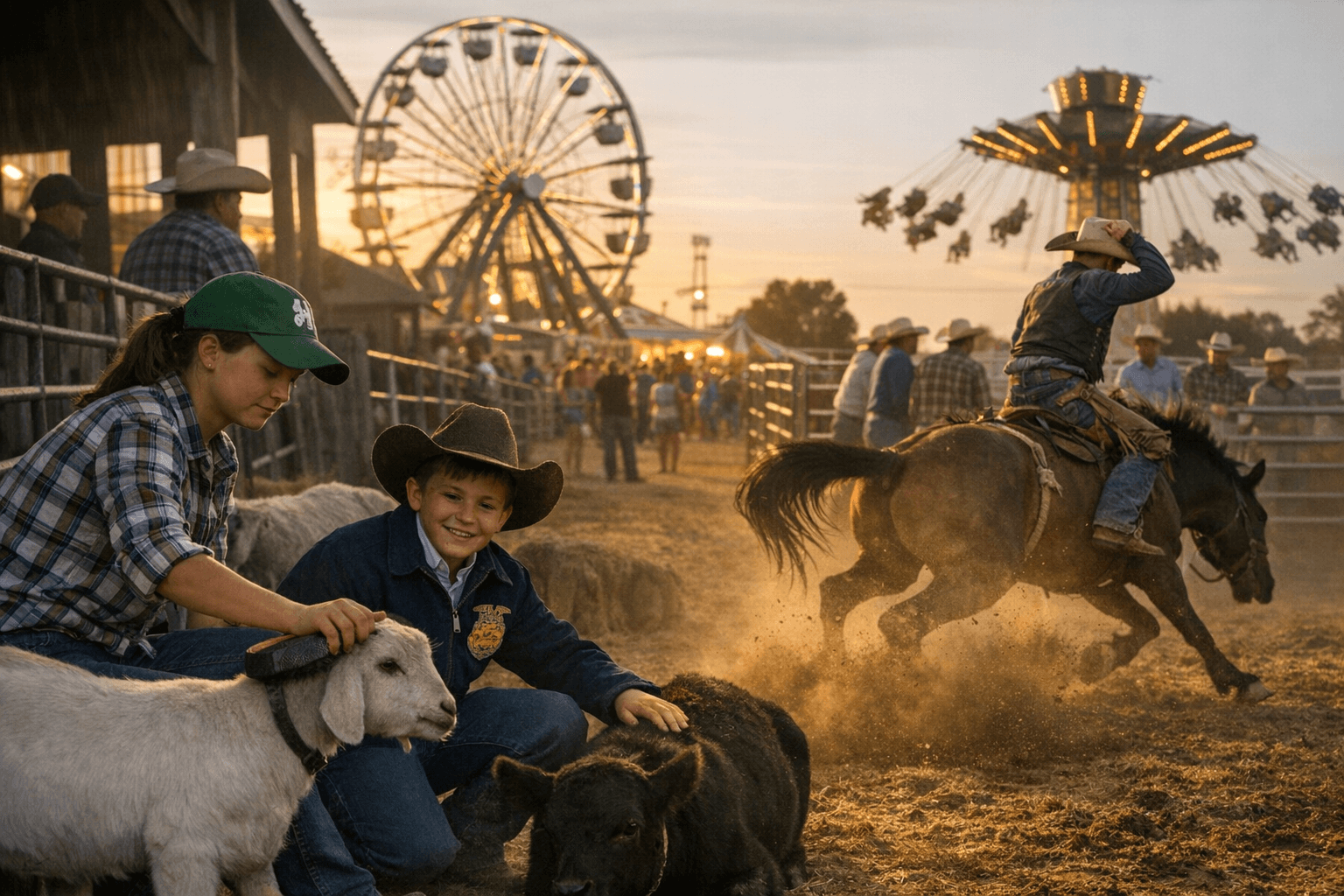
For youth participants, the fair is the culmination of a year's worth of project work. Livestock show classes generally cover species including beef cattle, swine, sheep, goats, poultry, and rabbits. Exhibitors in each species class compete for placings, with top animals advancing to fitting and showmanship competitions that reward an exhibitor's ability to present their animal to a judge.
Static exhibits, sometimes called the non-livestock or open class divisions, cover everything from photography and art to baked goods, canned produce, and sewing. These classes are open not only to 4-H and FFA members but often to community members of all ages, making the fair a genuine county-wide showcase. Entry deadlines for static exhibits typically fall several weeks before the fair opens, so planning ahead is essential.
The rodeo component of the fair draws competitors and spectators from across the region. Events typically include barrel racing, bull riding, team roping, and other traditional rodeo disciplines. For families attending rather than competing, the rodeo is one of the fair's signature draws and a highlight of the summer season in Logan County.
Deadlines and how to prepare
Fair participation requires attention to deadlines that vary by class and division. Livestock exhibitors generally need to have their animals tagged, weighed, or otherwise identified through the county Extension Office well before the fair, sometimes as early as spring for a summer fair. Missing these pre-fair identification deadlines typically means an animal cannot be exhibited, regardless of its quality.
Static exhibit entries follow a separate timeline, with entry forms due in advance and exhibits delivered during designated drop-off windows at the fairgrounds. Youth participants should work closely with their 4-H club leader, FFA advisor, or the Extension Office to track the specific deadlines relevant to their project areas.
Families new to the fair process can request an entry guide from the Extension Office or the fair board, which typically publishes a premium book listing every class offered, the rules for each division, and the prizes or premiums awarded to placers.
Volunteering and community involvement
The fair and both youth programs run substantially on volunteer labor. Beyond serving as a 4-H club leader, community members can help by judging exhibits, working fair gates, assisting in the show ring, or supporting the rodeo operation. The Logan County Fair Board coordinates volunteer needs for the fair itself, while the Extension Office manages 4-H volunteer recruitment.
For businesses and local organizations, sponsorship opportunities at the fair provide visibility while directly supporting youth programming. Premium payouts to young exhibitors, scholarship funds, and facility improvements all benefit from community investment.
Logan County's agricultural heritage is not simply a point of local pride; it is an active, living tradition that depends on young people choosing to participate and adults choosing to support them. The combination of 4-H, FFA, and the county fair creates a pipeline from childhood curiosity to genuine agricultural and professional competence, and that pipeline stays strong only when families decide to step in.
This article was produced by Prism’s automated news system from verified source data, official records, and press releases, then run through automated quality and moderation checks before publishing. The system is built and supervised by the people who set the standards it runs under. Read our full AI policy.
Did this article answer your question?