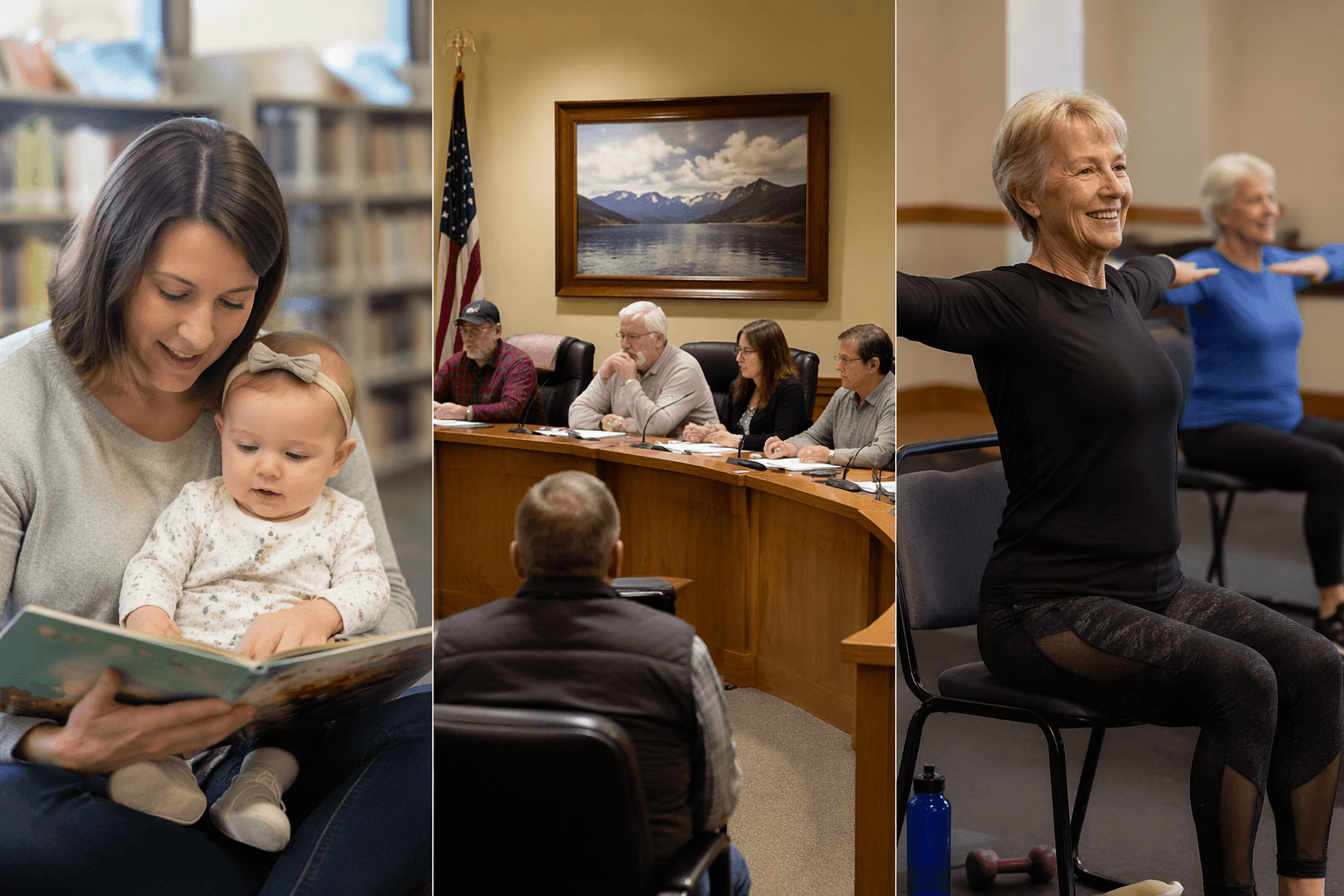
Logan County Landmarks and Institutions That Anchor Community Life
Four local anchors, the Overland Trail Museum, the Logan County Courthouse, the county fairgrounds and “NJC”, hold memory, jobs and events for Logan County, though some markers and names need clearer stewardship.

1. Overland Trail Museum
The Overland Trail Museum is named among Logan County’s key cultural places that “anchor community life” by preserving history and hosting public programming. County listings identify it as a cultural anchor for residents, newcomers and visitors, but public-facing details in compiled files (address, founding date, signature exhibits and seasonal hours) are not included in those summaries; confirming those facts will clarify how the museum contributes to tourism, school visits and local museum jobs. As the county’s designated cultural institution, the museum is central to interpreting settler, Indigenous and transportation histories tied to the Overland Trail corridor, a role that shapes how Logan County remembers and teaches its past.
2. Logan County Courthouse (and its lawn monuments)
The Logan County Courthouse grounds are a concentrated civic landscape with at least three monuments: “the statue of the Civil War Union soldier on the northwest corner,” “the Civil‑War‑era cannon on the northeast corner,” and a lesser‑known west‑lawn Lincoln marker described as “an upright granite cube standing at about five feet.” The west‑lawn plaque reads exactly: "Abraham Lincoln traveled this way as he rode the circuit of the Eighth Judicial District . . . 1847 1857. Erected 1921." That granite cube is “the least known and understood” of the three and is “nearly obscured from street view by evergreen bushes,” though it also carries “two small, raised symbols identifying the sponsoring organizations” at its base. Local history files further note Lincoln’s legal presence here in overlapping ways: the plaque commemorates his circuit riding (1847–1857) while the town record shows that “Abraham Lincoln practiced law in Lincoln, Illinois, from 1853 to 1860” and “sometimes collaborated with a local lawyer named Samuel C. Parks.” The courthouse lawn functions as a civic stage, from commemorative ceremonies to everyday courthouse traffic, and its layered monuments (soldier, cannon, Lincoln) illustrate how public memory is curated, obscured and periodically reinterpreted; stewardship choices like plantings, plaque visibility and replacement of vandalized signs directly affect what histories residents see and who is remembered.
3. Logan County fairgrounds and distributed historical markers
The county fairgrounds sit on the inventory of institutions that “host events, preserve history, provide jobs, and shape civic identity,” serving as the likely venue for fairs, 4‑H gatherings and exhibitions that sustain agricultural livelihoods and seasonal employment across Logan County. Beyond the fairgrounds’ role as an events hub, a network of roadside historical markers, many erected by the Logan County Historical Society, threads the county’s early narratives together: for example, the Lewis Council House marker (erected 1947) stands “on Road 91 at the southeast edge of Lewistown” and records that “The Maumee Rapids Treaty of September 29, 1817 granted the Shawnee and Seneca Indians a reservation of 40,300 acres surrounding this point. Here they lived until removed to the West in 1832.” Another nearby sign captures local educational beginnings: “FIRST SCHOOL HOUSE. Logan County’s first school house, a small log cabin was at this site for the education of Quaker Children, and replaced by brick in 1823. It became the first free Public School in the county.” Those inscriptions, and others like the Simon Kenton homesite on C.R. 153 east of Zanesfield, which reads in part “HISTORIC HOMESITE. Home of Simon Kenton. Here in a 20 foot square, one door, three window log cabin the old scout lived from 1819 to1828. The home was built by his children, stood on 65 acre tract of forest land.”, form a countywide curriculum of place. The markers also reveal contested and painful histories: the Lewis Council House text names “Captain John Lewis, Shawnee Chief” and refers to Polly Keyser as “his captive wife drudge,” language that reflects older commemorative practices and underscores the need for equitable interpretation and conversation about Indigenous removal, representation and public health implications tied to historical trauma.

4. NJC (acronym listed as a county anchor)
“NJC” appears on the county’s roster of institutions anchoring community life, but the compiled materials do not expand the acronym or provide its location, function, enrollment or workforce data. In an evergreen primer about county anchors this ambiguity matters because institutions like colleges, vocational centers or civic campuses can be major local employers, training providers for health and trades, and partners in disaster response and public-health outreach. To understand NJC’s concrete impact, jobs supported, programs offered, and how it connects with the courthouse, museum and fairgrounds during emergency response or civic events, the county needs clear identification of the entity behind the initials and up‑to‑date public data on enrollment, staff and programming.
Conclusion Taken together, these four anchors, the Overland Trail Museum, the Logan County Courthouse and its monuments, the fairgrounds and the institution listed as NJC, form the visible scaffolding of Logan County’s civic life: they hold festivals and court dockets, preserve contested histories on roadside markers, and employ residents. The markers’ dates and details matter: a courthouse plaque “Erected 1921,” multiple historical society signs from 1947, the replacement of Gunn’s Tavern marker in 1998 after vandalism, and carved texts that cite 1793, 1805, 1817 and 1819–1828 all signal waves of commemoration. Those material traces, sometimes obscured by plantings, sometimes marred by vandalism, sometimes written in language that needs updating, shape how public health messaging, emergency planning and civic education reach everyday people. Sustaining these anchors requires active stewardship, clearer documentation (for example, full transcription of marker texts and identification of NJC), and attention to how history is told so Logan County’s institutions remain accessible, accurate and equitable for the next generation.
This article was produced by Prism’s automated news system from verified source data, official records, and press releases, then run through automated quality and moderation checks before publishing. The system is built and supervised by the people who set the standards it runs under. Read our full AI policy.
Did this article answer your question?