Chappee-Webber Learning Center preserves Menominee County’s first river trading post
Louis Chappee’s gravestone, the 1824 trading post site, and 11 riverfront acres make the Chappee-Webber Learning Center Menominee County’s starting point.
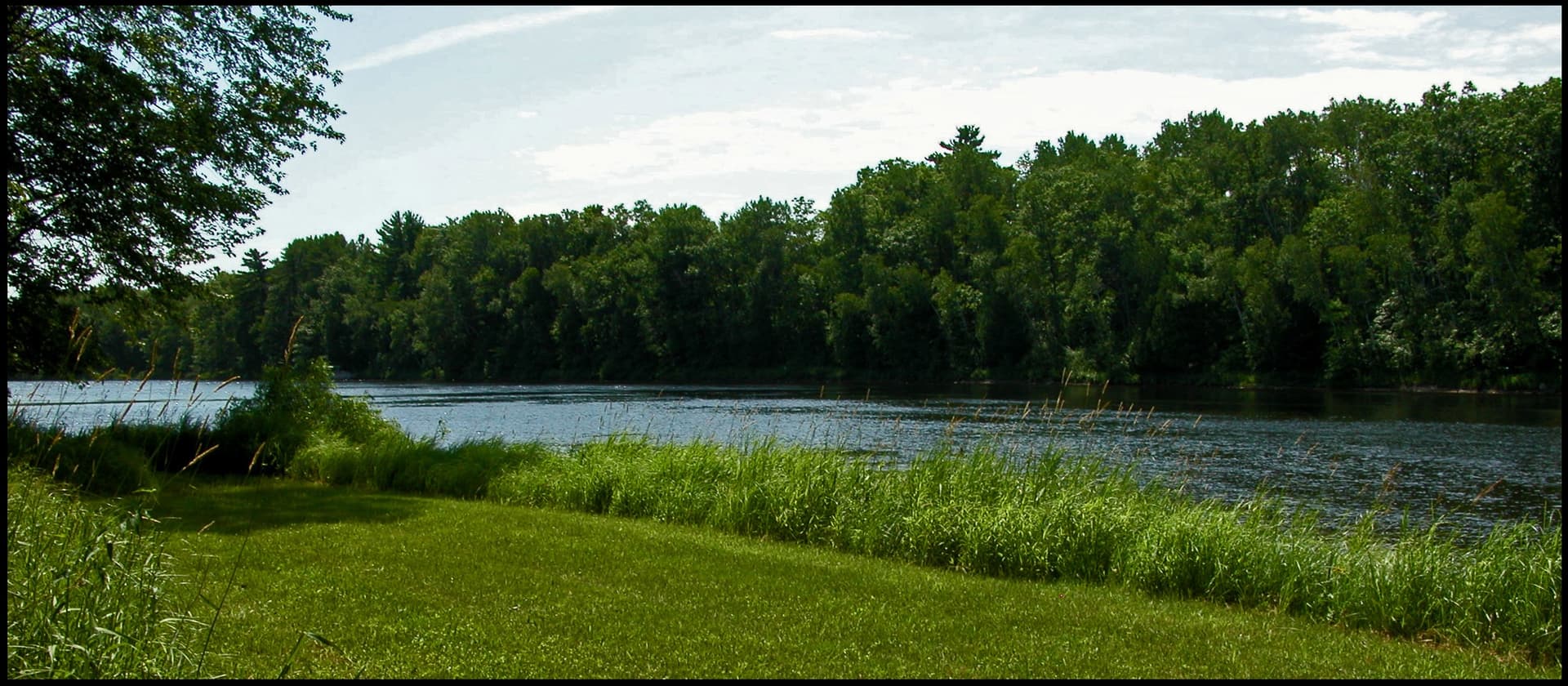
The Chappee-Webber Learning Center is where Menominee County’s river story becomes visible on the ground. On 11 acres along the Menominee River, the site preserves the location of the first trading post on the river, established in 1824 by Stanislaus Chaput, better known as Louis Chappee. His gravestone still stands there, turning a single parcel of land into a place where trade, settlement, and stewardship meet in one visit.
Where Menominee County’s story begins
The Menominee County Historical Society says Peter Webber gifted the 11-acre riverfront property to the society in 1973. That donation did more than add land to a local collection of historic sites. It placed under public stewardship a tract tied to one of the earliest commercial nodes on the Menominee River, the kind of place where river transport, fur trade, and the movement of people shaped the region before modern county boundaries existed.
That is why the 1824 trading post matters locally. It gives Menominee County a physical starting point, not just a date in a book. Visitors are not standing at a general historic overlook. They are standing where a named trader, Louis Chappee, left a mark that still exists in the form of his gravestone and the land around it.
What is still visible today
The site works because it is legible on foot. The Menominee Heritage Museum describes the Chappee-Webber Learning Center as open year-round and encourages visitors to walk the property, go down to the river, and see Louis Chappee’s headstone. That makes the learning center different from a roadside marker or an archived reference. The history is attached to terrain, river access, and a surviving burial marker.
The location itself helps anchor the experience. The learning center is identified as sitting on River Road near 48th Avenue and US Highway 41 in Menominee, Michigan, which gives residents and visitors a practical frame of reference for finding it. The site’s setting along the river is part of the lesson: the waterway was the corridor that carried commerce, travel, and cultural contact through the area long before today’s road network.
For a visit, the key features are straightforward:
- A preserved 11-acre riverfront tract
- Louis Chappee’s gravestone, still on site
- River access that makes the Menominee’s geography part of the story
- A place designed for walking, picnicking, and observing the landscape tied to the first trading post
Those details matter because they make the county’s earliest trade history something residents can actually visit, teach, and share.
How the site fits the wider river history
The Chappee-Webber Learning Center sits inside a much longer Menominee River timeline. The Advisory Council on Historic Preservation notes that French explorer Jean Nicollet first ascended the river in 1634, and that Father Marquette and Louis Joliet traveled it in 1669. By the time Chappee established his trading post in 1824, the river had already served as a route of exploration and contact for generations.
That deeper timeline helps explain why the learning center feels so specific to Menominee County. The site is not just about one trader or one century. It sits at the intersection of Indigenous history, French exploration, fur trade routes, and later American settlement patterns. A historical marker for Chapee Rapids reinforces that Chappee’s name belongs to the river landscape itself, while another historical account identifies Stanislaus Chappu, or Chappee, as a French-Canadian fur trader who operated a log trading post at the site of Marinette between 1794 and 1824.
Taken together, those references show a region where names, routes, and landmarks overlapped across both sides of the river. The Menominee River did not simply border communities. It organized them.
The local institutions keeping the site alive
The Menominee County Historical Society, established on January 17, 1967, has been central to that preservation work from the beginning. Its first officers were Michael J. Anuta, Frank Budmats, Violet Pawlowski, and William Ferstrum, names that matter because they mark the start of an organized local effort to collect and protect county heritage. The Chappee-Webber Learning Center is one of the clearest expressions of that mission in the landscape itself.
The site also fits into a broader regional heritage framework. The Upper Peninsula Heritage Trail Network includes Menominee County heritage sites, placing the learning center within a larger effort to interpret local history for residents and travelers across the Upper Peninsula. That regional context matters because it shows the site is not an isolated preserve. It is part of a network of places that help explain how river communities in this corner of Wisconsin and Michigan developed.
At the Chappee-Webber Learning Center, history is not confined to a name on a sign. It survives in the land, the riverbank, the gravestone, and the view across the water. That is what makes this 1824 origin point still important: it gives Menominee County a place where its earliest economic life can still be walked, seen, and handed on.
This article was produced by Prism’s automated news system from verified source data, official records, and press releases, then run through automated quality and moderation checks before publishing. The system is built and supervised by the people who set the standards it runs under. Read our full AI policy.
Did this article answer your question?