Keshena guide explores Menominee history, identity and tribal government
Keshena’s tribal offices, library and archives make it the best place to trace Menominee history, family records and the civic life that still shapes the county.
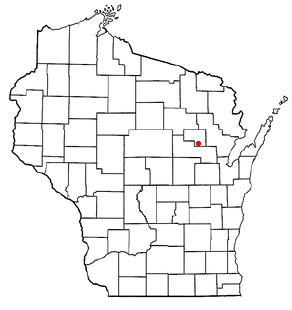
Keshena is the place to start if you want to understand Menominee County as more than a map line. It is the seat of government for the Menominee Tribe, and that makes the village a working center for tribal administration, archival research and cultural memory, not just a name on a road sign. The most useful part of that story is what you can do there now: look up family and tribal history, see how Menominee institutions are tied to place, and understand why preserving these records matters to civic life in the county.
Keshena as the county’s civic and cultural center
The Menominee Indian Tribe of Wisconsin describes its origin as beginning at the mouth of the Menominee River, about 60 miles east of the present Menominee Indian Reservation. The tribe says that is where its five clans, the Bear, Eagle, Wolf, Moose and Crane clans, were created. That geography matters because it shows Keshena as part of a larger story of movement and continuity, not an isolated headquarters on the reservation.
The scale is just as important. Recollection Wisconsin notes that the Menominee once occupied more than 10 million acres across what is now Wisconsin and Upper Michigan. That figure gives immediate context to the tribe’s presence in Menominee County today. Keshena sits at the center of that continuity, where government, history and identity overlap in everyday public life.
Where to begin your research
The best starting point for family history, local history and tribal history is the S. Verna Fowler Academic Library/Menominee Public Library. The library is a joint venture between the College of Menominee Nation, the Menominee Tribe and Menominee County, which makes it a rare civic partnership rooted in shared access to knowledge. For anyone trying to learn how names, places and events connect across generations, that structure matters as much as the collections themselves.
The library’s special collections preserve materials from the past of the Menominee people, the College of Menominee Nation and local history. Its holdings include documents, photographs, recordings, maps and other resources that let researchers move beyond broad summaries and into primary material. In practical terms, that means a resident tracing a family line, a student studying tribal governance or a visitor trying to understand the county’s history all begin in the same place.
What the archives hold
The online finding aids make the library’s archival value even more concrete. One digitized guide covers the Menominee Historical Collections Clippings and Scrapbooks, dated from 1967 to 23 November 2012, and describes the collection as 18 cubic feet. Another finding aid covers the Collection of Menominee Nation News newspapers from 1992 to 2013, with an extent of 9 cubic feet. Both are held in the Special Collections vault at the CMN S. Verna Fowler Academic Library/Menominee Public Library in Keshena.
Those details matter because they show how the history of Menominee County is preserved in usable form, not just in display cases. Clippings, scrapbooks and newspapers help researchers follow the public record over time, track names and events, and see how tribal and local life were documented as they happened. For anyone working on genealogy, community history or a school project, those materials can turn a general search into a specific answer.
The library’s reading-room materials widen that path further by covering a broad range of topics. The result is a research space that functions as part archive, part community repository and part civic classroom, all within Keshena.
A second archival layer in Chicago
Keshena’s documentary record does not stop at the local library. The National Archives at Chicago maintains a Keshena/Menominee Agency finding aid with records spanning 1908 to 1961. The file includes correspondence, settlements and administrative records, which adds a government record trail to the local collections in Keshena.
That broader archival layer gives researchers another way to connect the present reservation community with earlier federal administrative history. For local readers, it is a reminder that Menominee history has been recorded in multiple institutions, and that the record of tribal life extends across local, regional and national repositories.
The tribal government in plain view
Keshena is also where tribal administration is physically located. The Menominee tribal administration page lists a Tribal Archivist, Monea Warrington, and gives the tribal administration offices at W2908 Tribal Office Loop Road, Keshena, WI 54135. That address is more than a mailing point. It shows that the work of preserving records, managing offices and maintaining tribal governance is happening in the same community that anchors the county’s historical memory.
For residents, that means the government of the Menominee Tribe is not abstract. It is rooted in a specific place with named staff, office space and public-facing responsibilities. For visitors trying to understand how tribal sovereignty functions on the ground, Keshena offers a direct view of that structure.
Why this space matters now
Keshena’s value lies in how many civic roles it holds at once. It is the seat of government, the location of a shared library, the home of special collections and a point of access to archival records that stretch from the early 20th century into the modern era. That combination makes it one of the most important places in Menominee County for understanding how land, governance and identity fit together.
It also makes Keshena a practical destination, not just a symbolic one. A visitor can research a family name, a student can study local government and tribal history, and a resident can use the library and archives as tools for learning about the community’s past and present. In Menominee County, preserving Keshena means preserving the institutions that help explain who the Menominee are, where they came from and how their civic life continues to operate in the same place.
This article was produced by Prism’s automated news system from verified source data, official records, and press releases, then run through automated quality and moderation checks before publishing. The system is built and supervised by the people who set the standards it runs under. Read our full AI policy.
Did this article answer your question?