Menominee North Pier Lighthouse marks century of harbor history
The Menominee North Pier Lighthouse still shows how the county’s harbor was built for shipping and river traffic. Its tours and waterfront setting keep Menominee’s working-water story in view.
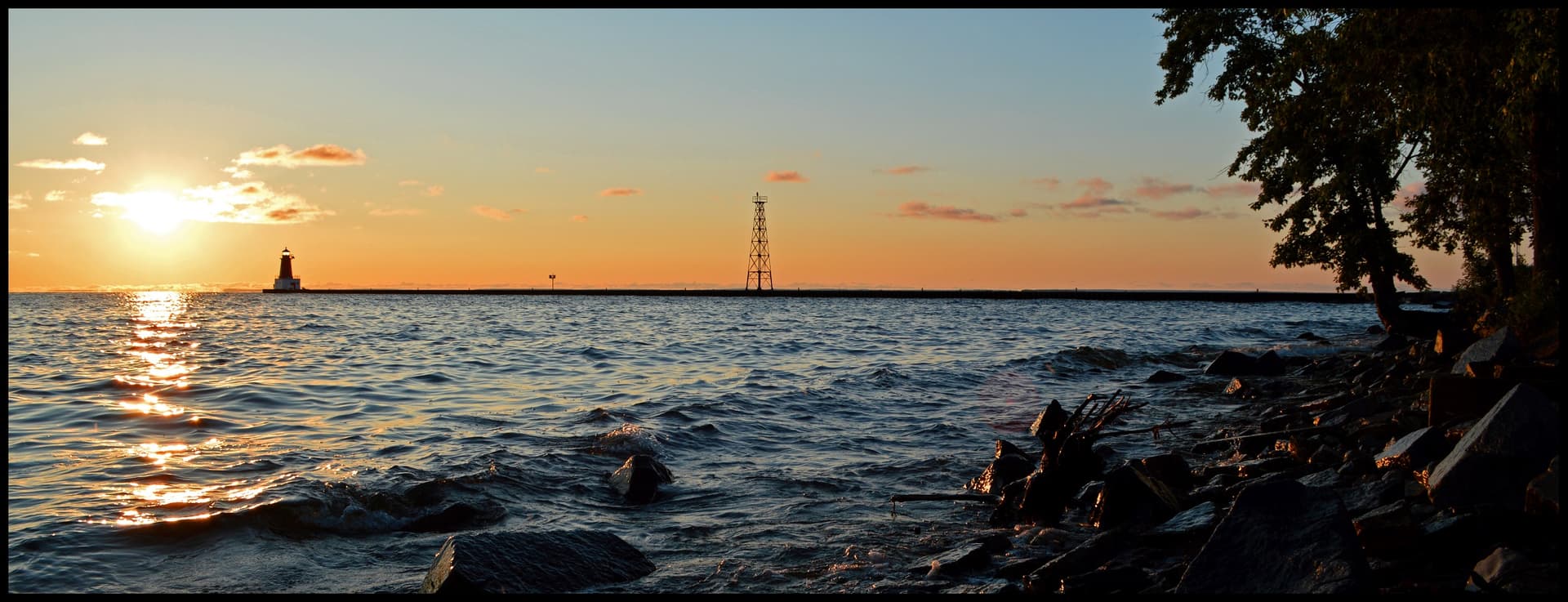
The Menominee North Pier Lighthouse sits at the mouth of the Menominee River as more than a postcard landmark. Built to guide vessels into the harbor, it still explains how shipping, river travel, and waterfront identity are tied together in Menominee County and in Menominee, Michigan. The site’s long record of relocations, paint changes, and light upgrades makes the pier a clear marker of how the harbor has changed without losing its working purpose.
A lighthouse built for the harbor, not just for the view
The original light station went up in 1877 on the northern end of the mouth of the Menominee River. It was a two-story cast-iron structure known then as the Menominee Pierhead Lighthouse, and it was painted white with a ruby-glass lantern that threw a red beacon visible from 12 miles away. That range mattered because the light was doing practical work: it was helping captains find the river entrance and the harbor mouth in a place where the shoreline, channel, and water traffic all had to line up.
That early design also tells a larger story about the Menominee waterfront. A harbor light at the mouth of a river speaks to commerce, timber, fishing, and lake traffic all at once, because those were the kinds of movements that depended on a safe approach to shore. In that sense, the lighthouse was part of the county’s working-water infrastructure from the start, not an ornament added later for visitors.
How the structure changed with the channel
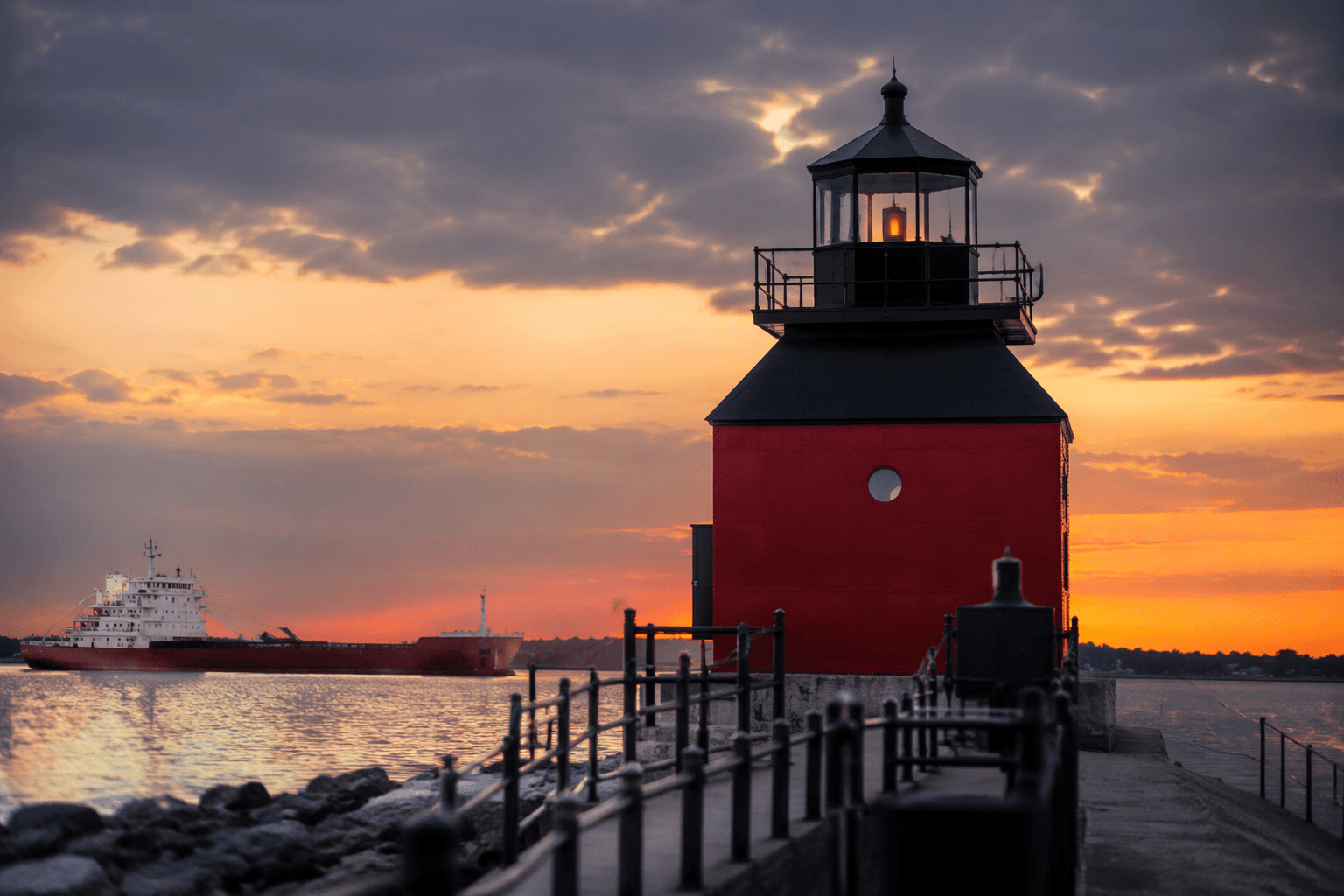
Over the next decade, the lighthouse was relocated further offshore twice, a reminder that Great Lakes harbor structures often had to move as conditions changed. Shorelines shift, channels are adjusted, and navigation routes evolve, especially where a river meets a lake. The Menominee light station followed those changes instead of resisting them.
By 1917, the lighthouse had taken on the red paint scheme that people recognize today. A Coast Guard historical page identifies the site as the Menominee North Pier Lighthouse, and that name captures the way the structure now reads as part of the pier itself rather than a detached beacon onshore. A lighthouse-history source adds another milestone: the current structure’s still-operational light was lit in 1927, and the light was automated in 1972. Taken together, those dates show a landmark that has moved from hand-operated harbor aid to modern navigation support while remaining rooted in the same stretch of water.
What visitors can do at the site
The lighthouse is also a practical stop for anyone tracing the county’s harbor history on foot or by car. A tourism listing says the Menominee North Pier Light Station is accessible by car and a short, easy walk, which makes the pier a straightforward add-on to a day along the waterfront. The same listing says the historical society offers interior tours in summer, organized by Skip Heckel, turning the site into a living public-history space rather than a view-only overlook.
That matters because the lighthouse is not set up like a traditional museum. A 2023 TripAdvisor review described it as a pier-head lighthouse without a museum visitors can enter freely, which is useful expectation-setting for anyone planning a stop. The site works best as an exterior landmark with seasonal interpretive access, not as an all-day indoor attraction.
Why the lighthouse still explains Menominee County
The real value of the Menominee North Pier Lighthouse is what it reveals about the harbor around it. The river mouth has long mattered for shipping and river travel, and the light’s original ruby beacon, its offshore relocations, and its later automation all point to a shoreline that was used, adjusted, and relied on. The building’s history is also a reminder that the working-waterfront story is still the most useful way to understand the harbor, because the same waters that once guided freight and fishing boats still shape how people see the area.
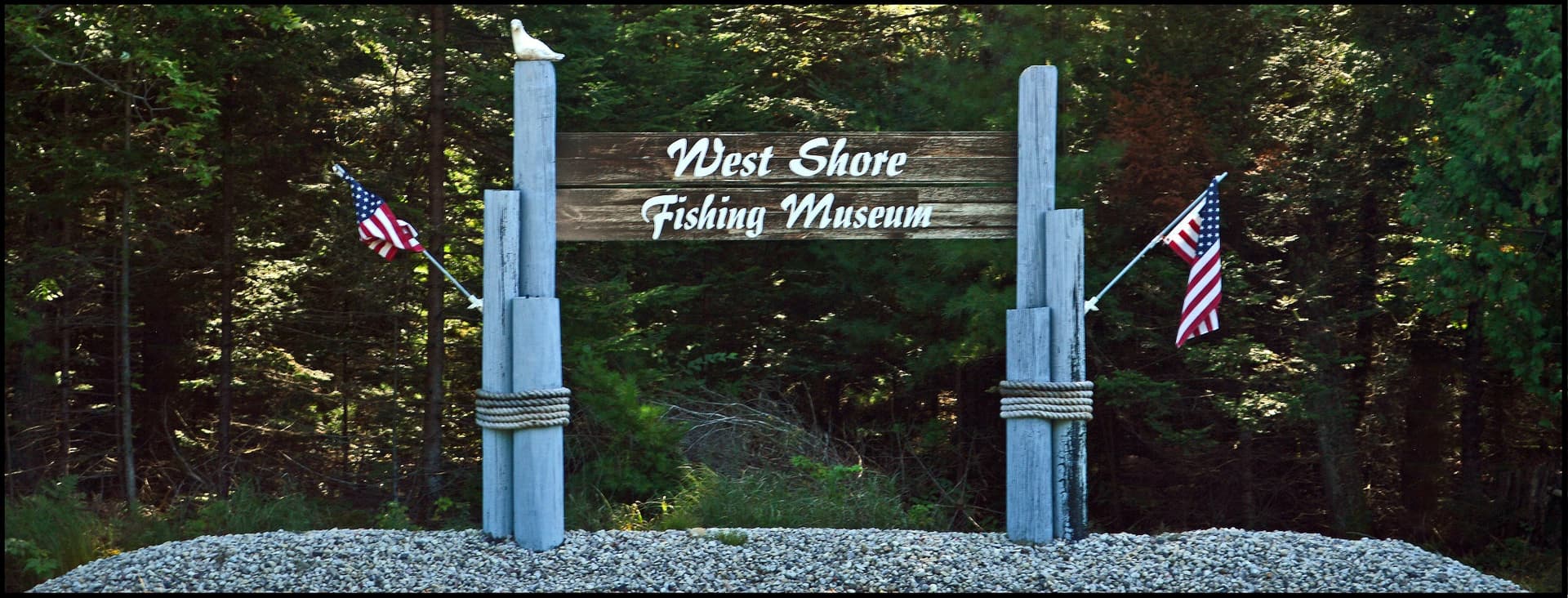
For Menominee County, that story does not sit in one place. It extends along the river and across local heritage sites that help preserve the region’s shoreline memory, including the West Shore Fishing Museum and the Chappee-Webber Learning Center. Together, those places show that the county’s maritime past has been kept visible through multiple public stops, not just one signature tower.
The lighthouse’s dated milestones make that continuity especially easy to read. Built in 1877, moved offshore twice in the 1880s, repainted by 1917, relit in its current structure in 1927, and automated in 1972, it reflects more than a century of harbor engineering and public safety. The result is a landmark that still connects the county’s present waterfront to the daily work that first gave the harbor its importance.
This article was produced by Prism’s automated news system from verified source data, official records, and press releases, then run through automated quality and moderation checks before publishing. The system is built and supervised by the people who set the standards it runs under. Read our full AI policy.
Did this article answer your question?