Miami-Dade cyclosporiasis cases nearly triple in one week
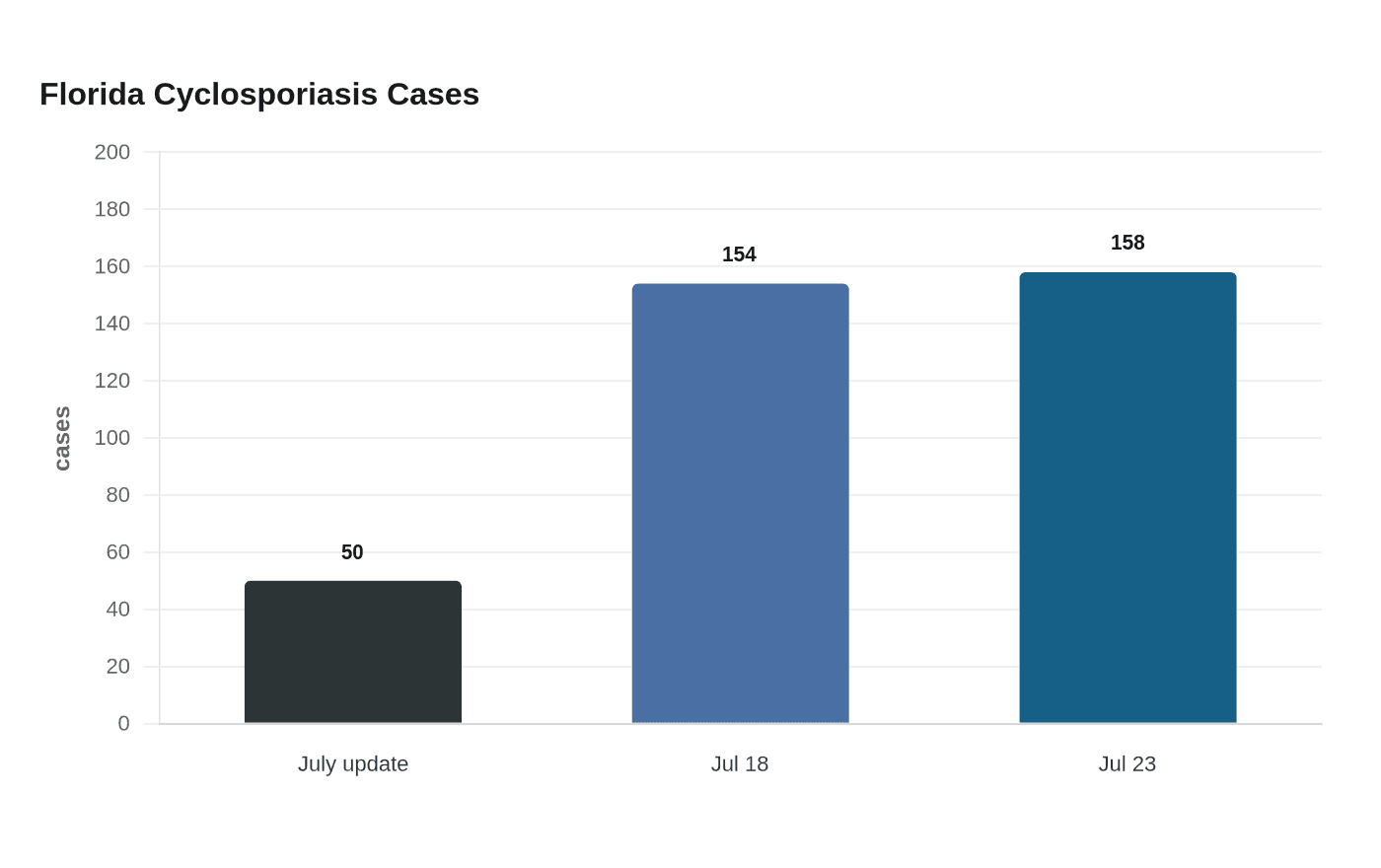
Miami-Dade’s cyclosporiasis count nearly tripled from the six cases reported July 4, and Monroe County logged its first case as Florida reached 94.

Florida health officials are warning Miami-Dade families to take the spike in cyclosporiasis seriously after state data covering May 1 through July 11 showed the county with the highest number of confirmed cases in Florida. Miami-Dade’s total nearly tripled from the six cases reported there on July 4, and the county overtook Lee County as the state’s hardest-hit area.
Cyclosporiasis is an intestinal illness caused by the parasite Cyclospora cayetanensis. It can bring weeks of watery diarrhea, nausea, stomach cramps, bloating and gas, and the illness is often linked to fresh produce. The Centers for Disease Control and Prevention says cyclosporiasis is seasonal and cyclical in the United States, and its surveillance page and health advisory coverage have underscored that the parasite can be hard to track, which means the real number of infections may be higher than the count that reaches doctors and state databases.
The spread is not confined to one county. Monroe County reported its first case, showing the illness had moved deeper into South Florida as Florida’s confirmed total climbed to 94 cases through July 11, up from at least 50 cases reported statewide as of July 4. Earlier counts included five cases in Broward County and six in Miami-Dade County. By mid-July, Miami-Dade had the most confirmed infections in the state.
Public-health advice tied to the outbreak has focused on food safety and hydration. Related guidance urged people to avoid raw produce during the outbreak and to eat cooked or steamed fruits and vegetables instead. The parasite spreads through contaminated food and water, poor hand hygiene, and close contact in shared settings, which makes households, day cares, schools and other communal spaces especially important places to watch for illness. Recreational water can also be a risk if people swallow it.
Health officials are urging people to seek medical advice if diarrhea lasts, becomes severe or signs of dehydration appear, especially in older adults, young children and people with weakened immune systems. In a county the size of Miami-Dade, even a week-to-week jump like this can send more people to urgent care and prompt more testing while officials try to identify the source of exposure.
This article was produced by Prism’s automated news system from verified source data, official records, and press releases, then run through automated quality and moderation checks before publishing. The system is built and supervised by the people who set the standards it runs under. Read our full AI policy.
Did this article answer your question?