Alligator Reef sanctuary protects Monroe County’s vibrant marine life
A lighthouse may draw the eye, but Alligator Reef’s protected waters shape how Monroe County boats, dives and tracks reef health.
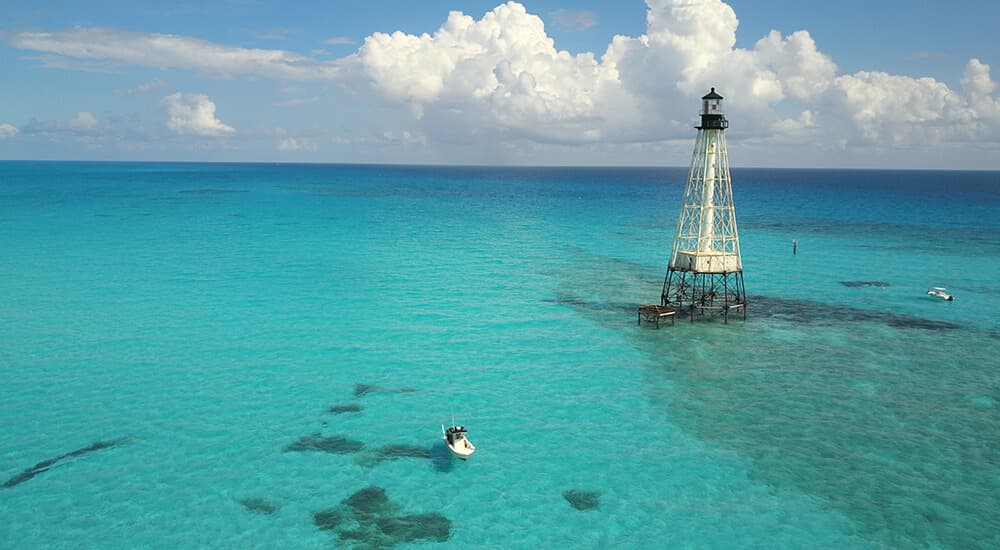
The postcard view at Alligator Reef hides the real story. Beneath the 136-foot lighthouse, a 0.32-square-mile sanctuary supports 632 known fish species, draws local dive and snorkel boats, and sets hard rules for how Monroe County uses the water.
A reef that functions like local infrastructure
Alligator Reef sits about 4.5 miles east of Indian Key, in the stretch of water between the shallow reefs of the Upper Keys and the deeper reefs of the Middle Keys. That position matters because the reef is more than a scenic stop: it is a rectangular bank reef that protects a spur-and-groove system, a reef crest, and part of the northeast rubble ridge. Some of the water there is only about 8 feet deep, which makes the site accessible to snorkelers and also places it squarely in the path of everyday boat traffic.
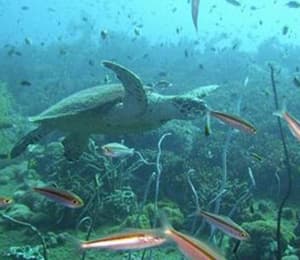
The reef’s fish count shows why it draws so much attention. A pioneering 1968 survey documented 516 fish species there, and later updates pushed the total to 632 known species by 2020. For Monroe County, that makes Alligator Reef a working benchmark for reef life, not just a pretty spot on the horizon.
What the sanctuary rules mean on the water
Alligator Reef is one of 18 Sanctuary Preservation Areas in the Florida Keys National Marine Sanctuary, and those zones together cover about 4.97 square nautical miles. The purpose is straightforward: protect shallow reefs along the reef tract, where the pressure from anchors, fishing gear, and foot traffic can do fast damage.
At Alligator Reef, fishing is prohibited. So is touching or standing on coral, anchoring on coral, and anchoring where a mooring buoy is available. Those rules are not abstract regulatory language for a distant file cabinet, because mooring buoys are what keep boats from scraping the bottom in a place that is shallow enough to attract local dive boats, snorkelers, and tourists.
The larger sanctuary framework is just as important. The Florida Keys National Marine Sanctuary was designated on November 16, 1990, now protects 4,539 square miles of waters around the Keys, and contains more than 6,000 animal species. NOAA’s Restoration Blueprint completed the first major update of sanctuary regulations since 1997, underscoring how much the management of these waters continues to evolve.
Why the fish counts matter now
The long record at Alligator Reef helps show how much the site has changed and why it is watched so closely. A reef that has supported 516 documented species in 1968 and 632 known species by 2020 is not a static museum piece. It is a biological crossroads where shallow-water and deeper-water habitats meet, and where changes in temperature, storm damage, and human use can show up in the species list.

That context matters even more after the summer of 2023, when very high water temperatures caused widespread coral bleaching and mortality across the Florida Keys. Any local claim about coral cover at Alligator Reef has to be read with that reality in mind. The reef’s value is not only in how it looks in a calm-weather photo, but in whether it continues to support the fish, coral, and habitat structure that keep the sanctuary functioning.
Nearby reefs help place it in a broader system. Molasses Reef is among the most heavily visited dive reefs in the Upper Keys, and Conch Reef is known for one of the best developed reef walls in the Keys. Alligator Reef fits into that same protected network, where zoning, mooring buoys, and travel patterns help determine which spots can absorb visitors and which need tighter protection.
The lighthouse that turned the reef into a landmark
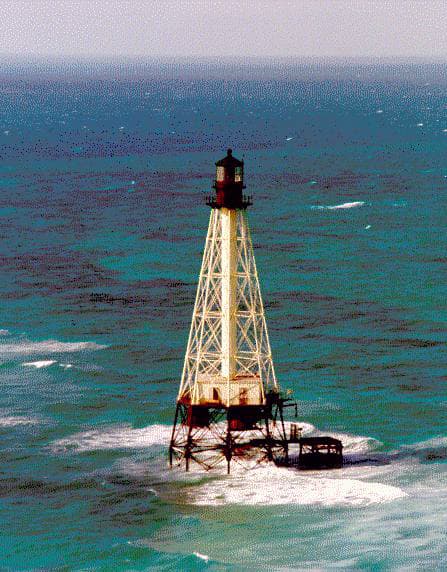
Alligator Reef Lighthouse gives the site its most recognizable silhouette. The U.S. Coast Guard Historian’s Office dates the tower to 1873, describes it as a 136-foot skeletal iron lighthouse near Indian Key and the Matecumbe Keys, and says it was named for the U.S. Navy schooner Alligator, which ran aground on the reef in 1822. The first light was lit on November 25, 1873, with George Richard Billberry serving as the first keeper.
The structure was automated in 1963 and still has its original fourth-order Fresnel lens. That combination of old hardware and present-day visibility is part of why the lighthouse continues to anchor Monroe County’s sense of place. Drivers along the Overseas Highway still spot the tower offshore, and the reef below it carries the name and memory of the 1822 wreck that gave the site its identity.
Restoration, tourism, and the people who still use it
Friends of the Pool has turned the lighthouse into a living local project, launching a multimillion-dollar restoration effort that keeps the site in public conversation. WLRN reported in 2023 that the group was spending $6 million to restore and preserve the lighthouse, and the campaign has since grown into a multiyear grassroots effort with engineers taken offshore to assess the structure and local fundraising events tied to the work.
The annual Swim to Alligator Lighthouse has become one of the clearest signs that the site still belongs to Monroe County, not just to history books. The event is an 8-mile roundtrip open-water swim from Islamorada, with kayakers providing support, and it has drawn more than 300 swimmers in one recent year and nearly 500 in later coverage. That scale matters because it shows the lighthouse and reef still operate as recreation, tourism, and community identity all at once.
For boaters, snorkelers, divers, and the marine businesses that serve them, Alligator Reef is not just a landmark to photograph. It is a protected working reef, a visible test of how well Monroe County balances access with restraint, and one of the clearest reminders that the future of the Keys depends on what happens below the waterline.
This article was produced by Prism’s automated news system from verified source data, official records, and press releases, then run through automated quality and moderation checks before publishing. The system is built and supervised by the people who set the standards it runs under. Read our full AI policy.
Did this article answer your question?