Fort Jefferson stands guard over remote Dry Tortugas National Park
Fort Jefferson rewards the longest day trip in Monroe County with a sea fortress, strict logistics, and a living lesson in defense and preservation.
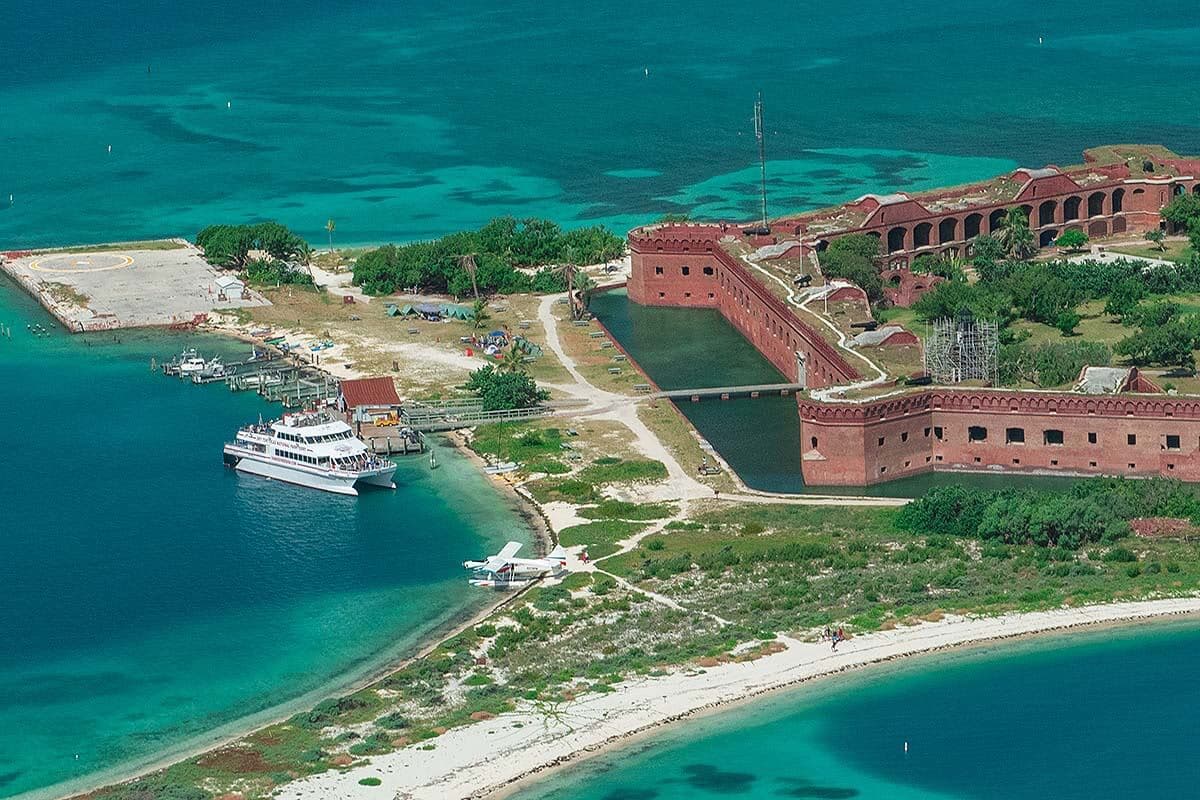
The trip to Fort Jefferson begins as a logistics test long before the first brick wall comes into view. Seventy miles west of Key West, Dry Tortugas National Park is reachable only by boat or seaplane, and the park’s remoteness is the point: visitors bring what they need, then step into one of Monroe County’s most isolated landmarks.
Why the Dry Tortugas feel so different
Dry Tortugas National Park covers 47,125 acres and includes seven keys, but less than 1% of that ground is dry land. The result is a landscape where water dominates every direction, the harbor feels exposed to weather and distance, and Fort Jefferson on Garden Key seems to rise out of the Gulf of Mexico with almost no visual buffer at all.
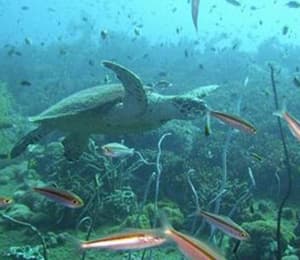
The park’s setting also shapes what visitors actually see. Bush Key has seasonal closure areas to protect nesting birds. Blue water, coral reefs, marine life, and bird life are part of the experience.
Fort Jefferson and the military logic of the Keys
Fort Jefferson was built to do a specific job: protect one of the most strategic deepwater anchorages in North America and help control maritime traffic through the Gulf and the Straits of Florida. In the 19th century, that meant standing watch over a major shipping route, shielding American waters from enemies, and giving ships a place to resupply, refit, or ride out storms.
That mission explains the fort’s scale. Fort Jefferson is the largest all-masonry fort in the United States and one of the most ambitious coastal defenses ever attempted in this country. More than 16 million bricks went into the project, and construction stretched across more than 30 years in the mid-19th century. Supply problems, subsidence, and the Civil War slowed the work so badly that the fort was never finished, in part because leaders feared that adding more brick and cannon would worsen settling and strain the cistern system.

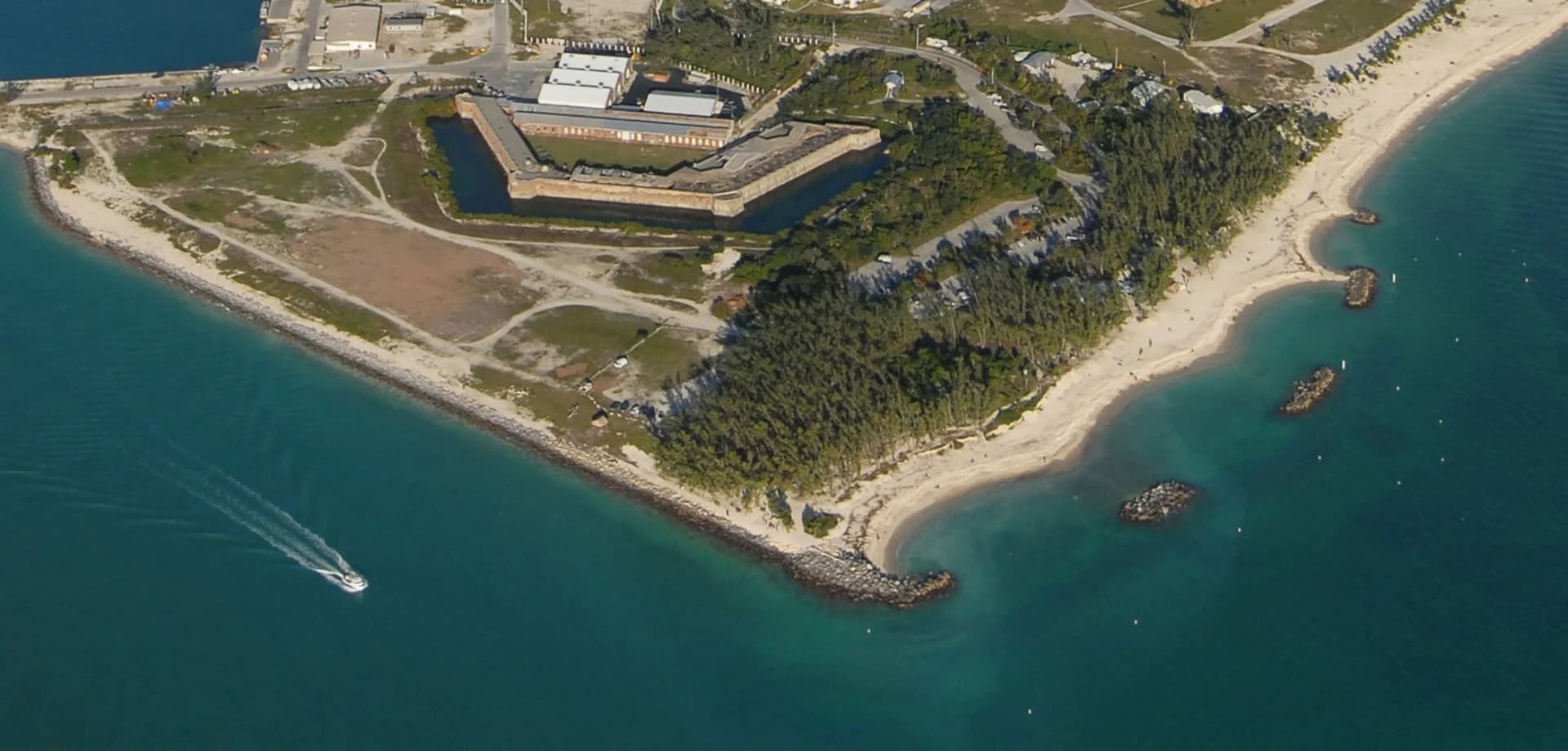
The fort occupies most of Garden Key. It was built as a third-system coastal fortification. Monroe County once sat inside a national defense plan shaped by naval power, blockade strategy, and the hard realities of seaborne supply.
What the visitor experience really requires
A trip to Dry Tortugas is not casual, and the park makes that plain. There is no car access, and there is no food, water, or fuel available in the park. Planning ahead matters because every visitor has to solve the same basic problem: how to reach a place that exists almost entirely beyond normal supply lines.
The park entrance fee is $15 per person for seven consecutive days, with visitors 15 and under exempt. Camping on Garden Key is primitive, and advance reservations are required for large groups. Seaplane transportation does not include camping gear, so anyone staying overnight has to arrive prepared for a remote and exposed site where the weather can change quickly and comforts are limited.
A prison, a political relic, and a national monument
Fort Jefferson’s history is not confined to military theory. During and after the Civil War, the U.S. government used the fort as a prison for hundreds of military deserters and convicts, mostly from Union forces. The best-known prisoner was Dr. Samuel A. Mudd, the physician convicted by military commission for helping John Wilkes Booth after Abraham Lincoln’s assassination.
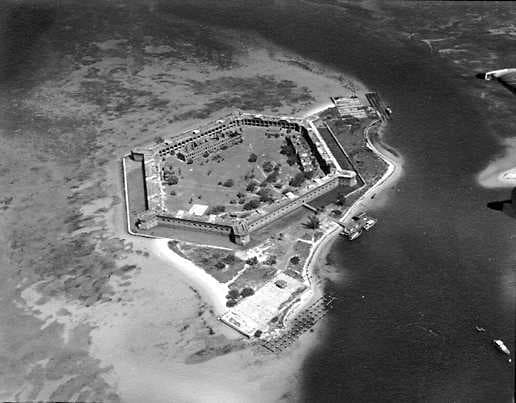
Mudd arrived at Fort Jefferson in July 1865 with three other conspirators and spent much of his sentence on the second tier above the sally port. His assistance to Booth is fixed, while historians continue to debate how much he knew in advance.
The fort also saw brief use during both world wars, and in 1898 the USS Maine departed the Tortugas on its fateful mission to Havana, Cuba. On January 4, 1935, Franklin D. Roosevelt designated Fort Jefferson National Monument under the Antiquities Act. Congress later expanded the site and redesignated it Dry Tortugas National Park on October 26, 1992.
Why preservation matters as much as history
The Dry Tortugas are a preservation problem as much as a historic one. The National Park Service is mandated to protect, stabilize, restore, and interpret Fort Jefferson for future generations, and the threats are constant: salt, heat, destructive weather, and water all work against the masonry.
The moat wall and counterscarp required repairs after Hurricane Irma in 2017 and Hurricane Ian in 2022, with additional hurricane damage in 2024. The park planning notice sets a timeline that could keep the moat wall closed until fall 2026.
This article was produced by Prism’s automated news system from verified source data, official records, and press releases, then run through automated quality and moderation checks before publishing. The system is built and supervised by the people who set the standards it runs under. Read our full AI policy.
Did this article answer your question?