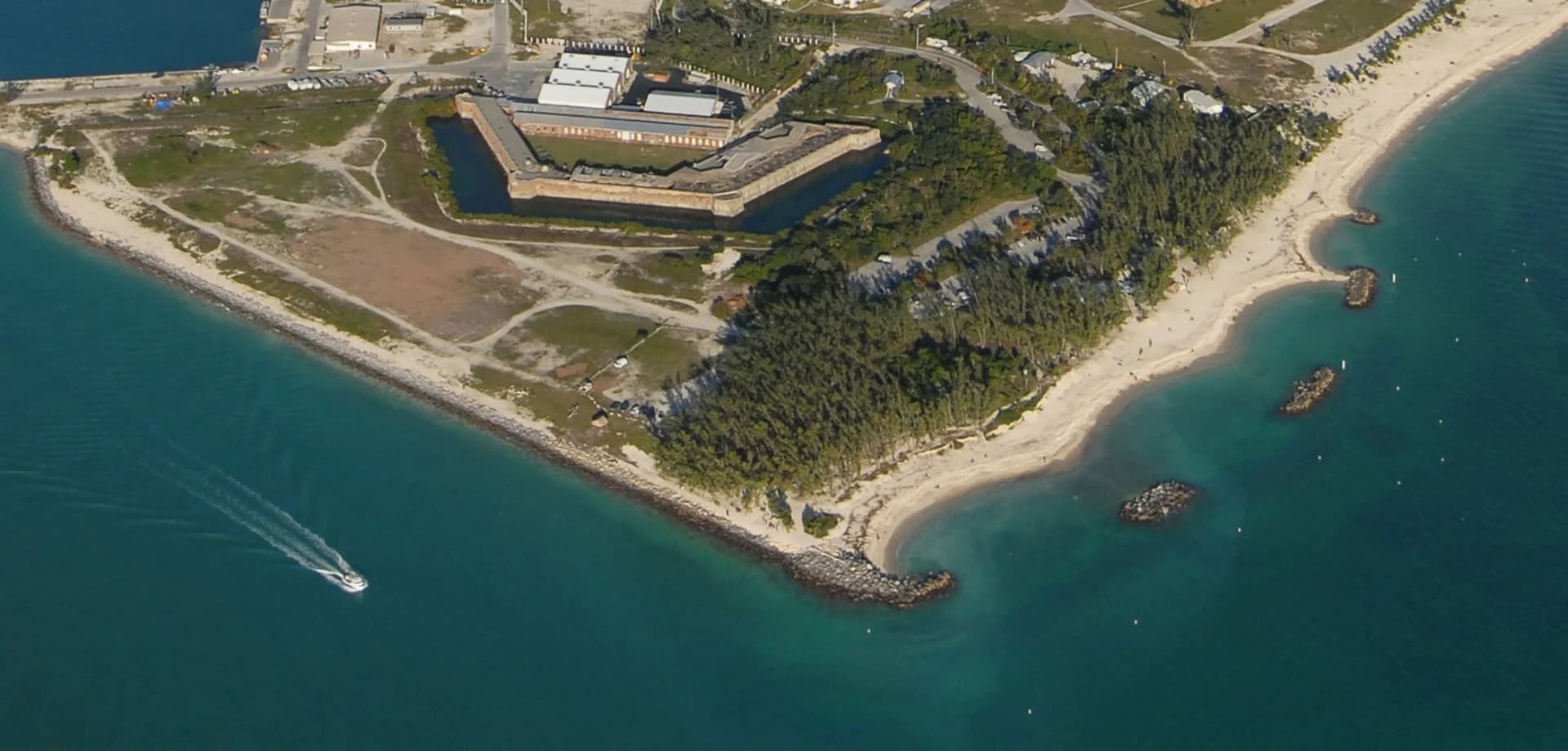
Hemingway Home in Key West stands as a literary landmark
Key West’s Hemingway Home sells the island’s identity in one address: a 1851 house, a landmark pool, and nearly 60 polydactyl cats.

At 907 Whitehead Street, Key West turns a single house into a full civic brand. The Hemingway Home & Museum folds together Ernest Hemingway’s years on the island, a Spanish Colonial house built from native rock, a famous pool, and the six-toed cat lore that keeps the property in the public imagination long after the novelist left town.
How Hemingway ended up in Key West
Hemingway first arrived in Key West in April 1928, and the trip began with a delay that became part of the legend. His new Ford Roadster had not arrived, so he and Pauline stayed in an apartment above the Ford showroom on Simonton Street, a temporary arrangement that lasted long enough to become the start of a lasting connection to the island. A historic marker account identifies that first lodging as the Trev-Mor Hotel and Ford dealership complex, later known as Casa Antigua, and says Hemingway spent his mornings writing and his afternoons fishing.
After two seasons in Key West, Pauline’s Uncle Gus purchased the Whitehead Street house for the couple in 1931. Britannica places Hemingway and his second wife, fashion journalist Pauline Pfeiffer, in the house from 1931 until their divorce in 1940, which gives the address a clear place in both his personal and literary timeline. The result is a house that is not just associated with Hemingway, but embedded in the years when his Key West identity took shape.
A house that carries Key West history
The house itself predates Hemingway by decades. Built in 1851 in Spanish Colonial style from native rock, it reflects the kind of construction that made sense in the Florida Keys, where material, climate, and hurricane exposure shaped nearly every architectural decision. The museum says the home was restored and remodeled in the early 1930s, which helped turn an older structure into the preserved site visitors see today.
That preservation status matters. The home is now a National Historic Landmark, a designation the National Park Service uses for places recognized for national significance, with the official program designed to guide preservation work at such sites. The museum says the house is visited by thousands of people, and Britannica describes it as the most popular tourist attraction in Key West, which helps explain why 907 Whitehead Street remains one of the island’s most recognizable addresses.
- the Spanish Colonial lines and native-rock construction
- the early 1930s restoration that shaped the present-day museum
- the way the house reads as both a residence and a landmark
- the steady visitor traffic that has made it a central stop in Old Town
What to notice first when you arrive:
The pool that became part of the story
The pool on the grounds is one of the site’s strongest visual hooks because it is both a feat of construction and a piece of family mythology. The museum says it was built in 1937-38 at a cost of $20,000, and that it was the first in-ground pool in Key West and the only pool within 100 miles at the time. In a place where salt air and shallow lots complicate almost every building project, the pool remains a marker of ambition as much as luxury.
The excavation itself is part of the attraction. The grounds page says workers dug through solid coral to create a hole 24 feet wide and 60 feet long, with a depth that varies from 10 feet to 5 feet at the south end. A penny is embedded in the patio to memorialize Hemingway’s complaint about the cost, a small detail that gives the site its most famous joke and makes the pool feel like a story you can walk around.

That mix of engineering and anecdote helps explain why the pool resonates far beyond the house. It is a physical reminder that the Hemingway home is not a frozen shrine, but a place where the island’s materials, household finances, and local lore all became part of the public narrative.
The cats that keep the house alive
If the house and pool give the site structure, the cats give it personality. The museum says it is home to nearly 60 polydactyl cats, many descended from Snow White, Hemingway’s original six-toed cat. The museum also notes that polydactyl cats are not a particular breed, which matters because the cat population is less a novelty act than an ongoing inheritance tied to the house’s history.
The origin story is classic Key West. Hemingway was given a white six-toed cat by a ship’s captain, and the museum says some of the cats that live on the grounds are descendants of that original animal, Snow White. Because Key West is a small island, the museum also says some local cats may be related, which keeps the place’s feline reputation alive outside the gates of the property.
The cats do more than entertain visitors. They transform the museum from a preserved home into a living landscape, one where the identity of the place depends on what still moves across the grounds. That is part of why the property feels less like a static exhibit and more like a functioning cultural landmark.

Why this address still defines Key West
The Hemingway Home endures because it connects several versions of Key West at once: the literary island, the architectural island, and the playful island that has long packaged eccentricity as authenticity. The Florida Department of State ties Hemingway’s Key West years to major works including A Farewell to Arms, To Have and Have Not, For Whom the Bell Tolls, and The Snows of Kilimanjaro, and it links that legacy to the annual Hemingway Days celebration each July. Those works gave the island a place in American literature; the house gave that reputation a fixed address.
Key West’s literary identity reaches well beyond Hemingway. The city’s creative lineage also includes Tennessee Williams, Elizabeth Bishop, Robert Frost, Shel Silverstein, Wallace Stevens, Ralph Ellison, and James Merrill, along with institutions such as the Key West Literary Seminar. Even so, the Hemingway house remains the site most visitors associate with the island’s writing history because it compresses so many of its themes into one stop: accident, ambition, preservation, and eccentric charm.
That is why 907 Whitehead Street still sells Key West to the world. The architecture says permanence, the pool says ingenuity, the cats say folklore, and Hemingway’s years there give the address literary weight that keeps drawing thousands of visitors into the same old story, one that still shapes what Key West is expected to be.
This article was produced by Prism’s automated news system from verified source data, official records, and press releases, then run through automated quality and moderation checks before publishing. The system is built and supervised by the people who set the standards it runs under. Read our full AI policy.
Did this article answer your question?