John Pennekamp park marks America’s first undersea preserve in Key Largo
Pennekamp is Key Largo’s reef gateway and conservation landmark, spanning 70 square miles, drawing more than half a million visitors and adding a new $52.5 million aquarium.

John Pennekamp Coral Reef State Park covers about 70 nautical square miles in Key Largo. Monroe County points to it when it wants one site that explains the Keys: reef tourism, conservation politics and everyday local use. The park stays open daily until sunset year-round and charges $8 per vehicle plus 50 cents per person. Florida State Parks still promotes it as America’s first undersea park, a label that fits the way the park functions now, as the easiest entry point to the Florida reef system for visitors who want to see the coral without needing a private boat or advanced dive experience.
How Key Largo became the first undersea preserve
The park’s origin story starts with a warning from the reef itself. At a 1957 biological conference focused on South Florida conservation, Dr. Gilbert Voss described damage caused by souvenir collecting and other exploitation. His push, combined with support from Miami Herald assistant editor John D. Pennekamp, helped build the political momentum that turned concern into protection.
The state moved first. Florida designated a 75-square-mile offshore preserve, and Governor LeRoy Collins granted control in 1959 through the Florida Board of Parks and Historic Memorials. President Dwight D. Eisenhower then signed a proclamation in 1960, and Collins announced the park’s current name at the Dec. 10, 1960 dedication. The state dedicated the Atlantic waters off Key Largo in 1960, the federal sanctuary followed after Florida changed its sea limit in 1974, and the Key Largo National Marine Sanctuary was established in 1975.
What the park offers today
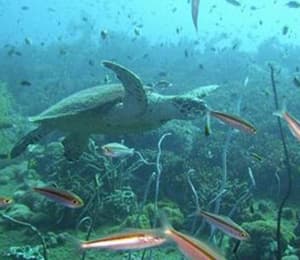
Pennekamp still works as both a day trip and a full waterfront outing. Visitors come for glass-bottom boat tours, scuba and snorkeling access, canoeing and kayaking, short trails through tropical hammocks and mangrove swamps, a beach and a set of exhibits built to explain why the reef matters.
Inside the visitor center, the park’s environmental education spaces make the experience broader than a boat ride. The center includes a 30,000-gallon saltwater aquarium, natural-history exhibits and a theater where visitors can watch nature videos. Guided walks on the Mangrove and Wild Tamarind trails give the park a land-side route for families, school groups and anyone who wants a closer look at the hammock and mangrove habitats that shape Key Largo’s shoreline.
- The park is open daily until sunset, 365 days a year.
- Entrance costs $8 per vehicle, plus 50 cents per person.
- Fishing is allowed only in designated areas.
- The park’s official offerings include the Coral Cam and a Maritime Heritage Exhibit.
A few practical details define the visit:
Why Monroe County still has a stake in the reef
Pennekamp drew more than half a million annual visitors in 2018-2019, according to the Fish & Wildlife Foundation of Florida, a level that makes it one of the most visible tourism assets in the Upper Keys. That foot traffic feeds the businesses around Key Largo, and the same water that draws visitors is the water residents are trying to keep healthy.
The waters off Key Largo have served as an example of marine protected areas for decades. Coral reef restoration in the Florida Keys has expanded from a few hundred corals a year to hundreds of thousands, as bleaching, disease and ocean acidification continue to stress the reef tract. Mote Marine Laboratory says it has restored more than 216,000 corals to Florida’s Coral Reef.
A $52.5 million Discovery Center & Aquarium is being built at Pennekamp to replace the existing visitor center, aquarium and auditorium. The project includes interactive exhibits, wildlife observation areas and a coral restoration nursery overseen by Mote Marine Laboratory.
The Friends of John Pennekamp Coral Reef State Park also keeps that local connection alive. The group supports conservation, stewardship, education and recreation at Pennekamp and Dagny Johnson Key Largo Hammock Botanical State Park, and volunteers help with a native-plant nursery that supports restoration projects and native plant giveaways for Monroe County residents.
This article was produced by Prism’s automated news system from verified source data, official records, and press releases, then run through automated quality and moderation checks before publishing. The system is built and supervised by the people who set the standards it runs under. Read our full AI policy.
Did this article answer your question?