Long Key State Park protects rare Keys cactus barren habitat
Long Key State Park hides one of the Florida Keys’ rarest landscapes in plain sight. The bayside cactus barren shelters the jumping cactus and is being cleared back from encroaching hardwoods.

Long Key State Park holds one of the Florida Keys’ most fragile natural communities in a place many visitors pass without noticing: a cactus barren on the bayside of the island. It is one of the few remaining spots where the jumping cactus, Opuntia triacantha, still survives, and the plant exists only in the Florida Keys.
A rare habitat hiding inside a busy park
A cactus barren is not a desert scene of deep sand and giant saguaros. In the Keys, it is an open, mostly herbaceous community on rocky Key Largo limestone, with little soil, little leaf litter, and scattered shrubs. That thin, windswept surface supports a small set of plants adapted to lean conditions, including Florida Keys indigo, Cape Sable thoroughwort, wild cotton, and sky blue morning glory.
The habitat itself is rare enough to matter. The Florida Natural Areas Inventory describes Keys cactus barren as a community found on only six sites, and it flags the habitat as highly vulnerable to climate change impacts. NatureServe places the jumping cactus in an even narrower frame, estimating only 6 to 20 known element occurrences globally and noting that only a few are protected and managed.
Why the jumping cactus stands out
Opuntia triacantha is easy to miss because it is small. Florida State Parks says it grows to about 5.5 inches tall and carries long spines that make it memorable to anyone who brushes past it. That size is part of the story: this is not a towering plant forming a broad thicket, but a low, specialized cactus surviving in a narrow ecological niche.
The Institute for Regional Conservation has documented the species at Long Key State Park, National Key Deer Refuge, and some private properties in Monroe County. That scattered footprint underlines how little room the plant has left. NatureServe recorded just three Florida occurrences as of September 1990, a reminder that even within the Keys, the species has always been limited to a small number of places.
The Center for Plant Conservation adds another layer to the picture: there has been very little published information on the species, and it is aware of no scientific research on it. In practice, that means each surviving site becomes more important, because the plant’s biology, recovery, and long-term resilience are still poorly documented.
What pushed hardwoods into the barren
The threat at Long Key is not abstract. Florida State Parks says water-flow changes after construction of the Overseas Railroad in the early 1900s allowed hardwood trees to encroach on the cactus barren. That shift changed the ecology of the site by making it easier for taller, shade-producing species to move in and crowd out the low-growing plants that belong there.
Park staff and contractors are now removing those trees so the imperiled native plant community can recover. The work is a direct response to a landscape altered by infrastructure long ago, and it reflects a broader reality across the Keys: once hydrology changes, the plants that depend on open, rocky, sunlit ground can disappear quickly.

Long Key State Park’s management plan goes further, calling the cactus barren there one of the best examples of this rare habitat type in Florida. That makes the restoration effort more than local maintenance. It is protection for one of the clearest surviving examples of a landscape that once had more room across the island chain.
A park shaped by history, not just habitat
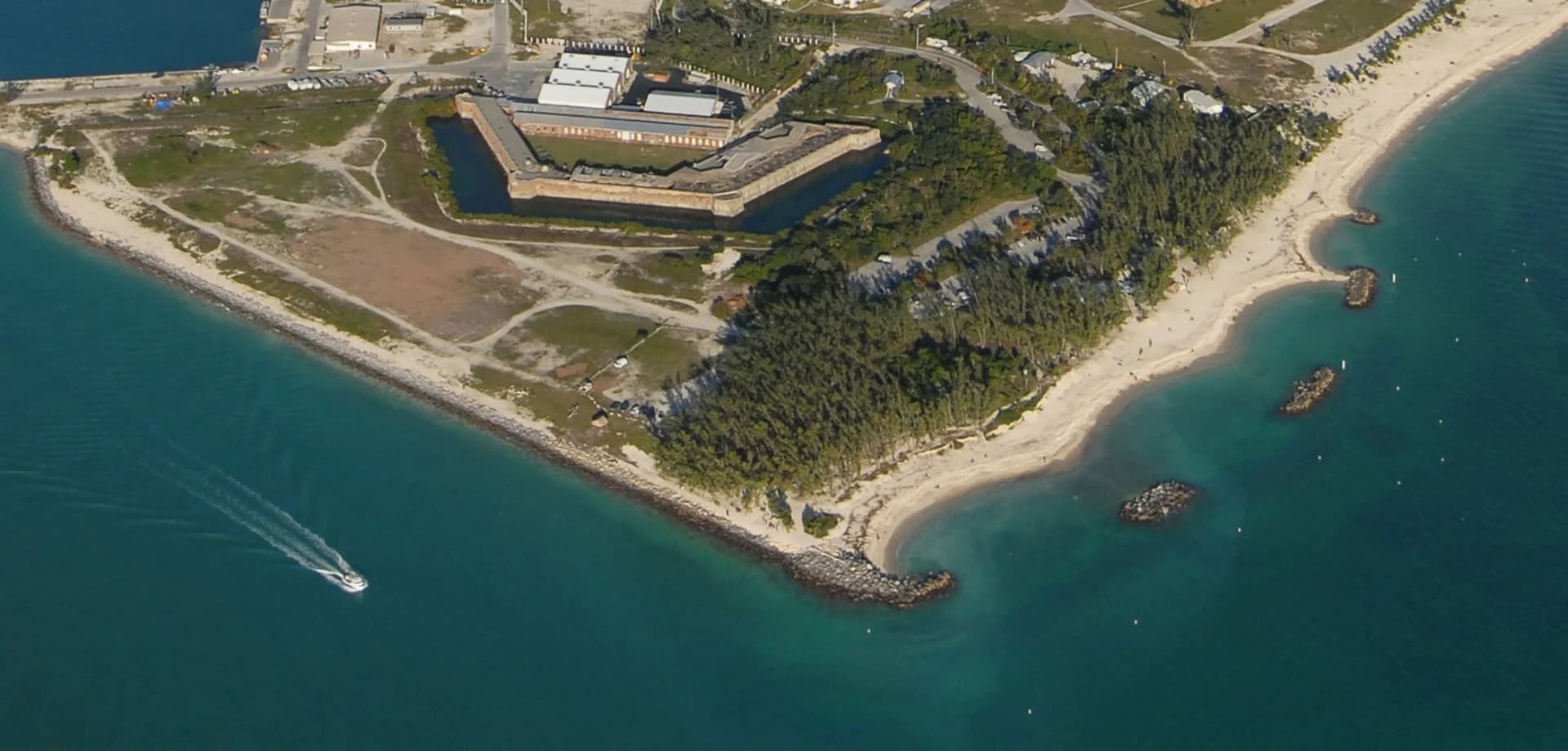
Long Key’s conservation story is tied to its human history. Florida State Parks says the island was part of Henry Flagler’s railroad era, and the glamorous Long Key Fishing Camp ended after the Labor Day Hurricane of 1935. The park itself officially opened in 1969, giving the site a modern public role after decades of transformation.
Its management status also shows how long the state has formally treated the area as conservation ground. The Long Key State Park unit management plan was recommended by the Acquisition and Restoration Council on August 20, 2004, and approved by the Office of Environmental Services on September 1, 2004. Those dates matter because they mark the park as a place where habitat protection has been part of the administrative record for years, not a recent reaction.
That history sits beside recreation. Florida State Parks says Long Key State Park offers kayaking, hiking, snorkeling, fishing, birding, and camping, making the rare habitat part of an active public landscape rather than an isolated preserve. The Golden Orb Nature Trail, one of the longest nature trails in the Florida Keys, cuts through that setting and can flood during high tides, a visible reminder of how exposed the park’s low ground is to water and weather.
Why the loss would matter for the Keys
If the cactus barren fades, the loss would be bigger than the disappearance of one small plant population. It would erase a living example of how the Florida Keys once looked in places where limestone, thin soils, salt exposure, and periodic flooding kept the vegetation low and open. In other words, it would weaken one of the island chain’s most distinctive natural identities.
That identity is tied to more than scenery. The cactus barren supports a tight community of rare and uncommon species, and its continued survival depends on active management, not neglect. When hardwoods take over, the structure of the habitat changes, light drops, and the specialized plants that need open ground lose their place.
Long Key State Park now stands as both a recreational destination and a conservation front line. Visitors come for the trail, the water, the birds, and the campsites. Hidden beside those uses is a rare ecological remnant on the bayside, where a 5.5-inch cactus with long spines still clings to a shrinking landscape that belongs to the Keys as much as any shoreline or bridge.
This article was produced by Prism’s automated news system from verified source data, official records, and press releases, then run through automated quality and moderation checks before publishing. The system is built and supervised by the people who set the standards it runs under. Read our full AI policy.
Did this article answer your question?