Truman Little White House, Key West landmark shaped U.S. history
Truman’s Key West retreat was where national power briefly centered, and its 1890 rooms still anchor Monroe County’s strongest presidential landmark.

The Truman Little White House is more than a famous old house at the edge of Old Town. It is the State of Florida’s only presidential site, and in Key West it still carries the weight of 175 days that Harry S. Truman spent there during his presidency from 1946 through 1952. That combination of national consequence and local geography is what makes the place matter in Monroe County.
Why this house still defines Key West history
The building began in 1890 as naval officers’ housing, which already ties it to the military life that shaped the Lower Keys. Later, it became Truman’s winter White House, a role that turned a waterfront outpost into a temporary center of American power. The museum says six American presidents have used the site, a detail that helps explain why the house sits in local memory as both a neighborhood landmark and a place where statecraft passed through Key West.
That history is not treated here as presidential trivia. It is part of the identity of the property itself, because the house tells a Monroe County story about how diplomacy, military planning, and retreat could all happen in the same compact building. Truman’s long time there, measured in months rather than a ceremonial visit, gave the site a depth that few historic homes in Florida can match.
What happened inside the winter White House
The most consequential moment attached to the property is the 1948 Key West Accord, when the Joint Chiefs of Staff met there and merged the Departments of War and the Navy into what became the Department of Defense structure. That meeting is the reason the house is remembered far beyond Key West, but it is also one of the clearest examples of how a local landmark can shape national policy from a small island setting. The site’s story links the architecture to a major federal reorganization, and that makes the house part of the record of postwar governance.

The museum also notes that Thomas Edison visited there, and that later presidents including Taft, Eisenhower, Kennedy, Carter, and Clinton came to the property. Those names do more than decorate a timeline. They show that the house remained useful to presidents long after Truman left, and that Key West kept a place in the ceremonial and practical life of the presidency.
For Monroe County, that matters because the site is not preserved as a remote monument. It is woven into a story of access, visibility, and civic memory, where national leaders came to a place that locals still recognize as part of the daily Key West landscape.
What the interior preserves
One reason the Truman Little White House feels different from many historic homes is the way it retains its original material character. The museum says roughly 80 to 90 percent of the furnishings are original to the site, which gives the rooms an immediacy that visitors can feel as soon as they step inside. The result is not a staged reconstruction of a presidential era, but a preserved setting that still carries the scale and atmosphere of Truman’s time.
That preservation helps the house serve two audiences at once. Visitors come for the presidential history, but they also encounter a domestic space that still feels rooted in the human side of governance, with the scale of a working house rather than a grand federal monument. In a city known for its porches, compact blocks, and dense historic fabric, that intimacy helps explain why the site remains so durable as a Monroe County attraction.
Where it sits in Key West life
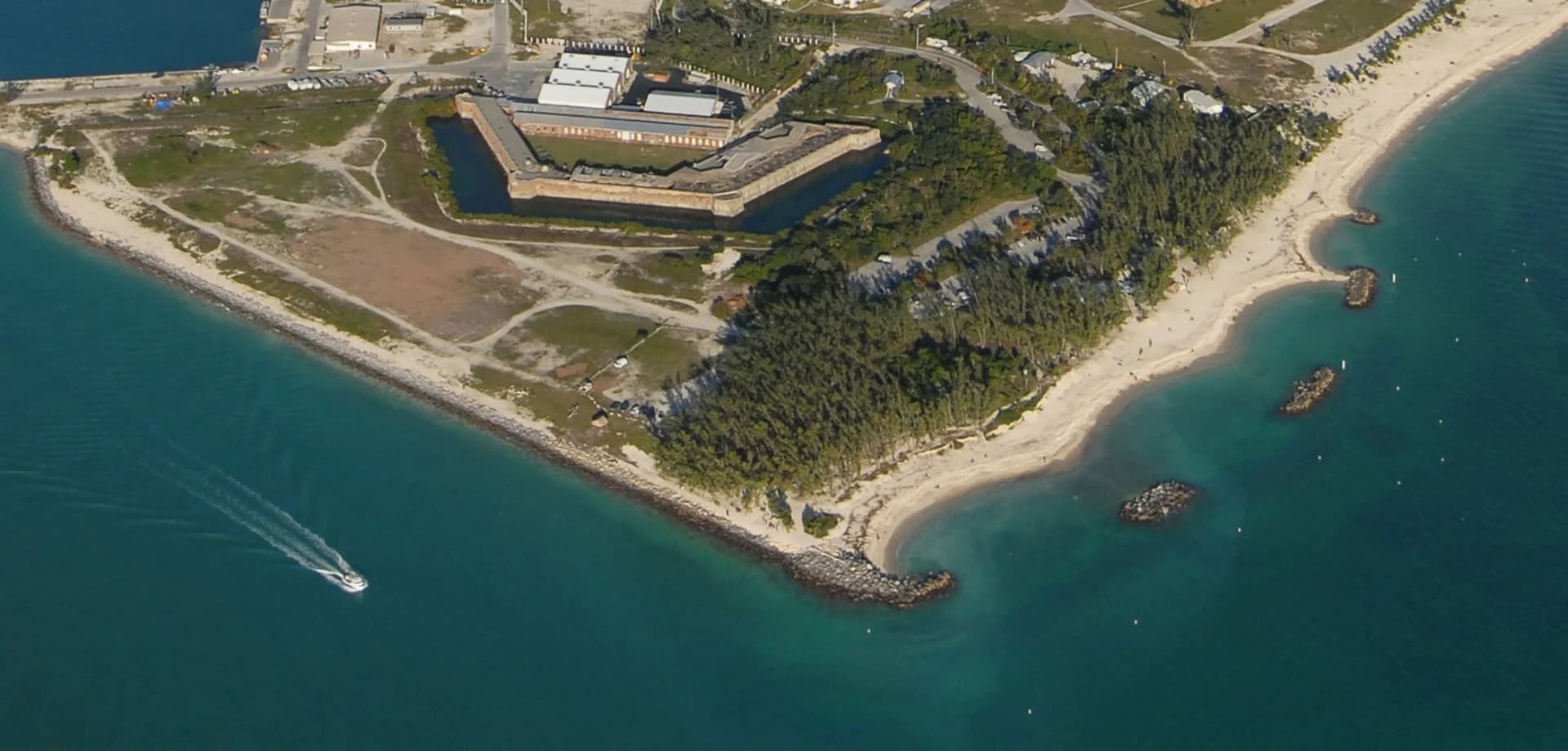
The museum places the house at 111 Front Street in the Truman Annex, just a short walk from Mallory Square. That location matters because it keeps the site connected to the ordinary movement of Key West, not hidden away in a separate historic district. Visitors can reach it from one of the island’s most familiar waterfront areas, which folds the presidential story into the broader rhythm of downtown foot traffic and tourism.
That physical setting is part of its appeal as a local landmark. The house is nationally recognizable, but it is also embedded in a place residents and visitors know well, which gives it a civic role beyond admission tickets and guided tours. It anchors a corner of Key West where military history, presidential history, and modern tourism all overlap.
Why Monroe County keeps returning to this story
The Truman Little White House endures because it offers several stories at once. It is the only presidential site in Florida, a former naval residence, Truman’s winter White House, and the setting for the Key West Accord. It also remains a preserved place, with original furnishings and a location that keeps it visible in the life of the island.
That mix is why the site keeps paying off as a Monroe County landmark. It is a place where national power briefly ran through Key West, and where the imprint of that moment still shapes how the county explains itself to visitors, students, and residents who want to understand why this house matters here.
This article was produced by Prism’s automated news system from verified source data, official records, and press releases, then run through automated quality and moderation checks before publishing. The system is built and supervised by the people who set the standards it runs under. Read our full AI policy.
Did this article answer your question?