Anaktuvuk Pass residents regain four-wheeler access for subsistence hunting
Four-wheelers are again allowed for subsistence hunting in Gates of the Arctic, giving Anaktuvuk Pass families a faster way back to caribou country.

Anaktuvuk Pass hunters are once again allowed to use four-wheelers for subsistence hunting in Gates of the Arctic National Park and Preserve, a change Marc John Morry called life changing. In a village inside the park’s boundaries, where roads do not reach the hunting grounds and the Brooks Range terrain can turn every trip into an ordeal, residents said the decision restores a practical way to reach the lands that feed their families.
The U.S. Department of the Interior announced in May that it was restoring off-road vehicle access for subsistence in the park, and the change took on immediate meaning for Anaktuvuk Pass, which sits at the top of a roughly 2,000- to 2,100-foot mountain pass in the 8.4-million-acre preserve. The new access is narrow in scope: it applies to subsistence hunting, not sport hunting, and it does not open the preserve to general off-road recreation.
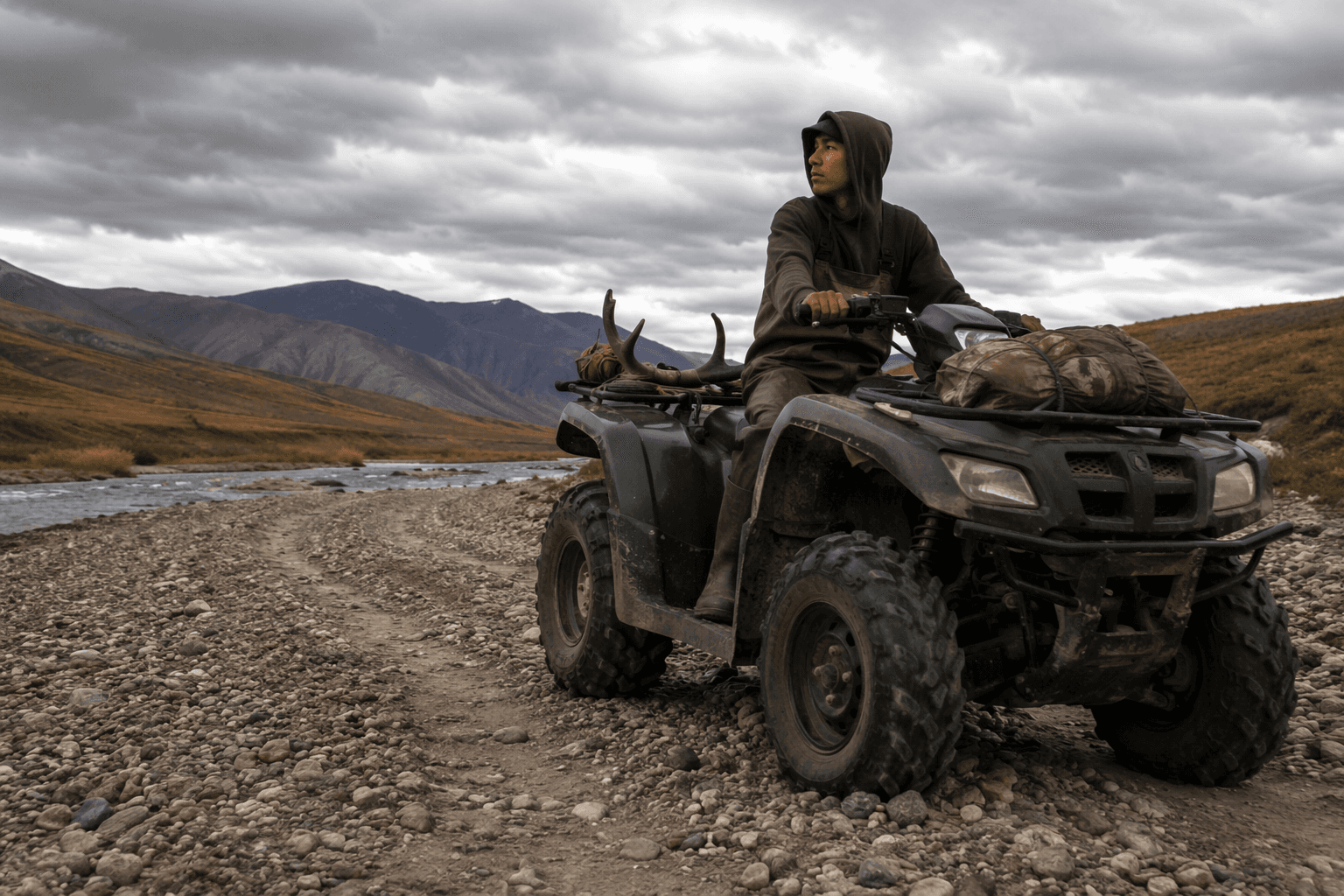
For families in Anaktuvuk Pass, that distinction matters because the village relies heavily on subsistence hunting and many residents still depend on caribou. Residents have long said all-terrain vehicles are often the only practical way to move across the land in summer and fall, when hunters need to cover distance, haul gear and bring meat home over country with no road network. Morry said the restored access would help residents learn and relearn what their ancestors taught them about caribou hunting and travel routes, tying the policy directly to both food security and cultural survival.
The fight over ATV access has stretched back decades. The National Park Service concluded in the early 1980s that ATVs were not a traditional means of access in the park, and in January 1986 it issued a memorandum saying Anaktuvuk Pass residents’ ATV use was nontraditional. Park history says officials began talks in 1984 because the amount of ATV-accessible land was not enough to meet villagers’ needs. That led to land-exchange negotiations and a draft agreement signed on January 20, 1989 by the National Park Service, the Arctic Slope Regional Corporation, the Nunamiut Corporation and the City of Anaktuvuk Pass.
Lillian Stone said the old ban created invisible boundaries for residents who depended on the land for survival. That history helps explain why the new policy is being read locally not as a convenience, but as a restoration of access in a place where most residents are inland Iñupiat, or Nunamiut people, and where much of the village’s protein still comes from caribou. As Charles “Sollie” Hugo said in describing that dependence, “The grocery store is what comes walking by.”
The change also lands in a broader management system that is still active. Anaktuvuk Pass is one of 11 designated resident zone communities with special subsistence privileges in and around Gates of the Arctic, and the park’s Subsistence Resource Commission is still pushing other access questions, including a winter moose hunt in Unit 24A for the 2026/27 and 2027/28 seasons. For a community that lives inside the park and depends on it, the ATV decision marks a major shift in how families can hunt, travel and pass on knowledge across the Brooks Range.
This article was produced by Prism’s automated news system from verified source data, official records, and press releases, then run through automated quality and moderation checks before publishing. The system is built and supervised by the people who set the standards it runs under. Read our full AI policy.
Did this article answer your question?