Birnirk landmark near Utqiagvik reveals earliest Iñupiat culture
Birnirk, known locally as Piġniq, preserves the earliest Iñupiat record near Utqiagvik, but rising sea level is already carrying evidence into Elson Lagoon.

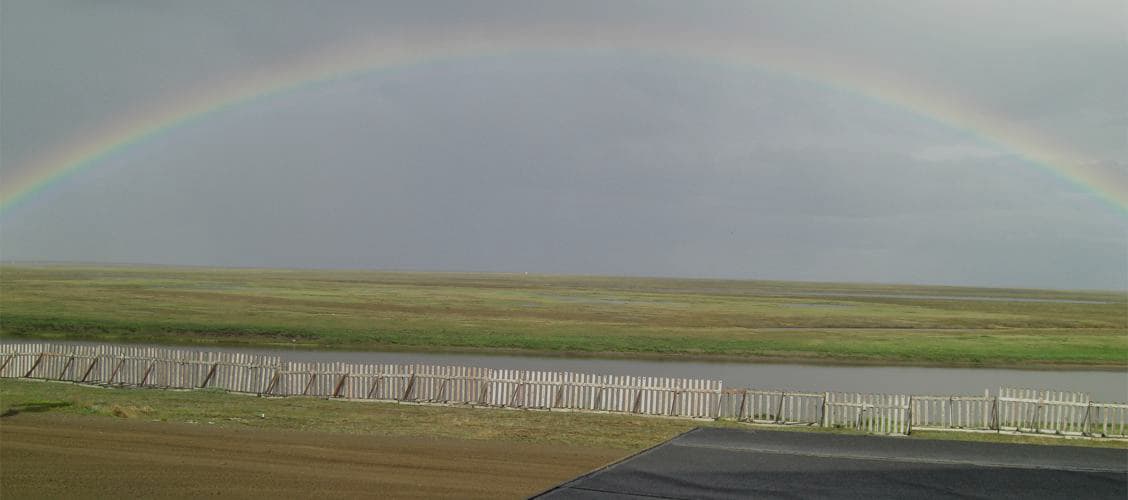
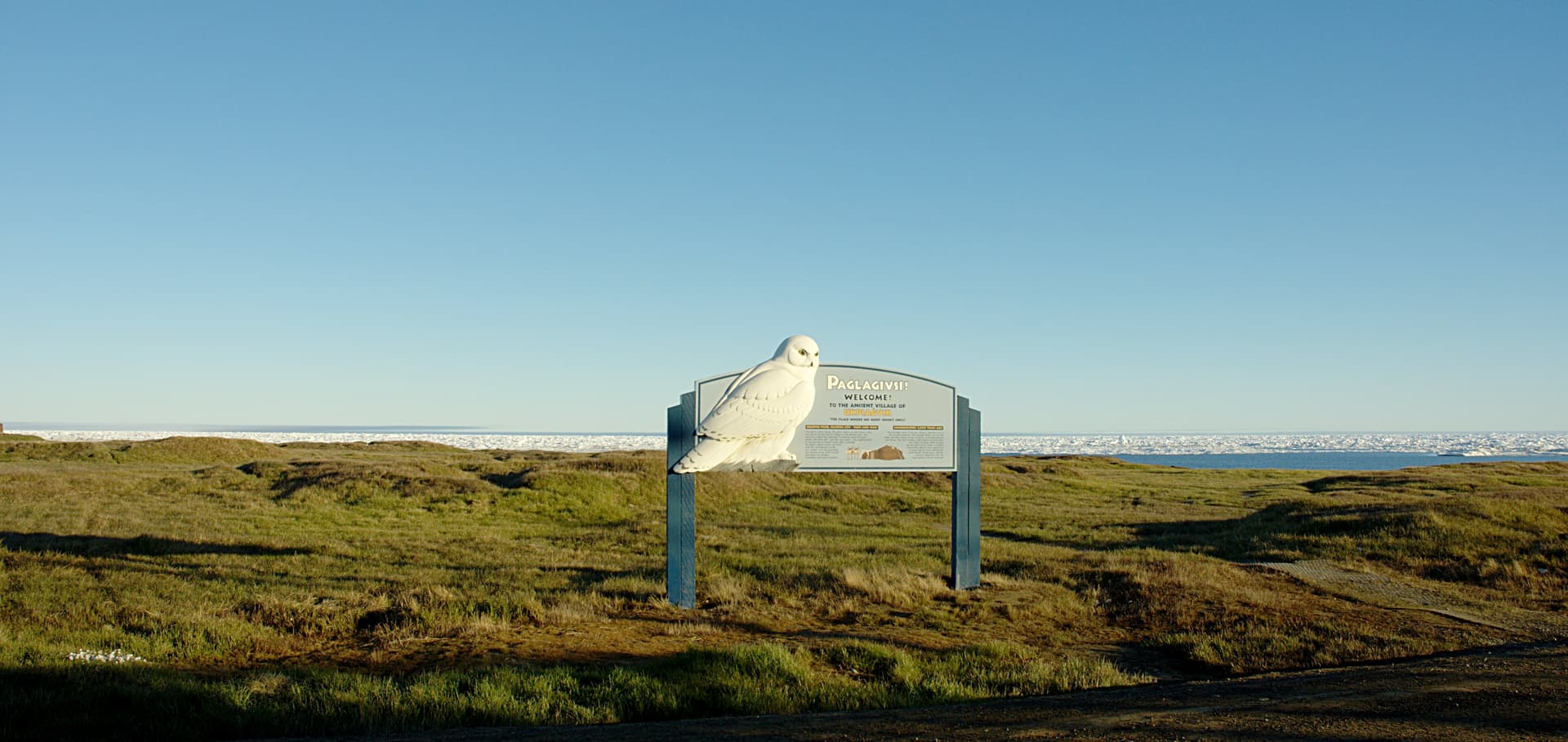
Birnirk on the Chukchi Sea coast near Utqiagvik is more than a cluster of old mounds. The National Park Service identifies Piġniq as the type site for the Birnirk archaeological culture and as the earliest manifestation of Iñupiat culture in North America, with a tradition that lasted from about 500 CE to 900 CE. The landscape still holds the physical record of that long occupation, even as rising sea level begins to pull it apart and send archaeology into Elson Lagoon.
Why Birnirk matters in Utqiagvik
Birnirk has been protected on paper for decades, but its value is local and immediate. The site was designated a National Historic Landmark on December 29, 1962, and it was listed on the National Register of Historic Places in 1966. It is not open to the public, and Ukpeaġvik Iñupiat Corporation manages it, placing the landmark under Native stewardship rather than distant control.
That matters in North Slope life because Birnirk is not only an archaeological reference point. It is a place where Iñupiat ancestry, land ownership, and cultural authority meet on the same shoreline. For families in Utqiagvik and students learning local history, the site offers a tangible connection to ancestors who built, traveled, hunted, and adapted here long before modern roads, schools, and utilities reached the coast.
What the ground still shows
Piġniq sits as a lagoon landform made up of about 20 mounds on beach ridges. Some of those mounds rise to about 14 feet. The mounds are not random piles of earth. They are the remains of houses and cache pits built on top of older structures over hundreds of years, which means the site reads like a layered record of repeated occupation.
The houses were small, square dwellings, about 12 feet wide, framed with driftwood and whalebone and covered with sod. Below-floor entryways helped trap heat, a practical design for Arctic living that shows how builders managed cold, wind, and scarcity with materials available on the coast. The ridges beneath those houses are former gravel shorelines left behind when sea level declined, and the same terrain now faces the opposite force: erosion as water rises and cuts into the site.
That combination gives Birnirk unusual relevance for present-day North Slope residents. It shows continuity in local lifeways, from shoreline settlement patterns to building techniques shaped by weather and geography. It also shows what can disappear when coastal landforms are left unprotected.
What the excavations revealed
The University of Alaska Fairbanks Museum of the North says excavations at Birnirk recovered more than 20,000 artifacts, a scale that makes the site unusually rich for Arctic archaeology. The museum identifies four distinct components at the site: Birnirk, Thule, Late Prehistoric, and Early Contact. Because permafrost helped preserve materials that are often lost elsewhere, the collection holds evidence that is both broad and unusually detailed.
Among the finds is a 1,000-year-old umiak fragment with ivory inlays and baleen lashing. Other objects include toboggans, stone lamps, ivory and bone tools, harpoon parts, and additional everyday items. Those pieces do not simply sit in a display case as curiosities. They document how people moved across ice and water, prepared food, hunted marine mammals, and organized winter life in a place where survival depended on skill and adaptation.
The Museum of the North also describes Birnirk as a pre-Thule culture dating roughly from 600 A.D. to 1300 A.D., and it says the earlier Birnirk and Punuk stages were especially important in the broader Thule tradition. That broader context helps explain why the site matters beyond one local landmark. Birnirk is part of the longer story of Arctic migration, innovation, and cultural development that shaped communities across the North.
How the collection came home
The excavation history adds another layer to the story. In the early 1950s, a Harvard graduate-student team headed by archaeologist Wilbert Carter excavated the Birnirk collection, with support from the Arctic Research Laboratory in Barrow, which had been established by the Office of Naval Research. That work pulled the site into a wider academic record, but it also removed a major body of evidence from the ground where it had meaning for local people.
By 2009, the University of Alaska Fairbanks said the Birnirk collection had "come home." That phrase captured more than the movement of artifacts. It reflected a broader recognition that collections tied to Iñupiat history carry cultural value in Alaska, not only scientific value in museums and universities far away.

Why stewardship matters now
North Slope Borough materials note that the technology developed at Birnirk helped drive the rapid spread of populations across the Arctic regions of North America and Greenland. That reach makes Piġniq far more than a local ruin on the coast. It is a key reference point for understanding how an early Iñupiat world formed and expanded across the circumpolar North.
The stewardship question is just as important as the archaeology. Ukpeaġvik Iñupiat Corporation is headquartered in Utqiagvik, was created under the Alaska Native Claims Settlement Act of 1971, and was incorporated in 1973. The corporation says it serves more than 3,800 Iñupiat shareholders and descendants, linking Birnirk to a living community with direct interests in land, heritage, and education.
That is why erosion at Elson Lagoon is not an abstract conservation issue. Each mound that weakens, slumps, or washes away can erase evidence that helps explain where Iñupiat culture came from and how it endured. For North Slope families, classrooms, and cultural institutions, Birnirk remains a place where the earliest record of local history is still visible, but only as long as the land beneath it holds.
This article was produced by Prism’s automated news system from verified source data, official records, and press releases, then run through automated quality and moderation checks before publishing. The system is built and supervised by the people who set the standards it runs under. Read our full AI policy.
Did this article answer your question?