Simon Paneak Memorial Museum preserves Nunamiut history in Anaktuvuk Pass
Simon Paneak Memorial Museum keeps Nunamiut history visible in Anaktuvuk Pass, linking caribou country, family names, and schoolchildren to the Brooks Range.
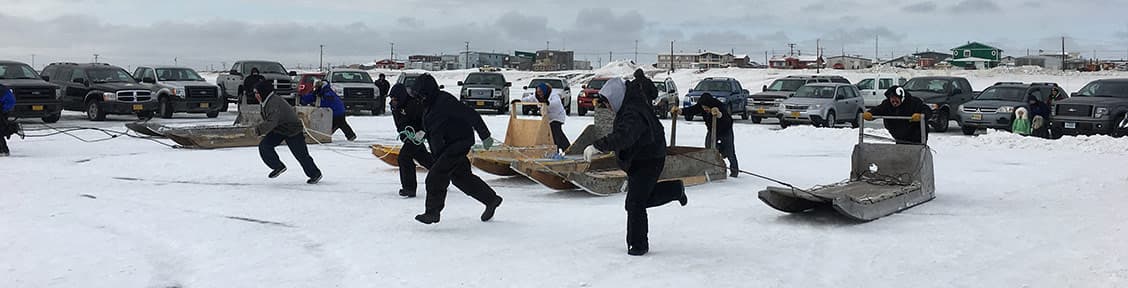
The Simon Paneak Memorial Museum sits above Anaktuvuk Pass in a log structure on high ground near the northwest corner of the village, and the setting matches its purpose. Inside, the borough’s local history and ethnographic museum keeps Nunamiut memory in place, where families, students, and researchers can see how inland Iñupiat life took shape in the central Brooks Range.
A museum built by the village
North Slope Borough says the museum opened in 1986 through the efforts of the entire community, then moved under the Iñupiat History, Language & Culture department in 2015 after years under the Planning Department. That shift matters because it places the museum inside the borough office most closely tied to Iñupiat language, history, and cultural work, rather than a planning function.
The museum’s location is part of the story. From the hill above town, it looks over Anaktuvuk Pass and the broad sweep of the summit, a setting that gives the collection its immediate connection to the land. The borough also describes Anaktuvuk Pass as home to the last of the Nunamiut, which gives the museum a role that reaches beyond display cases and into community memory.
What the exhibits explain
The museum’s 1,000 square feet of exhibits trace the origins and physical environment of the Brooks Range, the history of the Nunamiut, and the seasonal subsistence cycle built around hunting, fishing, trapping, and trading. Those themes ground the museum in the lived economy of the inland people who made their way across the range long before Anaktuvuk Pass became a permanent village.
Caribou sits at the center of that story. The museum emphasizes the animal as the foundation of Nunamiut economy, culture, and former nomadic life, which gives visitors a direct line from migration and survival to family identity and community practice. A pictorial essay about the settling of the last group of nomadic Eskimos into permanent village life in Anaktuvuk Pass adds the human turn in that history, showing how mobility gave way to settlement without erasing the ties to the land.
The National Park Service places that shift in a precise local timeline. By 1949, five families from Chandler Lake, followed by eight families from the Killik River, moved to a plateau at the headwaters of the John River and founded Anaktuvuk Pass. Soon after, the new settlement had a school, airstrip, and church, all signs that the village was becoming a durable center of community life.
The library side of the institution
The museum does more than hold exhibits. It is associated with the Hans Van Der Laan Brooks Range Library Collection, which the borough says includes general, scientific, and research references related to the Brooks Range, the Nunamiut, and earlier and contemporary peoples of the area. The collection was donated by the Brooks Range Trust, adding another layer of community support to the museum’s work.
Archival records show that in 1986, the North Slope Borough and the Brooks Range Library Board of Directors dedicated the Hans van der Laan Brooks Range Library to the Simon Paneak Museum. That pairing tied the library and the museum together from the start, giving Anaktuvuk Pass a place where oral history, written reference, and local knowledge sit side by side.
The museum’s mission is explicit: to collect, record, preserve, document, display, and interpret artifacts and materials relating to Iñupiat history, culture, and traditions. In practice, that means the building functions as a local archive as much as a public exhibit space, with the library collection extending what can be taught, remembered, and checked against the historical record.
Simon Paneak’s name gives the museum its anchor
The museum is named for Simon Paneak, an early village leader and respected elder, and the community voted to use his name before the museum opened. That choice matters because it roots the institution in local judgment rather than outside branding.
Paneak was born in spring 1900 near the Killik River valley in the north central Brooks Range and died in September 1975. The borough says he worked with scholars including Laurence Irving to document the Nunamiut and the Arctic environment, and another scholarly account describes him as a well-known guide and instructor of researchers. The name on the building therefore carries more than memorial value, it marks a life spent helping others read the land and its people.
Why the museum matters now
Anaktuvuk Pass had a population of 425 in the 2020 Census, and its scale helps explain why the museum functions as a community institution instead of a distant cultural stop. The borough says the museum works closely with schools, community leaders, and researchers, which keeps it tied to daily life in the village rather than to seasonal tourism.
That role is visible in how children respond to what they see. In a borough feature about the museum, one student looking at family history said, “I know who that is, it’s my great grandfather.” That moment captures the museum’s most practical work: turning names on labels into relatives, and distant settlement history into something a child can place inside their own family line.
In a village at the center of Gates of the Arctic National Park and Preserve, the Simon Paneak Memorial Museum keeps Anaktuvuk Pass connected to the Brooks Range on its own terms. It preserves Nunamiut history, but it also helps the next generation recognize that history as theirs.
This article was produced by Prism’s automated news system from verified source data, official records, and press releases, then run through automated quality and moderation checks before publishing. The system is built and supervised by the people who set the standards it runs under. Read our full AI policy.
Did this article answer your question?