Utqiagvik migratory bird festival returns with science, art and community events
Utqiagvik’s bird festival turns spring migration into a free, townwide classroom, with science, art and guided birding for families June 12-14.

Utqiagvik’s spring sky becomes a living classroom when thousands of migratory birds arrive over Alaska’s far north, and the annual festival built around that movement has grown into a community tradition with real local reach. Now in its fourth year, the three-day celebration is designed to bring residents, students, scientists, artists and visitors into the same conversation about birds, culture and the Arctic environment.
A townwide classroom for Arctic spring
The fourth annual Utqiaġvik Migratory Bird Festival runs June 12-14, 2026, with Fred Ipalook Elementary School serving as the main hub. From there, birding locations across the community function as an extended classroom, making the festival feel less like a single event and more like a map of places where learning happens outdoors. Everything is free and open to the public, which keeps the barrier to entry low for families who want to drop in for one program or spend the whole weekend moving from one site to the next.
What makes the festival stand out is the way it blends scientific learning with everyday community life. Audubon Alaska says the event brings together community members, bird experts, artists and agency partners to celebrate migratory birds and the traditions they inspire. That mix matters in Utqiagvik, where the season is not just a spectacle but a shared experience tied to place, identity and environmental knowledge.
What families can do during the festival
The festival brings back a mix of activities that work for different ages and interests. Organized events include trivia night, drawing workshops, science talks and guided birding tours, giving kids, parents and elders multiple ways to participate without needing specialized gear or formal birding experience. In a town where the landscape itself is part of the lesson, those events turn observation into a hands-on activity rather than a passive one.
For younger participants, the art and science elements are especially important. Drawing workshops give children a chance to notice shape, color and behavior, while science talks help connect what they see in the field to migration patterns, habitat needs and the larger Arctic ecosystem. Guided tours then bring those lessons outside, where families can look for shorebirds, eiders, geese and other waterfowl moving through the region.
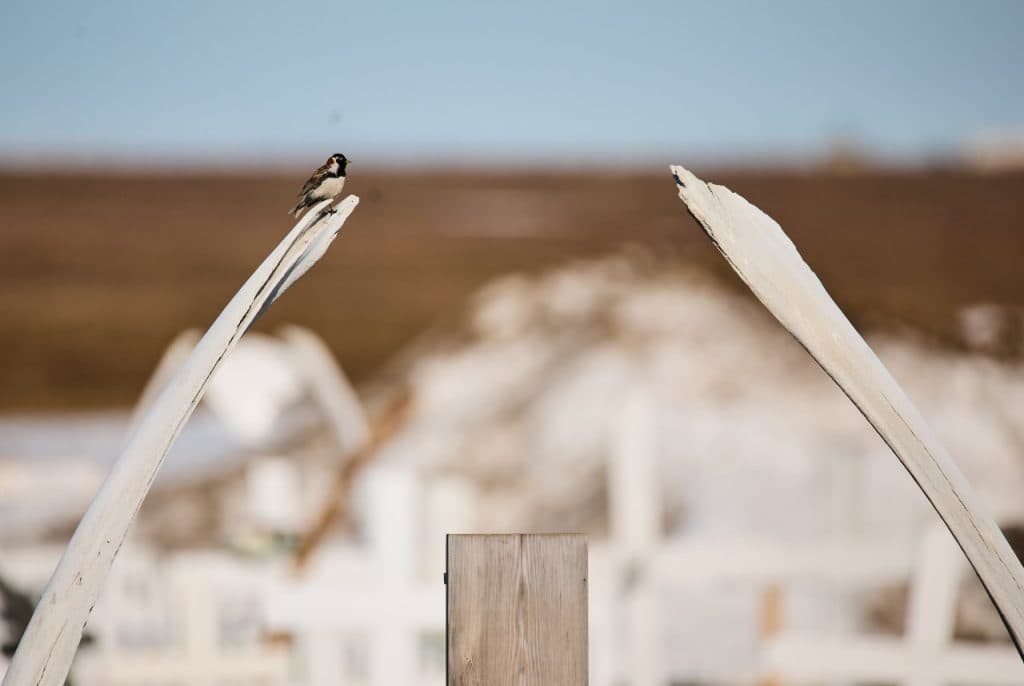
The festival’s local identity shows up in the details, too. Merchandise features a King Eider design, known in Iñupiatun as Qinalik, created by Utqiagvik artist Alaina Bankston. That kind of design choice does more than decorate the event: it makes language and artistic expression part of the public celebration, reinforcing that the festival belongs to the community as much as it does to birders.
Why the festival matters in Utqiagvik
Audubon Alaska has described the festival as a way to show how “amazing and unique” Arctic geography is for migratory birds. That is not an abstract claim in Utqiagvik, where the landscape serves as a critical stopover and breeding area for birds traveling vast distances. The festival makes that reality visible, and it reminds residents that the same geography that shapes everyday life also supports one of the North Slope’s most important seasonal migrations.
Organizer Max Nootbaar says the festival’s mission is to highlight the value of migratory birds, the threats they face in the high Arctic and the community’s connection to the region’s natural resources. That framing gives the event a wider purpose than entertainment alone. It becomes a public lesson in stewardship, and a reminder that caring about birds also means caring about the coastal, wetland and nearshore places they depend on.
The festival’s growth suggests that message is finding an audience. Virginia Tech reported that about 200 people attended at least one event in 2024, while KNBA said the 2025 festival drew more than 150 people and that attendees spotted about 60 species. Those numbers are modest compared with large urban festivals, but they are significant in a small Arctic community where a free, visible event can reach a broad slice of local life.
The birding trail that grew from the festival
One of the festival’s lasting impacts is the Utqiaġvik Birding Trail, which Audubon Alaska says the festival helped inspire. The trail is a collaboration among the U.S. Fish and Wildlife Service, the Alaska Department of Fish and Game, Ilisaġvik College, the Iñupiat Heritage Center, the North Slope Borough Department of Wildlife Management, UIC Science, Tuzzy Consortium Library and Audubon Alaska. That partnership matters because it shows the festival is not a one-off celebration, but part of a larger effort to build community infrastructure around birding and environmental education.
The trail includes 10 sites throughout town, including Stevenson Street Beachfront, Freshwater Lake at the end of Imaiqsaun Road, Nunavaaq Gravel Pit and coastal bluffs along Nunavak Road. Audubon’s trail guide says the best birding window in Utqiagvik is roughly May 25 through June 20, which lines up closely with the festival’s mid-June dates and helps explain why the event lands when it does.
Those locations are not just scenic stops. The trail guide notes that the coastal bluffs along Nunavak Road are especially good for shorebirds such as Buff-breasted Sandpipers, Western Sandpipers and American Golden-Plovers. That kind of detail gives families a practical reason to keep looking, and it gives the community a shared set of places to return to long after the festival ends.
A tradition worth showing up for
The fourth annual festival shows how a local tradition can grow without losing its character. It still centers birds, but it now also centers shared learning, Iñupiat identity and access to science in a place where the Arctic environment is not distant or theoretical, but part of everyday life. In Utqiagvik, the festival is becoming a seasonal marker as important as the migration itself, a place where children, families and experts can stand under the same sky and see the North Slope with fresh eyes.
This article was produced by Prism’s automated news system from verified source data, official records, and press releases, then run through automated quality and moderation checks before publishing. The system is built and supervised by the people who set the standards it runs under. Read our full AI policy.
Did this article answer your question?