Cannelton showcases Perry County history, riverfront landmarks and parks
Cannelton’s downtown, mill and riverfront pack Perry County’s history into one route, from the former courthouse museum to Eagles Bluff above the locks and dam.

Cannelton gives Perry County one of its most compact public history lessons: a downtown of churches, old civic buildings and historic stonework, then a riverfront that still frames how the city looks and works. The city’s attractions page makes it clear that this is not a single landmark stop but a connected circuit, one that runs from the Cannelton Historic District and the old cotton mill to parks, a boat ramp and the overlook at Eagles Bluff.
A downtown built around history and stone
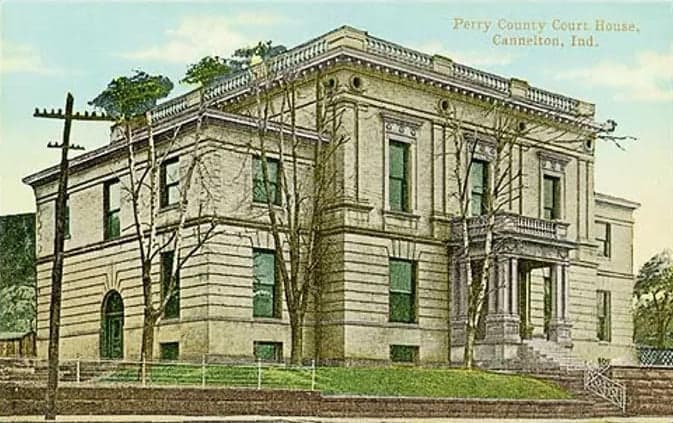
The best place to start is the historic core, where the city’s most visible landmarks sit close enough together to make a single outing practical. The attractions list points visitors to St. Michael Catholic Church, St. Luke’s Episcopal Church and First Baptist Church, along with Myers Grade School, the Magnolia Coffee Building and the Perry County Museum in the former Perry County Courthouse. Taken together, those buildings show how much of Cannelton’s identity still lives in plain sight rather than in a textbook.
That matters because the city describes itself as founded in 1837 and as a historical sandstone community. In practical terms, that means Cannelton is not just preserving isolated buildings. It is preserving a streetscape, a material texture and a civic memory that still shape how the city presents itself to residents and visitors alike.
The mill that explains the city’s industrial weight
No site better captures Cannelton’s industrial story than the Cannelton Cotton Mills, more commonly known as the Indiana Cotton Mills. According to the National Park Service, the project began in May 1849 and the first cloth was woven on January 7, 1851. That timeline places the mill squarely in the era when river towns across Indiana were trying to turn location and labor into lasting economic advantage.
The building’s setting is part of what makes it so memorable. The National Park Service says it faces the Ohio River and sits near the center of Cannelton, which helps explain why it remains one of the city’s signature landmarks. It is a reminder that the river was not just a scenic backdrop. It was the reason industry could settle here, expand here and leave a structure that still defines the city’s skyline and story.
Where the riverfront becomes a public space
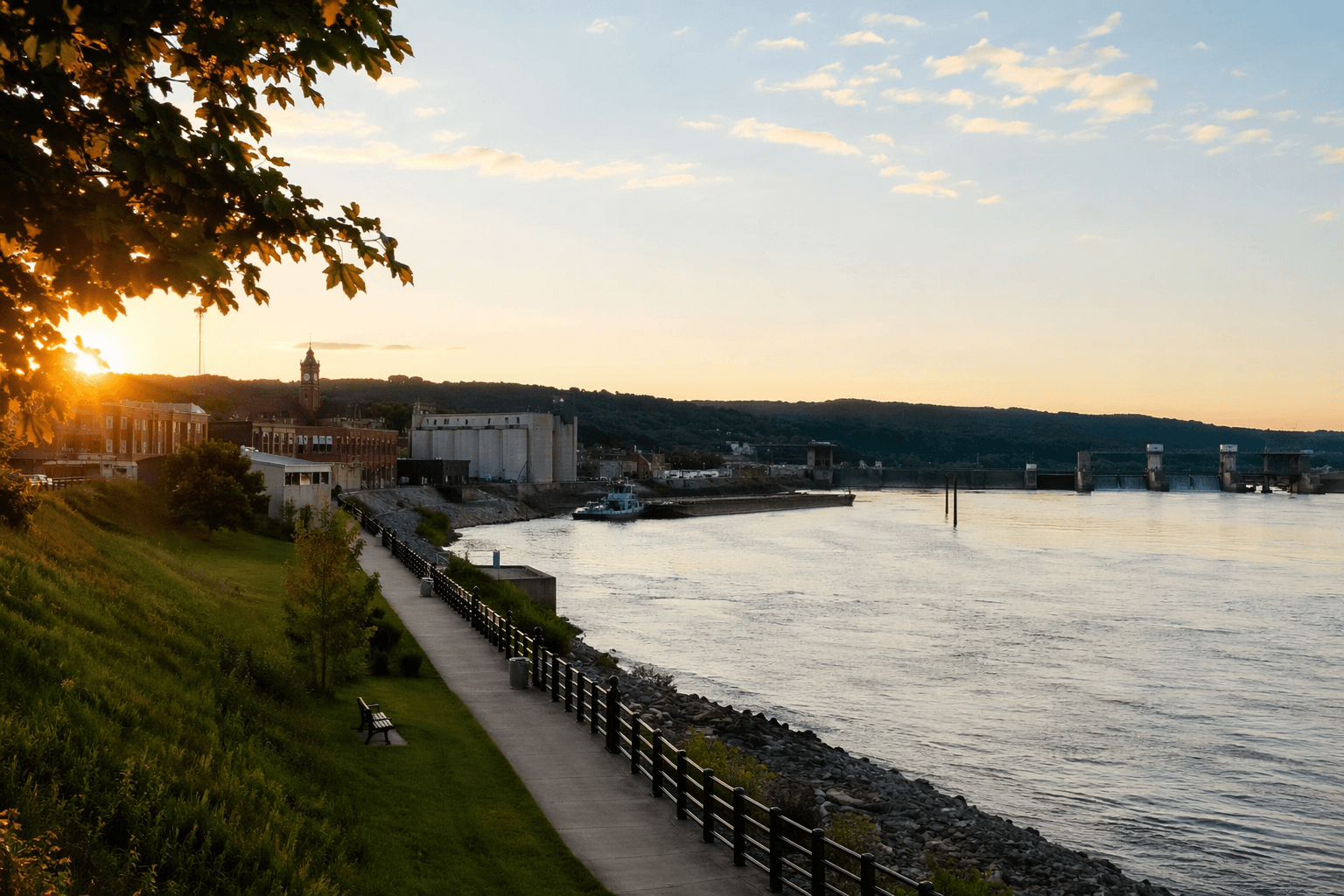
Cannelton’s riverfront is more than an edge of town. It is a public corridor that ties the city to recreation, navigation and regional travel. The attractions page highlights the Cannelton Boat Ramp, Hafele Park, Gazebo Park, the Cannelton River Walk Trail and Eagles Bluff, the overlook tied to the locks and dam. Nearby Rocky Point Marina, Blue Heron Winery and the Celtic Cross area extend the route for anyone making a longer visit.
The U.S. Army Corps of Engineers places Cannelton Locks and Dam on the Ohio River at mile 720.7 below Pittsburgh, about three miles upstream from Cannelton on the Indiana side. The Corps also says the upper pool extends 114 miles upstream to McAlpine Locks and Dam. Those numbers matter because they show the riverfront is not only scenic. It sits on a major navigation corridor that still organizes movement, views and recreational use along the Ohio River.
That gives Eagles Bluff and the riverwalk a civic role as well as a scenic one. They are not just places to look out over the water. They are places to understand how Cannelton fits into the larger river system that continues to shape southern Indiana.
A one-trip itinerary that stays grounded in real places
A practical Cannelton visit works best as a loop between downtown and the river. Start with the historic district and courthouse museum, continue past the churches and older institutional buildings, then move toward the mill and the riverfront parks. From there, the boat ramp, river walk and Eagles Bluff create a natural finish, especially if you want a view that connects the city’s past to the working river beyond it.

The city’s attractions list also points to Rocky Point Marina, Blue Heron Winery and the Celtic Cross area for anyone who wants to stretch the outing into a fuller day trip. That is where Cannelton’s public value becomes obvious: the city offers enough historic fabric, river access and local landmarks to keep visitors in town longer, which helps reinforce the small businesses and public spaces that make the river city livable.
Why stewardship of these spaces matters
Cannelton’s public landmarks are doing more than looking good on a brochure. They hold together the city’s identity as a river town, a county seat successor and a place where industry, faith and civic life overlapped for generations. The preservation of the courthouse museum, the churches, the mill and the historic district keeps that record legible. The maintenance of the boat ramp, river walk, parks and overlook keeps the city connected to the Ohio River in a way that still has practical and economic value.
The local government structure reinforces that this is an active city, not a frozen display. The city’s government site lists Mayor Morris “Smokey” Graves, Clerk/Treasurer John Paulin and council members Robert Durbin, Melvin McBrayer, Bruce Myers, Mike Anderson and Forrest Bozarth. That is the level at which decisions about streets, public spaces and preservation are made, which is why the condition of Cannelton’s landmarks remains a living civic issue.
For Perry County, Cannelton’s core and riverfront offer something rare: a place where the county’s past can still be walked, viewed and used in the present. The historic district, the mill, the museum and the locks-and-dam overlook together show a town that still explains itself through its buildings and its river, and that makes those assets worth keeping visible.
This article was produced by Prism’s automated news system from verified source data, official records, and press releases, then run through automated quality and moderation checks before publishing. The system is built and supervised by the people who set the standards it runs under. Read our full AI policy.
Did this article answer your question?