Cannelton’s historic core tells story of river, industry and preservation
Cannelton’s tight riverfront core explains why its historic district still matters. The mill, gateway sign and heritage festival show how preservation now shapes downtown identity and tourism.
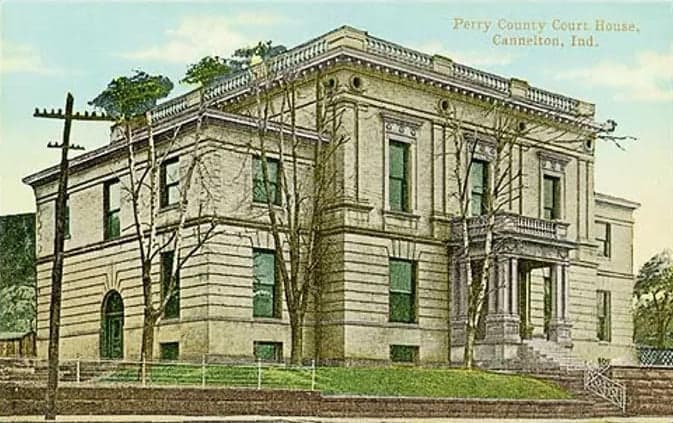
Cannelton’s historic core is small because the Ohio River and steep rock bluffs left it little room to spread. That compact footprint now holds the central business district, selected residential blocks and industrial sites that defined the town’s rise, making the district a readable map of river geography, labor and preservation.
A town compressed between river and bluff
The National Park Service’s historic district nomination describes Cannelton as a place whose growth was physically constrained by the river on one side and steep bluffs on the other. The proposed district boundary measured about 2,050 feet by 1,700 feet, a scale that helps explain why the town’s older streets and buildings remain concentrated in a tight core rather than fanning out in broad layers.
That same nomination notes that the town plat was already being revised and resurveyed by the mid-1840s, when Cannelton was still organizing itself around the Ohio River. Founded in 1837, the community developed in a place where land, transportation and industry had to fit the terrain rather than the other way around. The result is a historic center that feels unusually compact and visually coherent, with the riverfront and bluff line still shaping how the town reads from the street.
The mill that turned Cannelton into an industrial town
At the center of that story stands the Cannelton Cotton Mills, better known as the Indiana Cotton Mills. Construction began in May 1849, the first cloth was woven on January 7, 1851, and the building was designed by Thomas Alexander Tefft. Built of sandstone, it was once the largest industrial building in the United States west of the Alleghenies, a scale that made it a landmark long before preservation became a civic strategy.
The mill also shows how deeply labor and architecture were intertwined in Cannelton’s economy. The registration form for the building says it initially employed about 400 workers, mostly women and girls, and produced more than 200,000 pounds of cotton batting and four million yards of cotton sheeting each year. Those figures place the building not just as an architectural relic, but as the engine of a working town whose fortunes rose with manufacturing and river access.
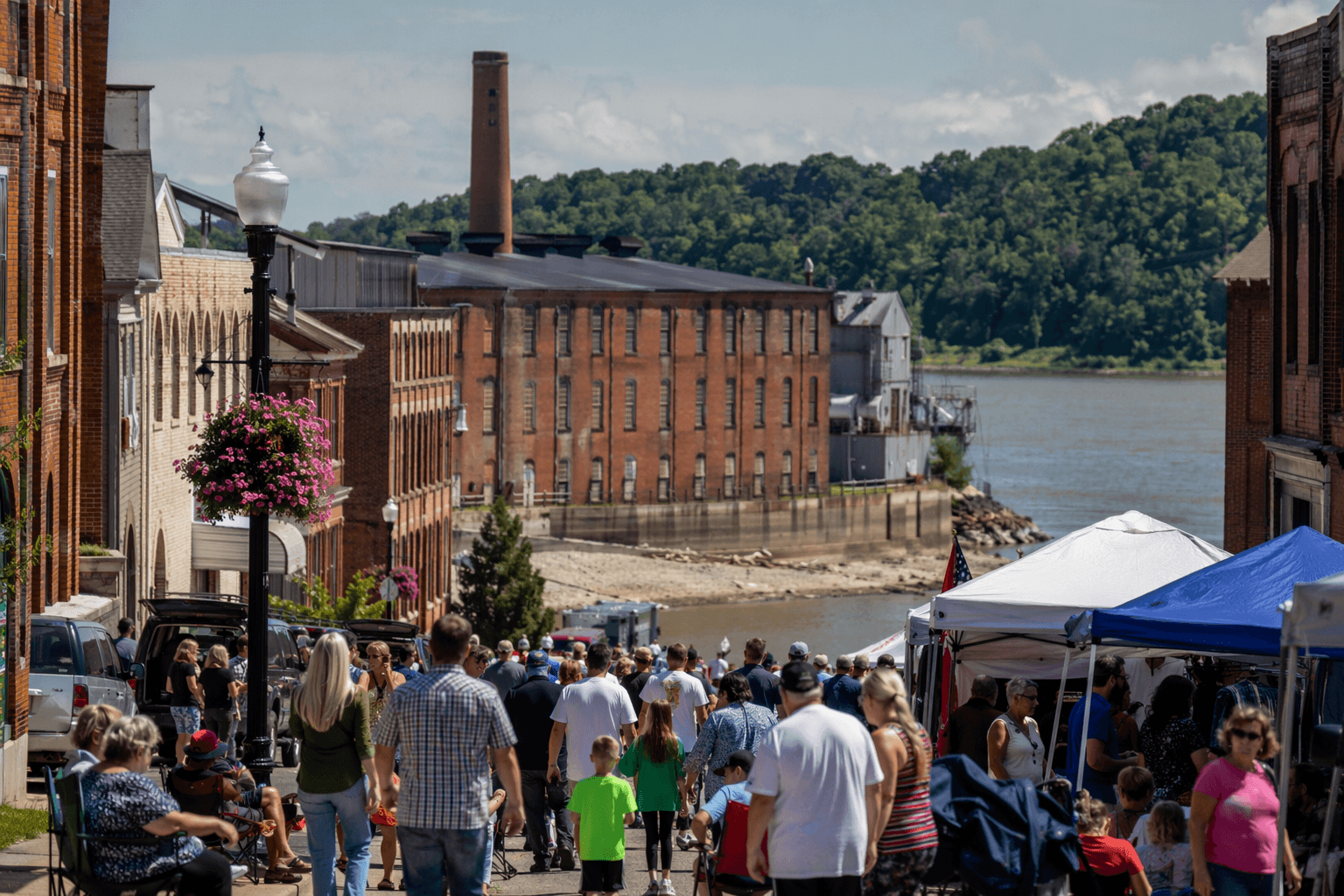
For anyone trying to understand the historic core, the mill is the clearest single reference point. Its size, material and location explain why the district includes industrial space alongside homes and shops, and why the town’s identity has always been tied to the practical demands of production rather than to ornament alone.
Preservation now functions as a public policy question
Cannelton’s preservation story is not frozen in the past. Renew Cannelton, the nonprofit formed in 2014, says its purpose is to restore vitality to historic downtown Cannelton and promote historic preservation as a vehicle for economic growth. That places preservation squarely in the realm of civic policy, where buildings are not treated only as old structures but as assets that can affect downtown activity, visitor traffic and local confidence.
The clearest example is the Historic Cannelton Gateway Sign Project, completed in 2018 at the junction of Highways 66 and 237. The sign design was inspired by the Indiana Cotton Mill, a choice that ties present-day branding directly to the town’s industrial past. In practical terms, the gateway sign is more than decoration: it is a public marker that tells drivers where they are and what Cannelton wants them to notice first.
That matters because heritage in Cannelton is being used as part of the town’s economic identity, not as a separate museum exhibit. When preservation groups invest in signage, downtown vitality and historic appearance, they are making a bet that visible stewardship can help keep the district legible to visitors and meaningful to residents. In a small river town, that legibility is part of the business case for keeping the core intact.
Where the historic district shows itself today
The modern visitor sees Cannelton’s history not only in the mill and old blocks, but in the places that keep the town’s heritage visible. Visit Indiana’s Cannelton Main Street listing points to the Celtic Cross and Eagle Bluff Overlook Park as part of the community’s current identity, and it places the town’s heritage festival inside the Historic District itself. Those are not separate layers of history; they are current uses of historic space.
The Cannelton Heritage Festival gives the district a civic function beyond preservation paperwork. By holding a community celebration in the historic core, the town uses its older streets and buildings as an active setting rather than a backdrop. That approach turns the district into a place where heritage is performed in public, with the old industrial town serving as the stage for present-day gathering.
Eagle Bluff Overlook Park and the Celtic Cross add another dimension to the landscape, linking the town’s river setting with points of reflection and viewing. In a community hemmed in by water and bluff, those landmarks help explain why Cannelton’s historic core feels distinctive: the same terrain that limited expansion also created a strong sense of place.
Why the district still matters
Cannelton’s historic core tells a direct story about what shaped Perry County’s river towns: geography, labor, architecture and adaptation. The district’s tight footprint, the mill’s industrial scale, the gateway sign and the heritage festival all show that preservation here is not about freezing a postcard view. It is about deciding whether downtown remains a place of use, memory and identity, or whether its most important buildings become detached from the life around them.
That is the real stake in Cannelton’s compact historic center. The river and bluffs set the limits, the mill made the town matter, and today’s preservation work is deciding how much of that story still functions as a living downtown.
This article was produced by Prism’s automated news system from verified source data, official records, and press releases, then run through automated quality and moderation checks before publishing. The system is built and supervised by the people who set the standards it runs under. Read our full AI policy.
Did this article answer your question?