Perry County 4-H handbook opens program to all youth
Perry County families need to sort out age cutoffs, fair oversight and office contacts before registration opens. The handbook lays out who can join, who to call and how to avoid project-rule problems.
Perry County families deciding between Mini 4-H and full 4-H need to start with the handbook’s age cutoffs: Mini 4-H is for youth in grades K-2, and full 4-H is open to youth in grades 3-12 as of Jan. 1 of the current calendar year. The same guide also spells out who oversees the program, where to get help in Tell City, and how the fairgrounds, fair activities and youth program fit together before summer deadlines close in.
Who can join, and what the handbook promises
The handbook makes one point unmistakable: Perry County 4-H is open to all youth. It specifically says participation is open regardless of race, religion, color, sex, national origin, ancestry, marital status, parental status, sexual orientation, disability or place of residence. That language matters because it frames 4-H as a countywide youth system, not a club limited by background, neighborhood or family circumstance.
The age split is equally important for parents making a first decision. Mini 4-H serves children in grades K-2, while the regular 4-H program is for youth in grades 3-12 based on where they stand in January of the current school year. That cutoff determines everything from which projects a child can enter to whether a family should be looking at beginner activities or the broader 4-H track.
The handbook also says it covers both the 4-H program itself and exhibits at the Perry County 4-H Fair. Families are asked to read it carefully and return to it throughout the year, which makes sense in a program where registration, project rules and fair preparation are connected rather than separate chores.
How Perry County 4-H is governed
Perry County 4-H is directed through the Cooperative Extension Service, the Perry County 4-H Council and Purdue University. That structure gives the program both local oversight and ties to the state’s land-grant university system, which is why the handbook reads less like a brochure and more like an operating manual.
The fair side has its own governing piece. The Perry County 4-H Fairgrounds Committee oversees the fairgrounds, maintenance and fair activities in conjunction with the 4-H Council. That distinction matters for families because the program, the grounds and the fair are coordinated, but they are not identical. Questions about youth membership, exhibit rules and fair logistics may flow through different people even when they affect the same summer schedule.
Purdue Extension says its mission is to improve lives and livelihoods through research-based education in agriculture and natural resources, human and health sciences, economic and community development, and 4-H youth development. In Perry County, that mission shows up in the way the handbook connects a child’s project work, a family’s registration decisions and the larger community calendar.
Where families should go for help
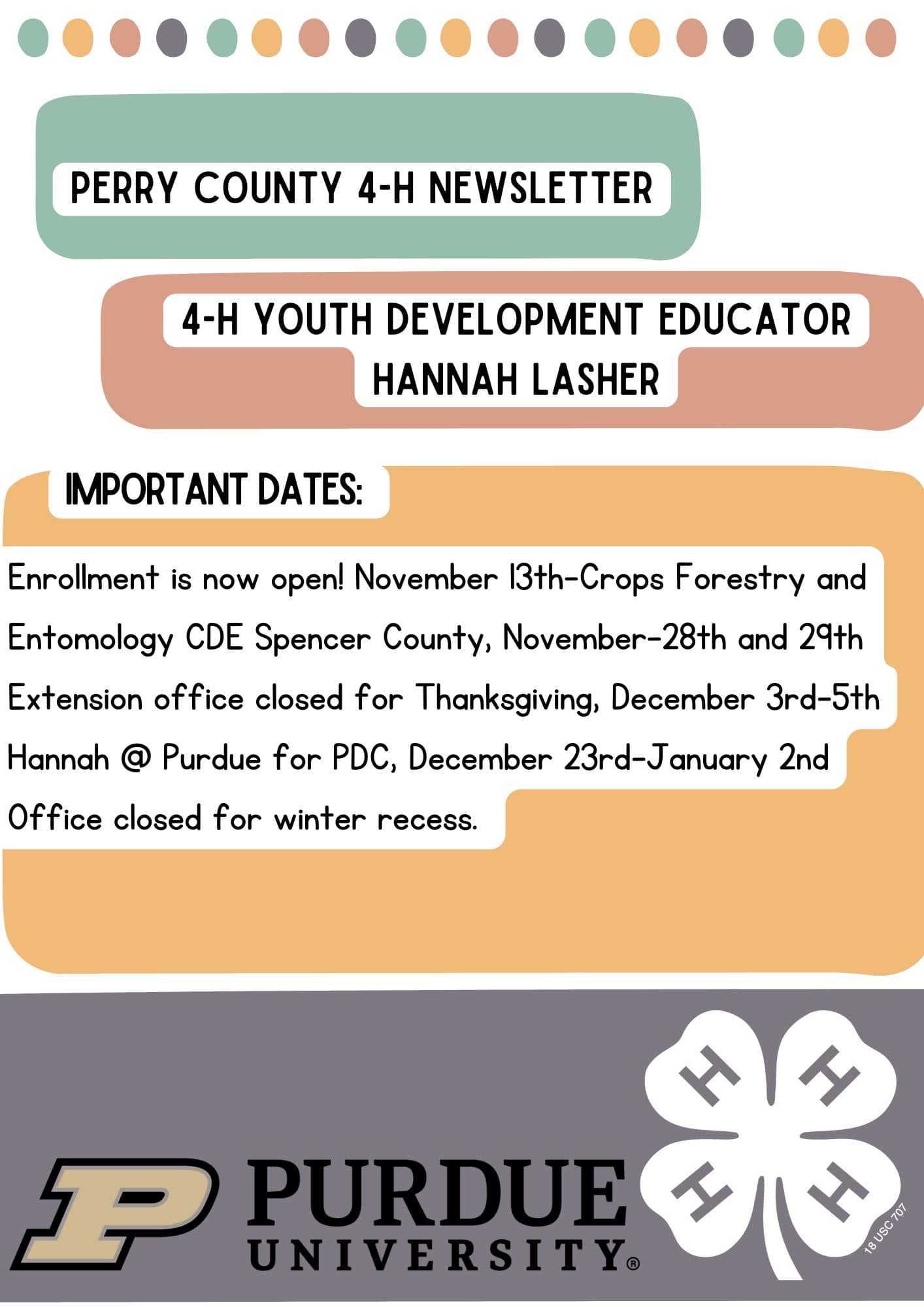
The county Extension Office is at 65 Park Avenue in Tell City, IN 47586, and it is open Monday through Friday from 8 a.m. to 4 p.m. Megan Jaspersen is listed as county extension director and health and human sciences educator. The office page also names Hannah Lasher, Sara Dzimianski, Erin Meyer, Danica Williams and Casey Mull, giving parents a concrete list of people to contact when they need help sorting out program details.

That office is the place to call before a family commits to a project, signs up a child in the wrong age group or misses a rule tied to fair participation. The office phone is 812-547-7084, and the handbook’s plain instruction to read and keep it nearby is a reminder that small registration errors can create bigger problems later in the season.
For parents trying to avoid confusion, the simplest first step is to match the child’s grade level to the correct program, then confirm any project or exhibit questions with the Tell City office. The staff list and office hours give families a practical support point, especially when summer schedules get crowded and deadlines start stacking up.
How camp and fair season fit the handbook
The handbook is not just about entry forms. It sits inside a year-round calendar that includes camp, leadership work and the annual fair. The Perry County 4-H Council and the Sue Miller Memorial Fund offered to sponsor up to 90% of camp costs in 2025, which shows that local support is built into the program rather than left to families alone.
That support helped make the camps more accessible. The 2025 county newsletter promoted 4-H Camp for grades 3-8 at Country Lake Retreat Center from May 30 to June 1, 2025, and a Mini Day Camp for Kindergarten through 2nd Grade Explorers at the Perry County Fairgrounds from June 2 to June 6, 2025. A later newsletter said that camp drew 227 campers and 54 counselors, including 20 Perry County campers whose fees were covered by 90%.
Those numbers show how the handbook translates into real participation. Families who know the age cutoffs can place children in the right camp, the right project category and eventually the right fair exhibits without scrambling at the last minute. The county’s current Extension site also features 2026 4-H Camp Counselor applications, which signals that older teens continue to be recruited into leadership roles as the program moves forward.
Why fair dates matter now
Perry County’s 2025 fair was scheduled for July 11-15, and Indiana 4-H’s county fair calendar lists the 2026 Perry County fair dates as July 11-18, 2026. For families keeping track of project work, animal care and exhibit planning, that means fair season lands squarely in the middle of summer and demands preparation well before the gates open.
The county newsletter described the fair as the highlight of the year, a time when youth showcase project exhibits, livestock shows and competitions. That is exactly why the handbook’s rules, eligibility lines and oversight structure matter now. A family that understands where Mini 4-H ends, where full 4-H begins and which office handles questions is less likely to run into a registration or project-rule problem when fair week arrives.
The handbook’s real purpose is practical: it ties youth development, fair oversight and local support into one system that Perry County families can use all year, not just in July.
This article was produced by Prism’s automated news system from verified source data, official records, and press releases, then run through automated quality and moderation checks before publishing. The system is built and supervised by the people who set the standards it runs under. Read our full AI policy.
Did this article answer your question?