Quitman County pitches industrial park, rail access to attract businesses
Quitman County is betting on low-cost industrial land, freight rail and road upgrades to lure employers, and residents will judge it by jobs, wages and safer roads.

Quitman County is making a straightforward pitch: come for the space, stay for the freight access, and help rebuild a small Delta economy that cannot afford to wait for businesses to wander in on their own. The county is openly courting new and expanding employers, pointing them to industrial land in Marks, state incentive programs and tax advantages, while also selling the county as a place for tourism and business.
What Quitman County is offering
The core of the strategy is simple. Quitman County says its industrial park is accessible by freight rail and trucking, which matters in a rural county where moving materials cheaply can make or break a site plan. That message fits the broader state economic-development playbook as well: Mississippi competes for projects with incentives, permitting, training and infrastructure, so Quitman County is trying to plug itself into that larger system rather than go it alone.
The county’s own materials frame the opportunity in practical terms. It says businesses looking for an ideal location for business or industry should consider Quitman County, and it emphasizes that the county is open to both business and tourism. In accountability terms, that means the public pitch is not just about recruiting a logo for a press release. It is about whether the county can turn low-cost land and transportation access into actual payrolls and tax revenue.
The industrial park, in hard numbers
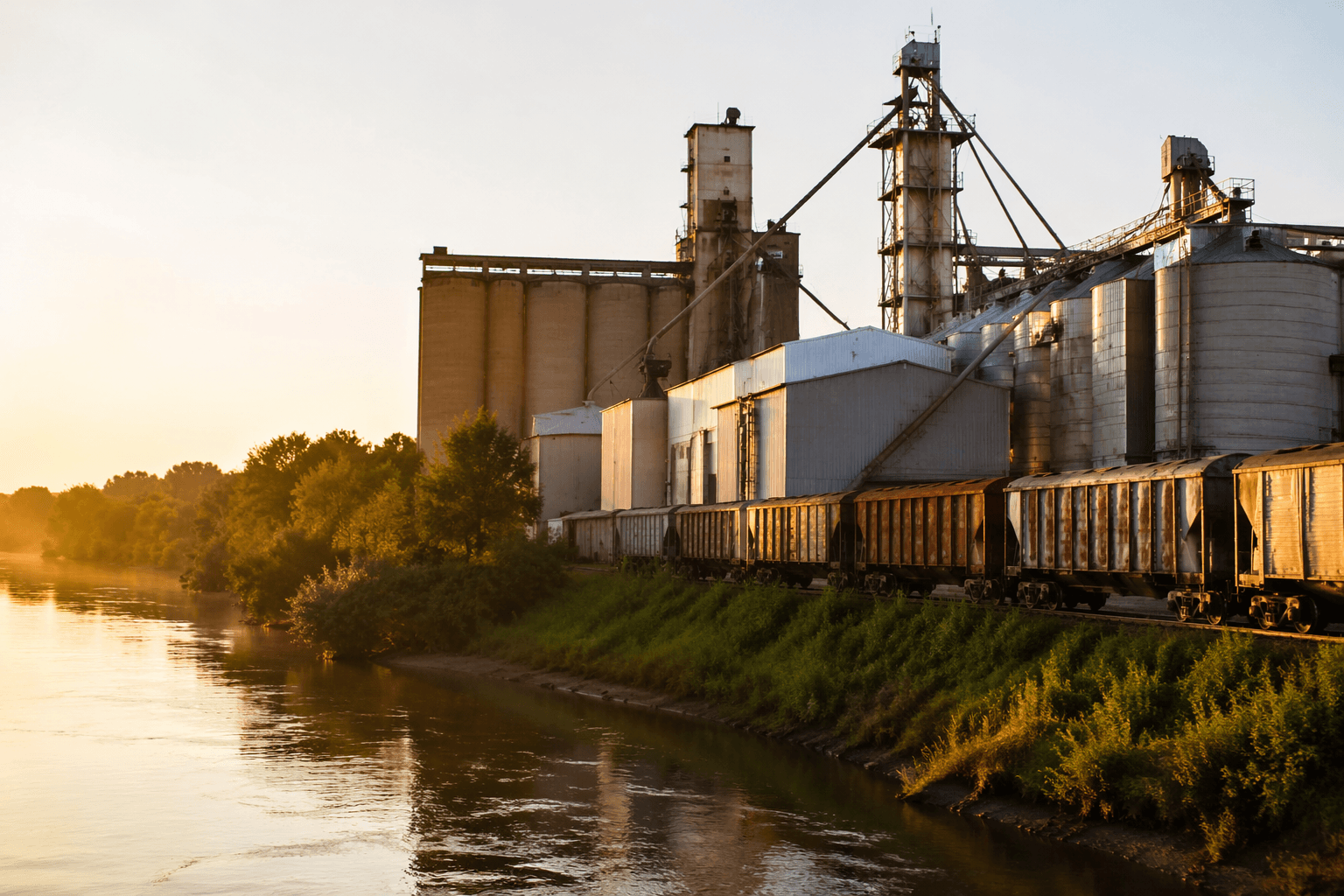
The county’s featured site is Furr Industrial Park at 415 Roger Road in Marks. The park has 39 available acres and a sale price of $3,000, a figure that signals just how aggressively the county is trying to lower the entry cost for an employer willing to take a chance on the Delta. Rail service is available, and the county says the nearest interstate is I-55, about 18 miles away, while Memphis International Airport is about 83 miles away.
That geography tells you a lot about the kind of employer Quitman County is chasing. This is not a pitch built around suburban office parks or high-end corporate campuses. It is aimed at firms that can use truck access, rail service and cheap land to keep operating costs down, especially manufacturers, distributors and other businesses that move goods in volume. The county’s infrastructure is still a small-county footprint, though, and the limitations are part of the story too: roads are mostly two-lane highways, with Highway 3, Highway 6, Highway 316 and U.S. 278 carrying much of the traffic.
Utilities are another part of the test. Quitman County says water and sewer service is not centralized in one system, and that many residents receive service through associations, with reliability varying by system. That means any serious business decision will have to weigh more than land price and rail access. A company looking at Marks will need to judge whether local utilities, transportation links and site preparation can support day-to-day operations without costly surprises.
Why the county’s size changes the stakes
Quitman County’s economic case is inseparable from its demographic reality. The county had 6,176 residents in the 2020 census, and the 2024 estimate is 5,542. Its median household income is $32,412, its employment rate is 46.6%, and it has 91 employer establishments. In a place that small, even one new industrial employer could move the needle in a way that would barely register in a larger county.
That is why the county’s development pitch deserves to be judged on concrete results, not just on whether officials can attract attention. If the strategy works, residents should eventually see more than a ribbon cutting. They should see more employers, higher payrolls, a stronger tax base and better odds that young workers can stay in the county instead of leaving for jobs elsewhere in the region.
A county with a long history of poverty and persistence
The modern campaign sits inside a much older local story. Quitman County was established in 1877 from parts of Tallahatchie, Tunica, Panola and Coahoma counties, and the county seat, Marks, was named for Leopold Marks, the legislator who introduced the bill creating the county. The county has long been associated with rural poverty and anti-poverty activism, and that history still shapes how people read today’s economic-development efforts.
In 1967, Marian Wright arranged for Robert F. Kennedy to tour the county to see poverty conditions in the Delta. That moment remains part of the county’s public memory because it captured something still relevant now: Quitman County has spent generations trying to convert hard agricultural land and limited infrastructure into a stronger future. The current industrial park pitch is another chapter in that same struggle.
Rail is no longer theoretical in Marks
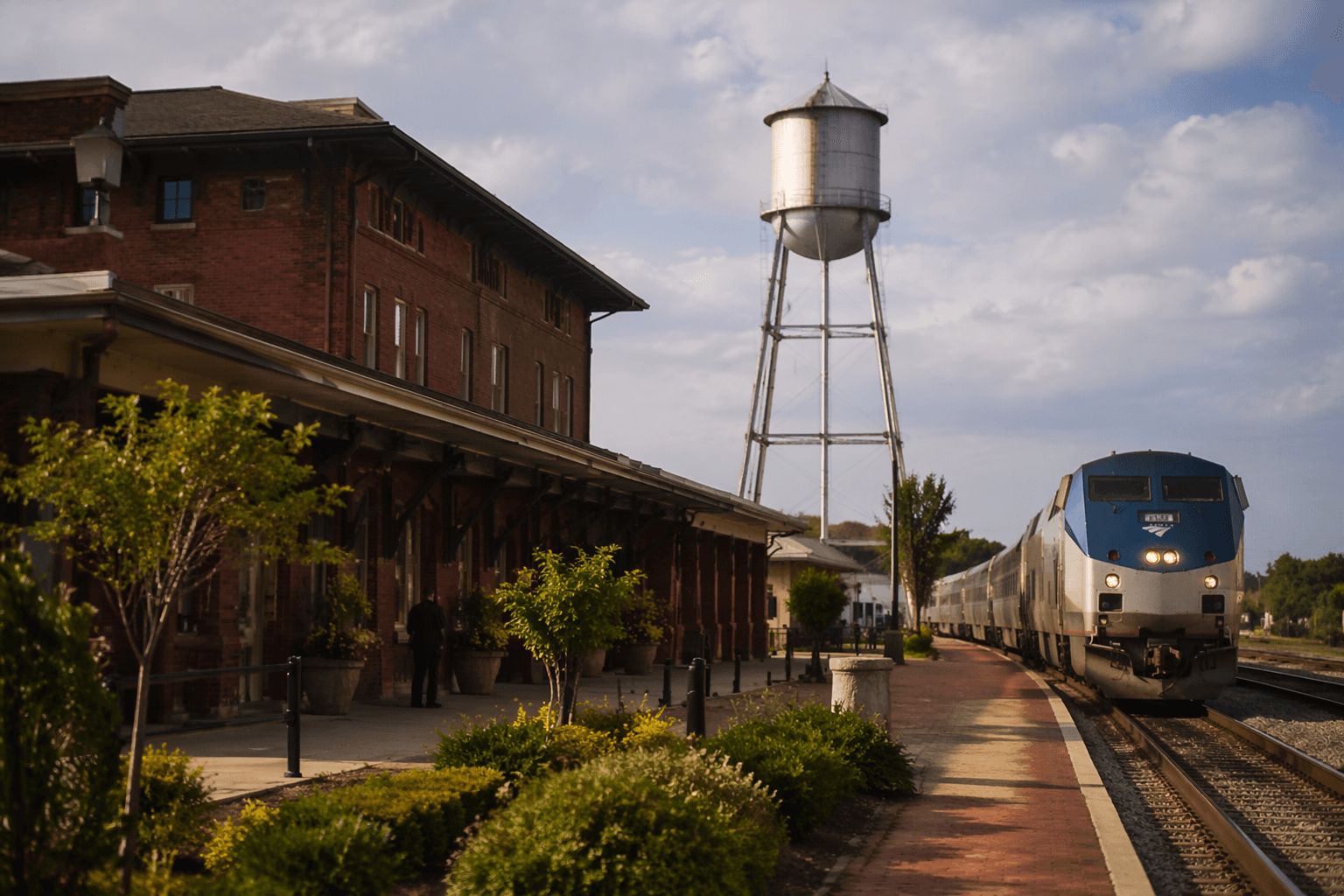
Quitman County’s rail story got a tangible boost when Marks opened a passenger stop on Amtrak’s City of New Orleans line in May 2018 after more than two decades of local effort. Local coverage puts the project cost at roughly $1.2 million to $1.3 million, funded with a $500,000 federal grant along with local matches and support from the Delta Regional Authority.
That station, known as the Northwest Mississippi Regional Station, gives the county something more than a freight talking point. It creates a second rail narrative: one for goods and one for people. County leaders have treated it as both an economic and tourism asset, and that matters because regions that can connect workers, visitors and freight tend to have more options than places that rely on one transportation mode alone.
Roads, flooding and the public cost of getting around
The county has also tried to make road work part of its development case. Quitman County’s Riverside Road RAISE materials say the project was sought to reduce flooding, property loss and displacement, and to provide a safer route connecting residents with State Highway 322. The file set also includes letters of support from U.S. Sens. Roger Wicker and Cindy Hyde-Smith, U.S. Rep. Bennie Thompson, the City of Marks and the Town of Lambert.

That support list matters because it shows the county is not treating road upgrades as a side issue. In a county where freight, commuter traffic and emergency access all depend on a limited road network, Riverside Road is an economic-development issue as much as an engineering one. If the project reduces flooding and improves access to Highway 322, residents will feel the benefit in safer travel long before any industrial recruit posts a hiring notice.
The institutions behind the pitch
Quitman Tourism Economic Development, or Q’TED, is described by the county as a nonprofit division organized to create economic growth and development, promote tourism, improve public education opportunities and support social and cultural transformation. That broad mandate shows how the county has tried to braid together business recruitment, tourism and community development rather than treat them as separate silos.
There is also a deeper organizing history behind the work. Quitman County Development Organization records say QCDO was chartered in February 1977, and later accounts describe it as rooted in African American community activism in Marks and the civil rights movement. That matters because it suggests today’s development effort is not just a marketing campaign from county hall. It is part of a longer local tradition of trying to shape the county’s economic future from within.
What success should look like
Residents should judge this strategy by outcomes that can actually be counted. The first test is whether the county adds employers beyond the current total of 91 and whether those jobs move the employment rate above 46.6%. The second is whether household income rises from $32,412, not just in aggregate headlines but in paychecks that keep workers local.
The third test is physical: whether Riverside Road, the industrial park and the surrounding highway network become more reliable, less flood-prone and easier to use year-round. A fourth is whether the county can hold or reverse population loss, since a place that fell from 6,176 people in 2020 to an estimated 5,542 in 2024 cannot afford development that looks impressive on paper but leaves the labor force unchanged.
Quitman County has given itself a clear test. If cheap land, freight rail, passenger rail, road fixes and state incentives are going to justify themselves, the payoff has to show up in jobs, wages, utility reliability and better roads that residents can feel every day.
This article was produced by Prism’s automated news system from verified source data, official records, and press releases, then run through automated quality and moderation checks before publishing. The system is built and supervised by the people who set the standards it runs under. Read our full AI policy.
Did this article answer your question?