Railroad decision helped Royse City grow, history shows
A railroad route through Royse City instead of around it set the town’s footprint, and the same downtown core still anchors commerce, preservation, and growth.

The railroad did more than stop in Royse City. It decided where the town would form, where the first businesses would cluster, and why the downtown grid still sits at the center of local life. Garrett Burgess Griffin Royse, known as Byrd Royse, platted the townsite in 1886 and sold the first lots, turning a rail decision into the framework for a community that still carries that origin in its streets and storefronts.
How the railroad made the town
Royse City began taking shape in 1885 after settlers learned the Missouri, Kansas and Texas Railroad would be built through this part of Rockwall County. That routing choice mattered because it made Royse City the favored location instead of neighboring Fate, and it pulled early residents, businesses, and investment toward the new stop. The city’s history preserves a family legend that Royse offered land for a train station if the railroad would name the stop Royse City, a detail that fits the town’s practical origins as much as its identity.
The early settlement pattern was unusually concrete. Some business houses were pulled on rollers from Fate, a reminder that the town did not grow in theory or on paper alone. It grew by moving structures, opening stores, and making the railroad landing place into a working commercial center. The first business, a general merchandise store, opened in December 1885, and a post office followed in 1886.
By 1890, Royse City had reached 1,000 people, two cotton gins, a gristmill, and 20 businesses. It first incorporated in 1891, lost that incorporation in 1902, and brought it back in 1906. The name, the lot layout, and the first round of business all trace back to G. B. Royse, the man who gave the town its name and its first development pattern.
The downtown core left by depot-era growth
The railroad did not just create a town site. It created a downtown footprint that still defines the city’s historic core. Much of Royse City’s brick building stock from the 1920s remains in use, and that continuity gives the old center a commercial value that goes beyond nostalgia. It is the built record of the town’s earliest economy, when agriculture, cotton trading, cottonseed oil manufacturing, and cotton ginning drove the local base.
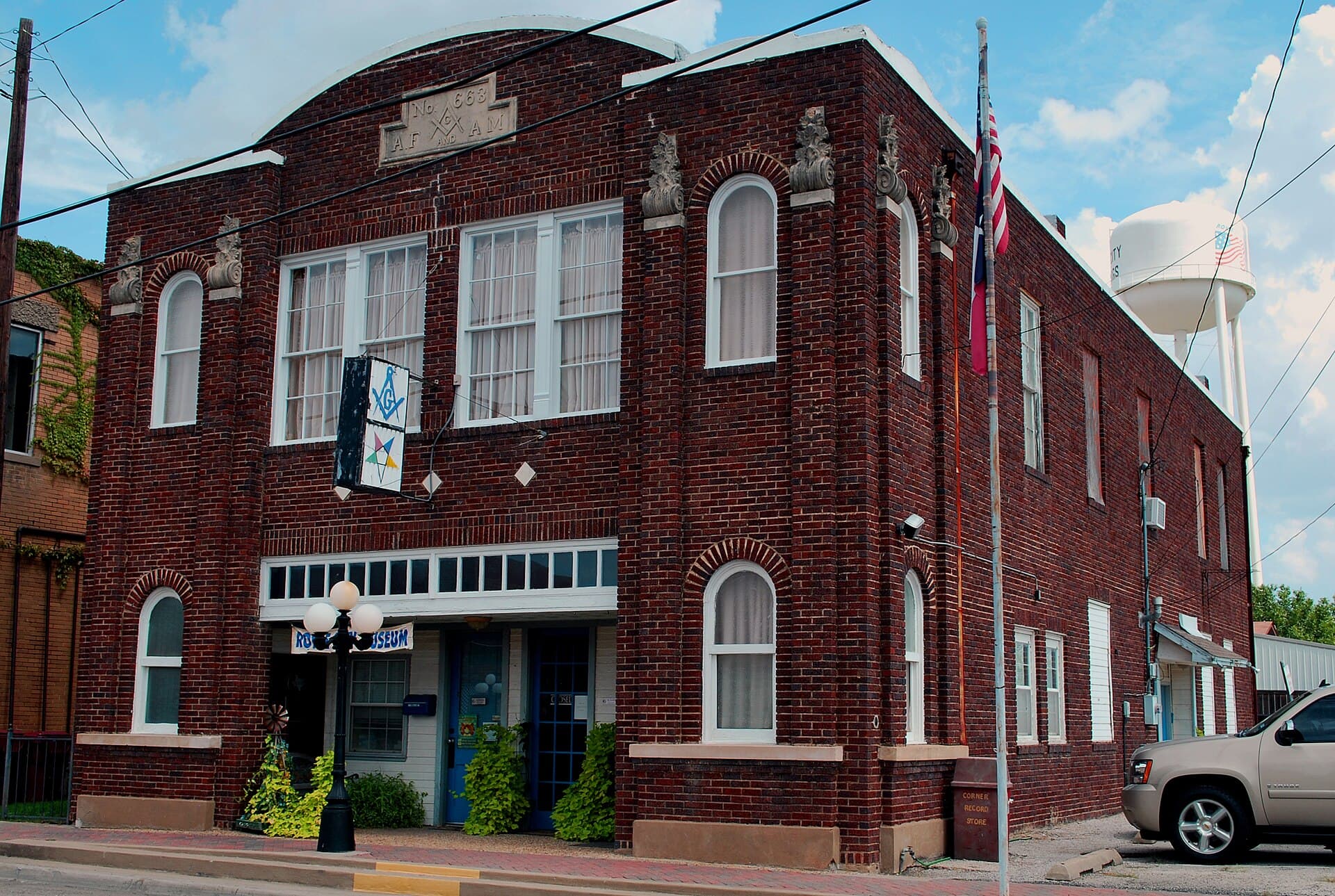
That history is visible in specific buildings. The Zaner Robinson Historical Museum sits in a 1925 building that is both a Recorded Texas Historic Landmark and listed in the National Register of Historic Places. The museum interprets life on the Blackland Prairie from early settlers through the boom years from 1920 to the 1960s, linking the rail-era town to the larger agricultural region that sustained it. Nearby, the Methodist Church, built in 1904, and the Masonic Lodge, built in 1925, add two more fixed points to the downtown story. The lodge is also listed on the National Register.
Those landmarks matter because they show how the town’s original economic engine became its civic frame. The old depot-era logic was simple: rail access drew commerce, commerce drew buildings, and buildings drew a street pattern. More than a century later, that pattern still channels where the historic district feels cohesive, where foot traffic naturally concentrates, and where visitors can still read the town’s origin in the built environment.
Why preservation now affects commerce
Royse City’s heritage overlay district turns that history into policy. The district is regulated by the Heritage Preservation Board and requires a Certificate of Appropriateness for exterior changes. Its purpose is to safeguard the early-20th-century character of the neighborhood, including building style, colors, and exterior features. In practical terms, that means the city treats the historic core as an economic asset as well as a cultural one.
That approach has a direct relationship to local commerce. A downtown that still looks and functions like a recognizable rail town gives Royse City a distinct place identity in a region where growth can blur one community into the next. The city’s active effort to brand and interpret the historic MKT Depot shows that local leaders understand the value of that identity. A preserved core supports walkability, storefront continuity, and the kind of street-level visibility that small businesses depend on.
The numbers show why the issue is no longer small-town preservation in isolation. Royse City’s population reached 13,508 in the 2020 Census. The Census Bureau’s 2024 ACS profile lists 7,146 housing units, 6,573 households, and a median household income of $116,660. Texas Almanac population history shows the scale of the town’s rise, from 2,957 in 2000 to 9,349 in 2010, then 13,013 in 2019, 13,508 in 2020, and 15,978 in 2021. That growth has turned the historic center from the town’s whole commercial world into its most visible anchor.
Royse City also sits in a location that keeps that anchor relevant. Texas Almanac places it on State Highway 66, five miles northeast of Rockwall in the northeastern corner of Rockwall County. As the Dallas-Fort Worth metroplex continues to expand, the old railroad decision becomes a present-day business issue: the town’s original downtown still gives Royse City a defined center, and the heritage district is the mechanism that keeps that center legible.
The Texas Historical Commission says National Register listing recognizes a property’s historical or architectural significance. In Royse City, that recognition extends beyond one building. It covers a wider story of rail routing, cotton-era commerce, and a downtown that still carries the outline of the decision that started it all.
This article was produced by Prism’s automated news system from verified source data, official records, and press releases, then run through automated quality and moderation checks before publishing. The system is built and supervised by the people who set the standards it runs under. Read our full AI policy.
Did this article answer your question?