Rockwall County library guide helps families trace genealogy records
Rockwall County’s library and clerk’s office can uncover census lines, burial clues, and land ties fast. The best path starts at the library, then moves to microfilm and obituaries.
At the Rockwall County Library, families can search HeritageQuest and Fold3, use Ancestry Library Edition in the building, and head upstairs to the Genealogy & Periodical Room for microfilm. From there, property records, cemetery lists, obituary notices, and historic maps connect names to places across a compact county that has been documenting itself for generations.
Start at the Rockwall County Library
The county library is the best first stop because it brings several major genealogy tools together in one place. Rockwall County patrons can use HeritageQuest and Fold3 Library Edition through TexShare databases, and Ancestry Library Edition is available for in-library use only. HeritageQuest can also be accessed remotely from home, which makes it the easiest place to begin when you are sorting through a family line and want to test a few names before making a trip.
Ancestry Library Edition is the heavyweight tool in the room. It includes about 4,000 databases, including U.S. Federal Census images and indexes from 1790 to 1930, more than 1,000 historical maps, DAR lineage volumes, WWI draft cards, the Social Security Death Index, federal slave narratives, and a Civil War collection.
Microfilm and the genealogy room
The practical backbone of the library is still its microfilm collection. Microfilm is available in the Genealogy & Periodical Room on the second floor, and the building also has a self-service microfilm and microfiche reader. Copies cost 15 cents each, and use is limited to one hour if other patrons are waiting, so it pays to arrive with a short list of names, dates, or records already in hand.
Microfilm holdings and the database room are available inside the library building. The library is useful for more than online browsing: it is a place to pull local newspaper runs, obituaries, county notices, and other records that are easier to inspect on film than in a general web search.
Move from names to land and vital records
Once a surname turns up in a census or obituary, the Rockwall County Clerk’s Office becomes the next stop. The clerk’s office provides searchable property records and online requests for Rockwall County birth and death certificates, which helps tie a family name to a location and a time period. Property records are especially useful in a county where land ownership often stayed in the same family long enough to create a clear paper trail.
The clerk’s office also points researchers toward the Family Land Heritage Program, where a deed or tax-related clue can confirm that a household moved from one tract to another, or stayed on the same land while the family grew around it.
Use cemeteries, obituaries, and maps to fill the gaps
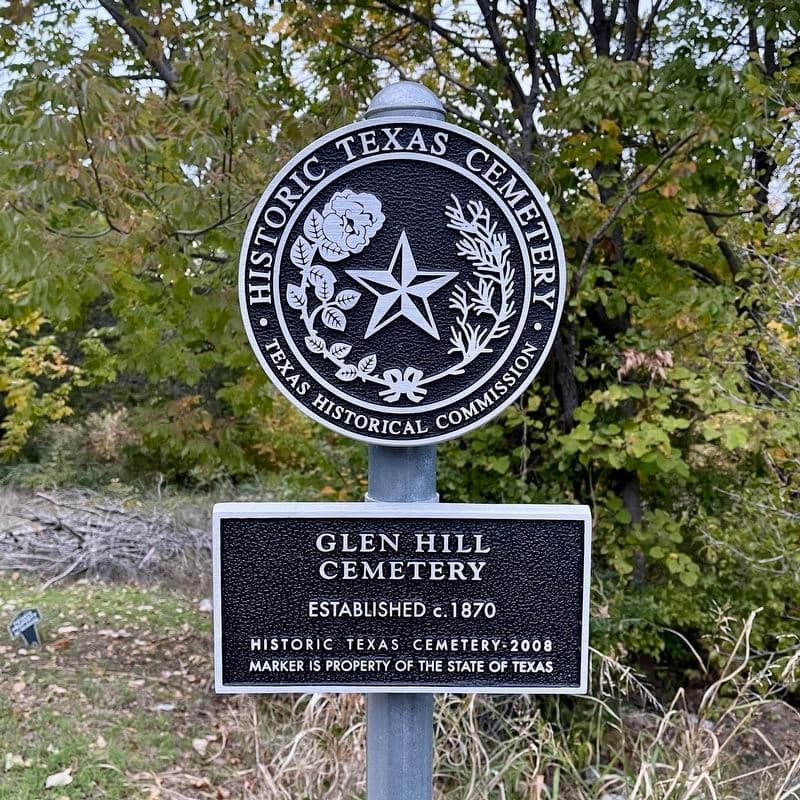
Researchers can use a partial Rockwall County cemeteries inventory and Rockwall area obituaries from Rest Haven Funeral Home. A cemetery entry can give a burial place and sometimes a birth or death year, while an obituary can identify spouses, children, military service, church ties, and surviving relatives.
Maps are just as important in Rockwall County as names and dates. Researchers can use old maps, the Perry-Castañeda Library map collection, county maps, and the Rockwall County Monument Network. In a county shaped by road corridors and changing settlement names, Rockwall and Heath were founded along the National Road of the Republic of Texas, and the area’s first post office was Black Hill, details that can explain why a family appears under one place name in an older record and another in a later one.
Researchers can also use the Portal to Texas History, the Library of Congress Genealogy Research Guide, National Archives genealogy resources, the National Genealogical Society Free Resources Directory, the USGenWeb Project, the Dallas Genealogical Society, and the Texas State Library and Archives Commission. Local searches often stall when one record set runs out. A census hit in Rockwall County may need a map from one institution, a military record from another, and a newspaper notice from a third before the family line locks into place.
Why Rockwall County rewards local research
Rockwall County is the smallest in Texas, covering just 147 square miles. The area was first home to Caddo and Creek peoples, the National Road of the Republic of Texas was surveyed and constructed through the area in the mid-1840s, and Rockwall County was formed in 1873.
Rockwall County sits in the Blackland Prairies of north central Texas, about 25 miles northeast of Dallas, with elevation ranging from about 390 to 620 feet. In a compact county like this, records often overlap quickly: a family name can appear in a cemetery inventory, a courthouse deed, an obituary, and a historic map all within the same local area.
Rockwall County Library moved to its current facility in September 2008 after voters approved an $11.5 million bond issue in November 2004, and the current building is about five times larger than the former facility. A public-library profile lists 64,570 residents served and about 323,180 items circulated annually.
Where beginners usually get stuck
The most common mistake is starting too broadly. In Rockwall County, the better tactic is to begin with one ancestor, one likely spelling variation, and one place, then cross-check that name in HeritageQuest, Ancestry Library Edition, property records, and obituary sources. Another easy trap is assuming the online version tells the whole story; the county’s microfilm room and cemetery inventory often provide the detail that finishes the search.
The Rockwall County Genealogical Society meets the first Thursday of every month from 6 to 8 p.m. for people new to genealogy or new to the library’s genealogy resources.
This article was produced by Prism’s automated news system from verified source data, official records, and press releases, then run through automated quality and moderation checks before publishing. The system is built and supervised by the people who set the standards it runs under. Read our full AI policy.
Did this article answer your question?