Rockwall County museum turns local history into an outdoor campus
Harry Myers Park holds a walkable history campus where Rockwall County’s past becomes a family outing. Restored homes, prairie habitat and the rebuilt rock wall turn local lore into a live exhibit.

At Harry Myers Park, visitors can walk from a rebuilt stretch of Rockwall County’s famous rock wall to restored homes, a tenant cabin, prairie habitat and working-era outbuildings. In one afternoon, the grounds make the county’s development feel immediate rather than abstract.
A campus built for a real afternoon
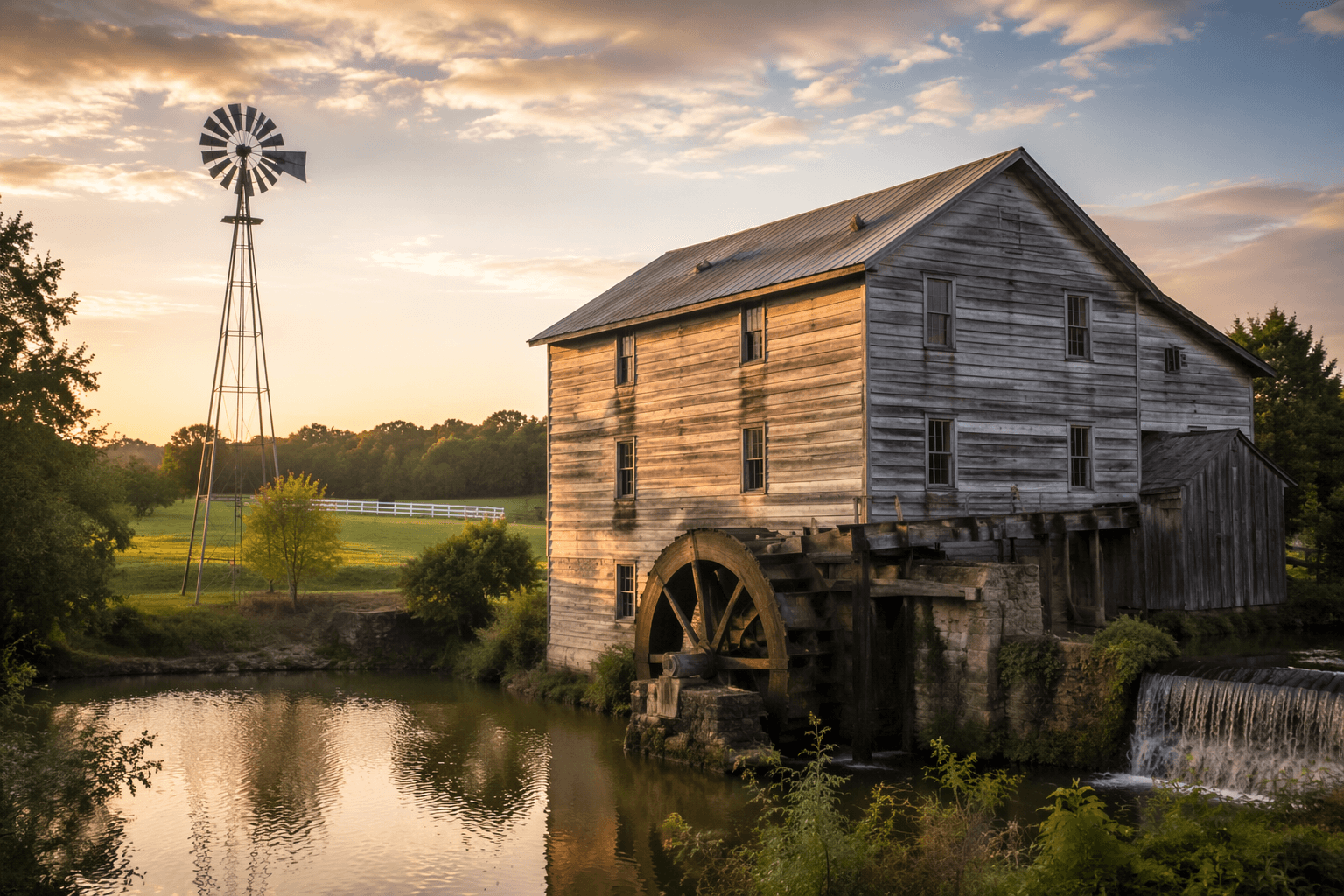
The Rockwall County Historical Foundation & Museum sits in downtown Rockwall inside Harry Myers Park and operates as a compact outdoor campus, not just a building full of artifacts. The property includes two homes from early Rockwall County, a tenant cabin, the Hartman Windmill, a replica carriage house, an outhouse, a gazebo, a Blackland Prairie Grassland preservation project planted with native grasses and wildflowers, and an original segment of the rock wall rebuilt on museum property.
The prairie section shows the land before suburban growth transformed the county, while the homes and service structures show how people lived, worked and organized domestic space. Hours run Thursday through Saturday, 10 a.m. to 3 p.m., and Sunday, 1 p.m. to 4 p.m., with guided and self-guided tours available while the site is open. Groups larger than 10 are asked to schedule in advance, young children must stay with a guardian, and the organization is a 501(c)(3) independent of city or county government.
Two houses anchor the story of settlement and status
The Bailey House gives the campus a direct link to early 20th-century Rockwall life. Built around 1909 and moved to the museum grounds in 2017 from 301 N. Goliad St., the house was restored with funds raised for the project, including two original fireplaces that had been removed and were later found in a consignment shop.
The Bailey name also ties the house to civic change through Lucy Estelle Curry Bailey, who became the first female elected County Clerk in Rockwall.

The Manson-LaMoreaux-Hartman House connects home life to medicine, journalism and politics. It began as a two-room dogtrot-style house built by Watson B. Bowles. Dr. Henry, or Hal, Walker Manson bought the property in 1880, later served in the Texas House of Representatives and ran the Rockwall Success, the county’s first local newspaper, from 1885 onward. Dr. Jessie Castle LaMoreaux, one of the first female dentists in Texas, also practiced there.
What the other structures reveal about daily life
The rest of the grounds fill in the social and practical world around those homes. The Tenant Cabin points to the labor that supported local farms and households, while the Hartman Windmill speaks to water, agriculture and the mechanics of rural life in Blackland Prairie country. The replica carriage house and the outhouse show the everyday infrastructure that shaped how families moved, stored equipment and handled basic needs before modern plumbing and cars.
The Blackland Prairie Grassland preservation project plants native grasses and wildflowers and creates a living reference point for the landscape that supported early settlement.
The rock wall turns geology into public memory
The rock wall was discovered in 1852 by Benjamin Boydstun, Terry Utley Wade and William Clay Stevenson, and the town was officially platted on April 17, 1854. Early Rockwall’s economy relied mainly on cattle until the Missouri, Kansas & Texas rail line helped the town grow.

The wall also shows how scientific interpretation changed over time. Sidney Paige’s 1909 Science article concluded the feature was not a wall at all but sandstone dykes. In 1927, Smithsonian researchers L.W. Stephenson and J.W. Fewkes pronounced the structure natural. The 1936 Texas Centennial excavation averaged 70 visitors per day in its first months.
Today, reconstructed wall segments sit on museum grounds and at the Rockwall County Historic Courthouse, while in-place walls remain buried on private property and are closed to the public.
A museum that works as a local classroom
The museum’s mission is to preserve and recognize significant places and people. Lectures, family programs and a monthly Sheri Stodghill Lecture Series give the grounds year-round use, while the museum’s educational resources tie local learning to the year the wall was found in 1852. Featured stories on the site include Texas’s first female dentist, the rock wall investigations and local business history.
The Rockwall County Historical Foundation was organized on January 16, 1978, to collect, preserve and present the county’s history.
This article was produced by Prism’s automated news system from verified source data, official records, and press releases, then run through automated quality and moderation checks before publishing. The system is built and supervised by the people who set the standards it runs under. Read our full AI policy.
Did this article answer your question?