Bowdoin Faculty Debate Expression Policies, Academic Freedom at Spring Meeting
Bowdoin posted its lowest-ever acceptance rate of 6.5% as faculty debated campus expression policies, with a motion to rescind them withdrawn in favor of a summer review.
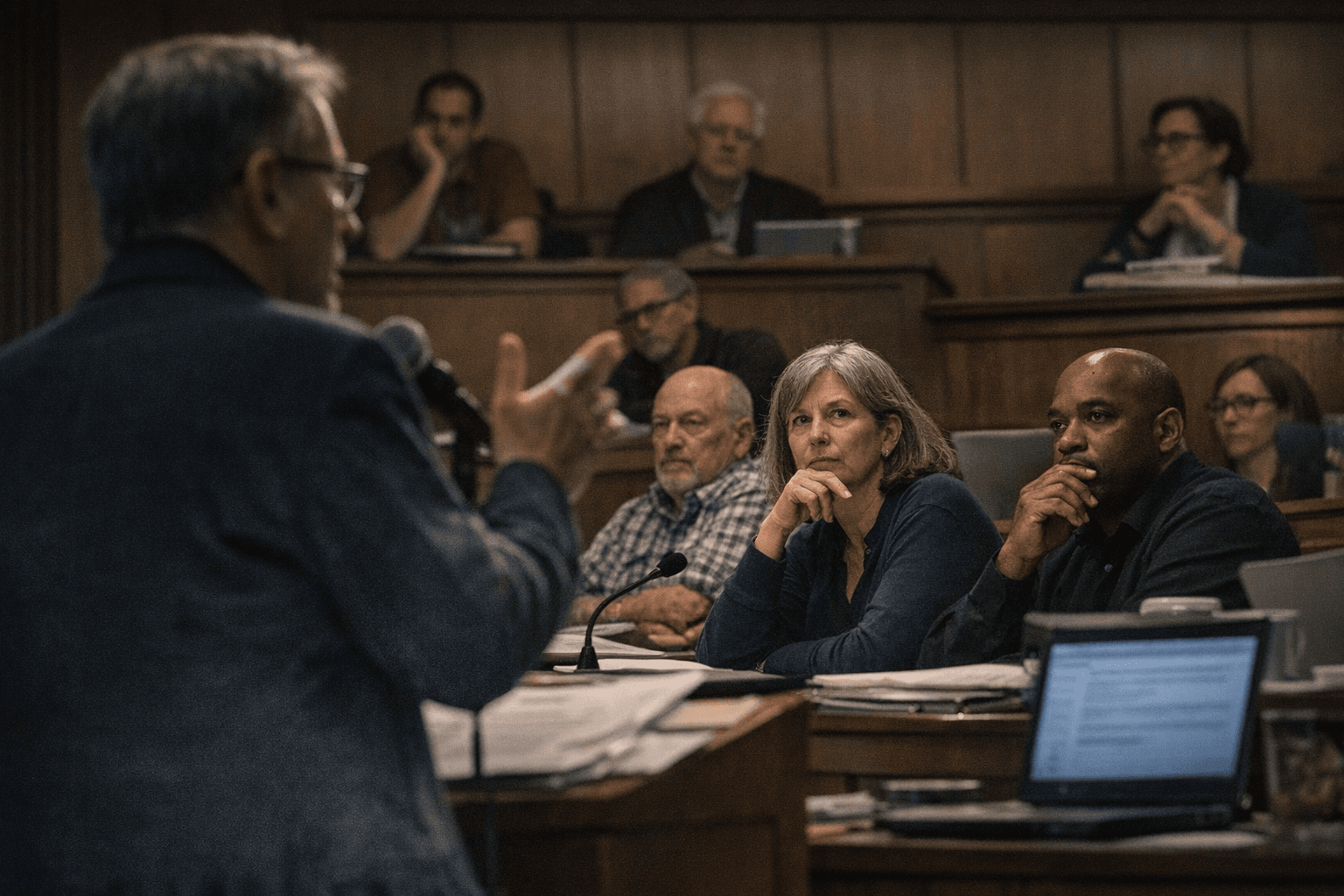
Associate Professor Salar Mohandesi arrived at Bowdoin's first post-spring break faculty meeting in Mills Hall with a motion calling on President Safa Zaki to rescind the college's newly announced campus use and expression policies. He left without pressing it to a vote.
Mohandesi had formally advanced the motion ahead of the April 3 meeting and used his floor time to outline concerns about potential double standards in how the policies would be enforced, connecting them to a broader national trend toward campus speech restrictions. He ultimately withdrew the motion and deferred to a planned summer review process, a decision that signals at least some faculty preference for deliberative procedure over an immediate governance confrontation.
The academic freedom question was already moving along a parallel track. Aaron Kitch, professor of English and chair of the Committee on Governance and Faculty Affairs, described ongoing work to establish a dedicated working group focused on crafting academic freedom language for the faculty handbook. The GFA had recommended forming the group, and Bowdoin's AAUP chapter accepted the recommendation. The intent is to produce durable policy language rather than a temporary patch.
Zaki opened the meeting by acknowledging the impact the U.S.-Israeli war in Iran has had on members of the Bowdoin community before turning to two institutional developments. Regular-decision admissions results released over spring break showed a 6.5 percent acceptance rate for the Class of 2030, the lowest in the college's history. She also shared early renderings of a proposed science building tied to the broader campus master plan.
On the financial underpinnings of that plan, Zaki was direct. "We're not being timid. We're being strategic about our approach here," she said, describing an effort that will require negotiation with the Budget Committee and a sustained philanthropic commitment to avoid eroding financial aid or academic programs.
Any construction that emerges from the master plan would involve local contractors and carry ripple effects for Brunswick's housing market and town-gown relations. The summer review of campus expression policy is now the next moment when faculty pressure, administrative discretion, and competing conceptions of free inquiry will meet again.
This article was produced by Prism’s automated news system from verified source data, official records, and press releases, then run through automated quality and moderation checks before publishing. The system is built and supervised by the people who set the standards it runs under. Read our full AI policy.
Did this article answer your question?