SoMa, Tenderloin, Mission Residents Frustrated as Homelessness Tensions Mount
Tents in SoMa have surged 140% as sweeps push the unhoused from neighborhood to neighborhood, with only 36% of SF's homeless population able to access a shelter bed.
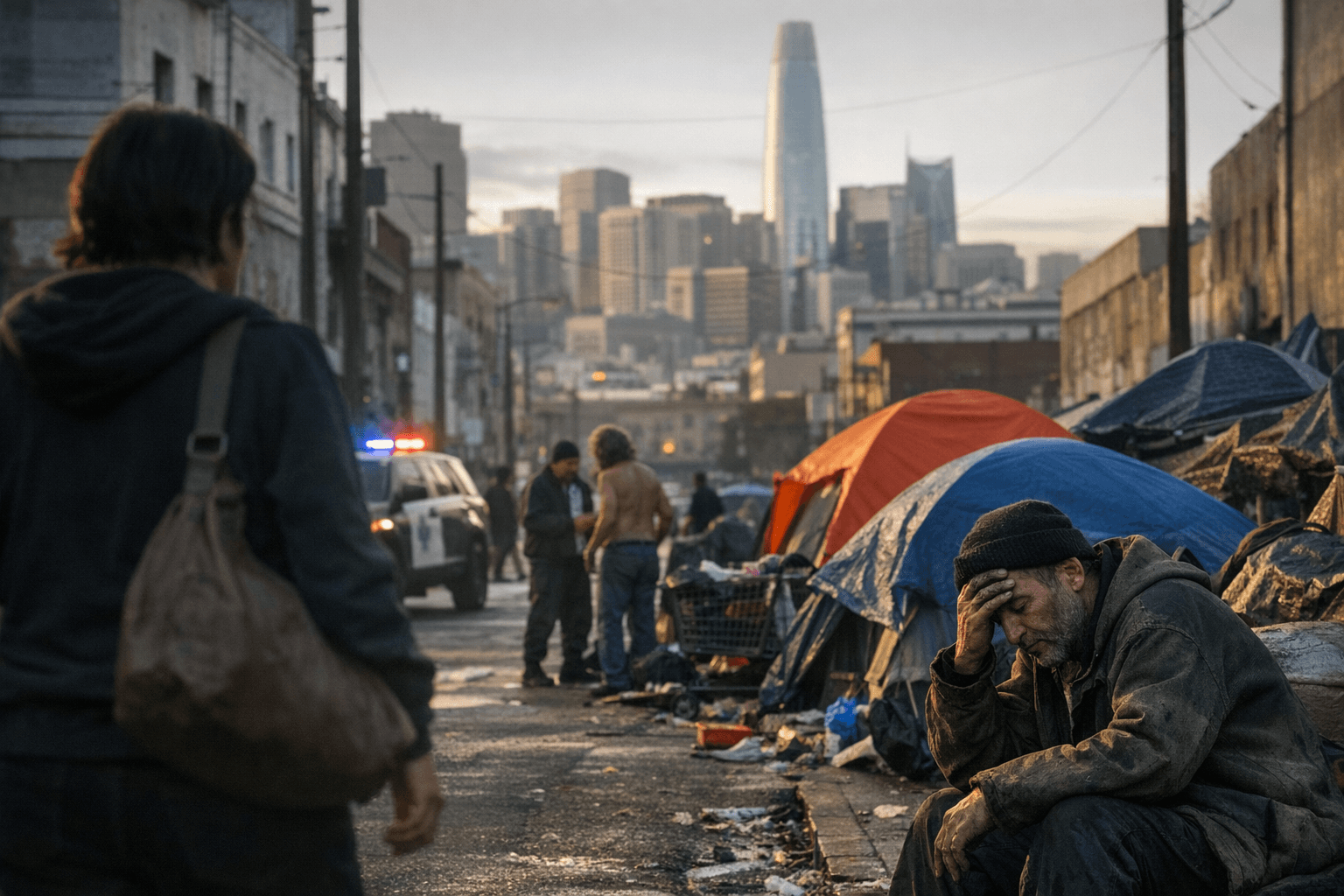
Beneath a freeway overpass in SoMa, Kalani Estis heard the familiar crackle of a police megaphone ordering her to move. She gathered her belongings, rounded the corner, and waited out the officer. When it began to rain and the patrol passed, she returned to her original spot on the wet pavement. "We're all wet, and we didn't even get to start our day off right," Estis said. "We're just trying to keep our stuff together, what little we have. There's only so many places to stay dry."
Her situation is one data point in a pattern city numbers now make undeniable: tents in SoMa have surged nearly 140% since last year, climbing from 18 to 43 since June alone, even as the citywide count of visible encampments has dropped since Mayor Daniel Lurie launched an aggressive crackdown in July 2024. The math is not complicated. When police clear one block, people move to the next neighborhood over.
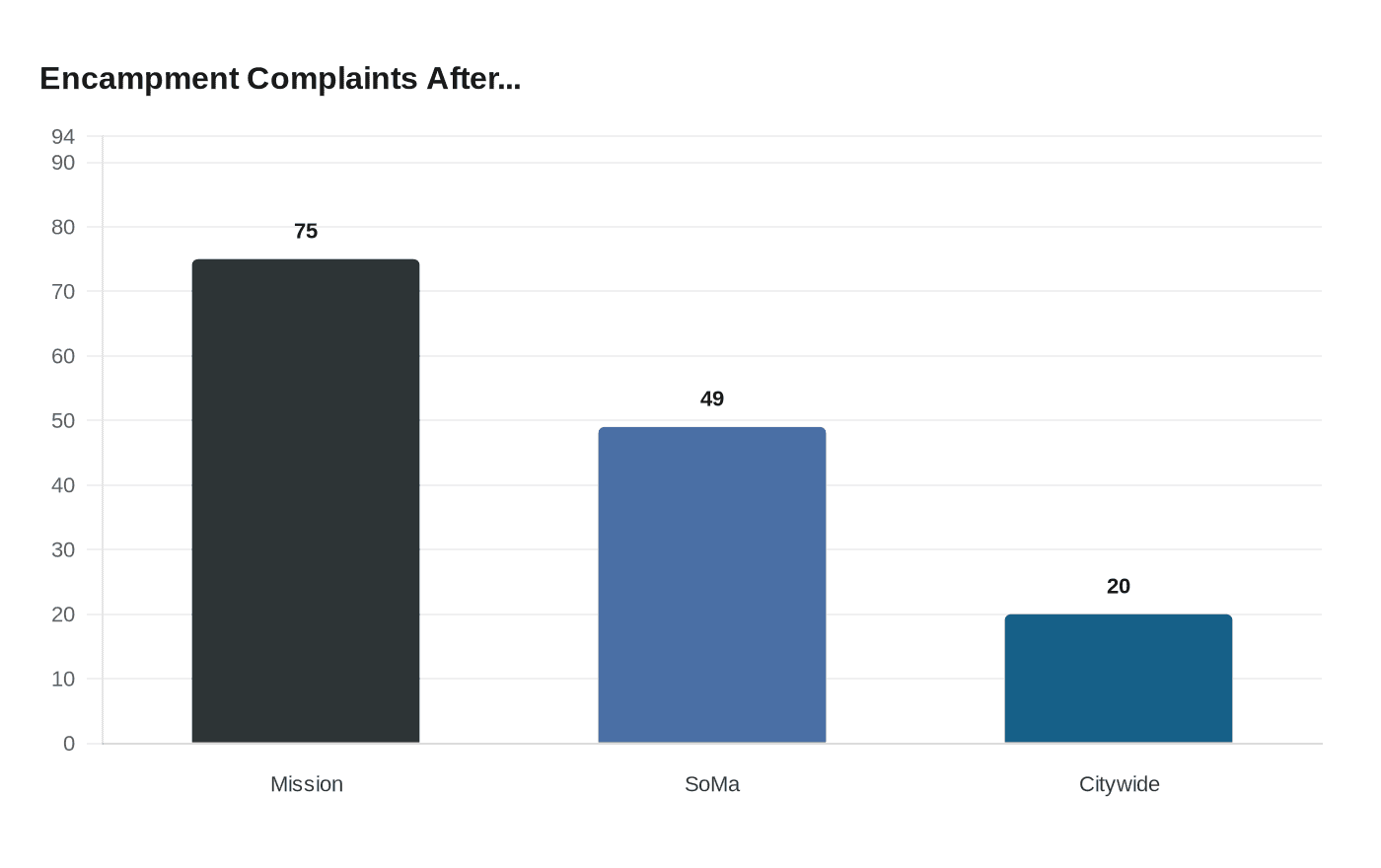
The displacement trail runs through all three communities. Shortly after Lurie took office, Mission business owners complained that his Tenderloin cleanup had pushed the unhoused into their streets. Now SoMa residents are making the same argument, and 311 data supports them: encampment complaints in the Mission rose 75% and in SoMa 49% in the months following accelerated sweeps, against a citywide increase of roughly 20%. The pattern predates Lurie. When the city cleared downtown for the Asia-Pacific Economic Cooperation summit in November 2023, Mission encampment calls to 311 jumped 27% while SoMa calls dropped 33%.
"Instead of them coming up with a solution, they just move us," Estis said.
The root of the frustration, for both housed and unhoused residents, is a shelter system that is geographically and numerically inadequate. San Francisco's emergency beds are concentrated almost exclusively in the Tenderloin, SoMa, Mission, and Bayview-Hunters Point. According to data the Department of Homelessness and Supportive Housing provided to Mission Local, Districts 4, 7, and 8 have no shelters at all; Districts 1 and 11 have no emergency shelters. A city controller report described the imbalance plainly: "There are no shelters on the western half of the city." Meanwhile, only about 36% of the city's homeless population, roughly 2,400 people, have access to a shelter bed on any given night. New York City, by contrast, shelters over 90% of its homeless population under a right-to-shelter law San Francisco does not have. The city's own homelessness department has acknowledged that for every person it moves into housing, approximately three more people become homeless.
Supervisor Bilal Mahmood, who represents the Tenderloin, introduced geographic equity legislation to require every district to approve at least one new shelter, transitional housing facility, or behavioral health residential care facility by June 2026. The bill would also bar new shelter facilities from opening within 1,000 feet of existing ones without a board waiver. But Lurie's office drafted amendments that would strip the mandate, replacing the word "require" with "endeavor to" and effectively removing any enforcement mechanism.
Kate Robinson, executive director of the Tenderloin Community Benefit District, said the amended language guts the intent of the law. "Instead of turning this into a real ordinance, to say 'endeavor' really gives it no teeth," Robinson said. "We need real commitment to geographic equity."
The city budgeted $677 million for homelessness programs in fiscal year 2025-26, down from $846 million the year before. Temporary shelter and crisis intervention programs ran at or above 90% capacity from July 2023 through July 2025. Chris Barnes, who volunteers to maintain the alley next to United Playaz buildings on Howard Street in SoMa, said he has seen incremental improvement under Lurie but is skeptical it will hold. "More enforcement, a lasting enforcement, not just we're going to clean it today and this week, and then we're done and they're going to be back," Barnes said.
As long as shelter supply remains concentrated in a handful of eastern neighborhoods and falls far short of actual need, residents in SoMa, the Tenderloin, and the Mission are absorbing what amounts to a structural policy choice: the city's homelessness crisis is being managed in their backyards, not solved in them.
This article was produced by Prism’s automated news system from verified source data, official records, and press releases, then run through automated quality and moderation checks before publishing. The system is built and supervised by the people who set the standards it runs under. Read our full AI policy.
Did this article answer your question?