First tornado of 2026 hits Murphy Lake in St. Louis County
Murphy Lake got the Northland’s first tornado of 2026 before dawn, an EF-1 with 105 mph winds and a 1.6-mile path. No one was hurt, but trees were shredded.
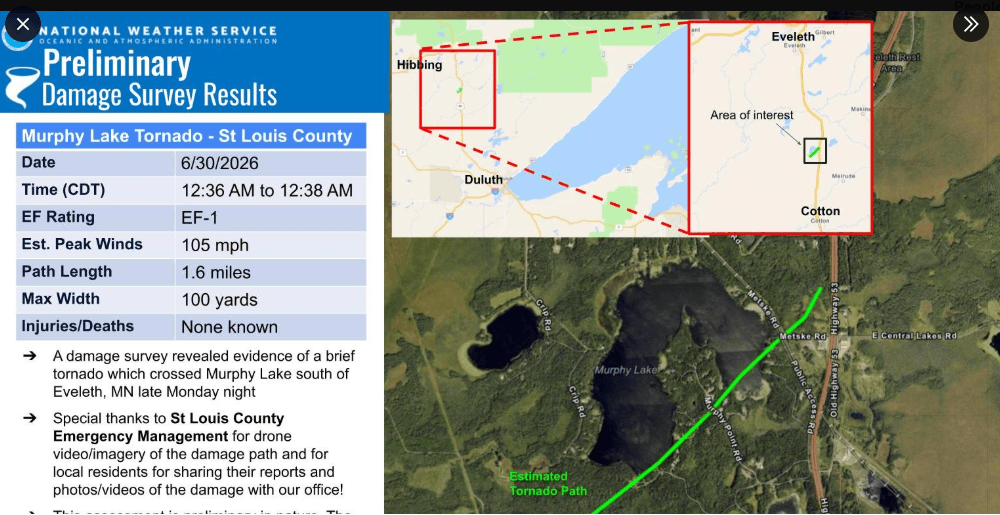
A line of storms over Murphy Lake in central St. Louis County produced the Northland’s first confirmed tornado of 2026, a brief EF-1 that touched down at 12:36 a.m. June 30 and left a 1.6-mile damage path. The National Weather Service office in Duluth estimated peak winds at 105 mph, with a maximum path width of 100 yards, and the survey found no fatalities or injuries.
The tornado began about 5 miles east-southeast of Zim and tracked through the area south of Eveleth and north of Cotton before lifting after just a few minutes. The National Weather Service described it as a single brief tornado produced by a line of storms, and its weather story page was updated July 2 with the survey result. The official classification matters because it turns a storm that might have seemed like a flash of bad weather into a documented event in the county’s severe-weather record.
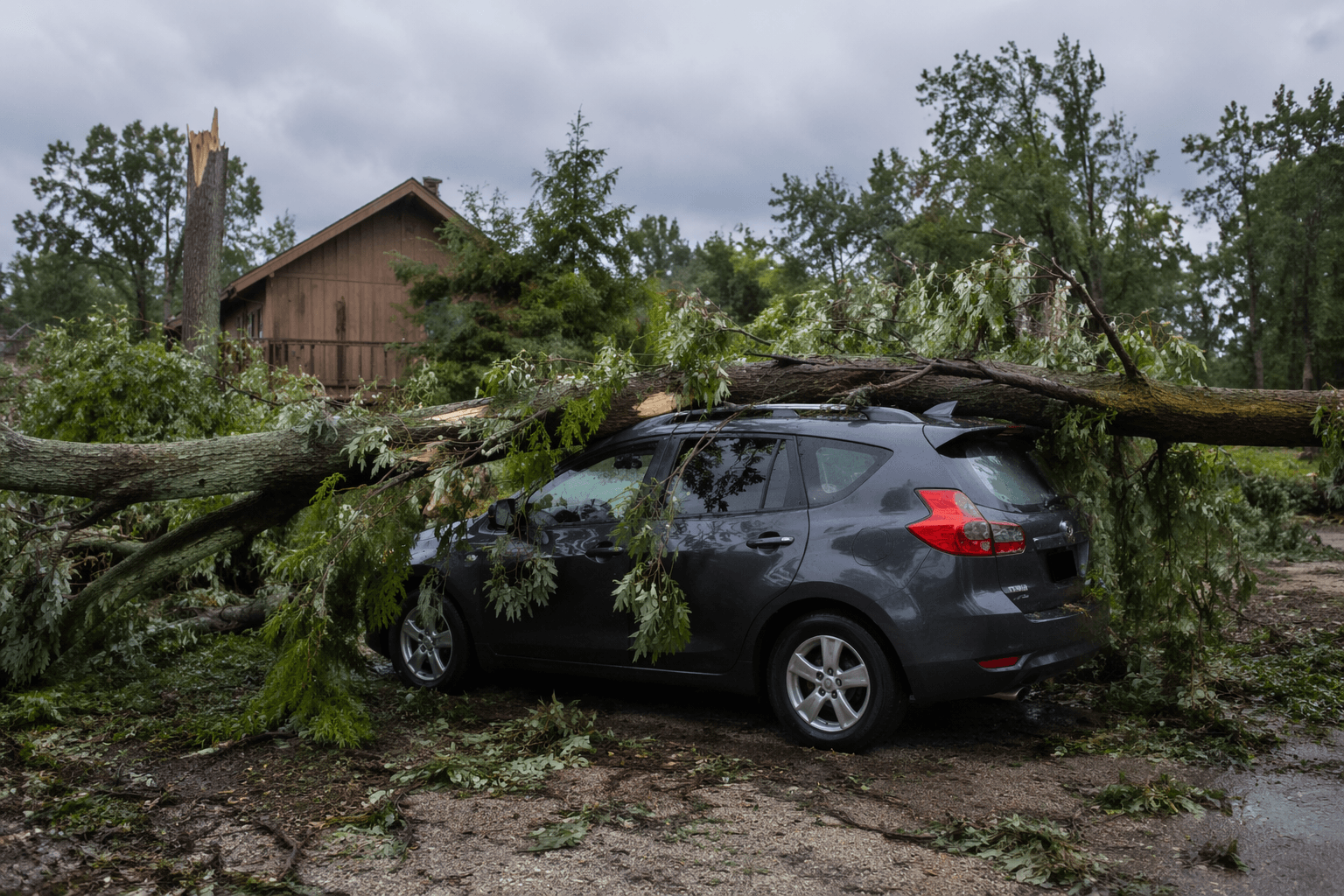
That record matters most in places like Murphy Lake, where cabins and rural homes can sit farther from quick shelter and where a midnight warning can arrive while people are asleep. A tornado that lasted only minutes still damaged hundreds of trees, and a storm that short gives residents little margin between an ordinary thunderstorm and a verified tornado. For anyone relying on phone alerts, weather radios or sirens, the lesson is not the size of the storm but the speed of the change.
The early timing also gives St. Louis County a clear seasonal benchmark. This was not a long-track outbreak or a high-end tornado; it was a narrow, short-lived EF-1, strong enough to snap and uproot trees but not tied to deaths or injuries in the survey. That makes it a useful warning for the rest of the summer: severe weather in the Northland can still build fast, strike overnight and leave enough damage to justify a careful review of shelter plans before the next line of storms moves through.
This article was produced by Prism’s automated news system from verified source data, official records, and press releases, then run through automated quality and moderation checks before publishing. The system is built and supervised by the people who set the standards it runs under. Read our full AI policy.
Did this article answer your question?