Giants Ridge grew from mining land into a year-round resort
Giants Ridge began as a hand-cleared Iron Range ski hill and became a four-season resort that now supports jobs, tourism, and access in Biwabik.
Giants Ridge is one of the clearest examples in St. Louis County of land reuse becoming regional identity. What started as a rough ski hill carved out by local residents in the late 1950s is now a year-round resort in Biwabik, built across the Iron Range’s forests, lakes, and former mining ground. That transformation still shapes how the property works today: as a recreation site, an economic engine, and a public asset that reaches far beyond winter skiing.
From a rope tow to a county destination
The first version of Giants Ridge was modest and stubbornly local. In 1958 and 1959, the main run was cleared by hand, served by a single rope tow, and paired with a small chalet converted from the Evergreen Trailer Court. A contemporaneous account names the original founders as Ed and Gretchen Karkoska, the Hagbergs, Duane and Carly Ramfjord, Bill and Shirley Kuchta, and Robert and Vivian Smith. The first year was so improvised that it reportedly included an outhouse and a 1949 Plymouth used as the power source on beginner hills.
That rough beginning mattered because the resort did not survive on scenery alone. Giants Ridge faced financial strain and a temporary closure in the late 1970s and early 1980s, and the property’s next chapter came only after the Iron Range Resources and Rehabilitation Board acquired it in 1984. The agency invested about $6 million to $7 million to turn the site into a major alpine ski and Nordic training complex, a decision that tied the resort’s survival to the broader public goal of keeping the Iron Range economy moving.
Why the land itself tells the story
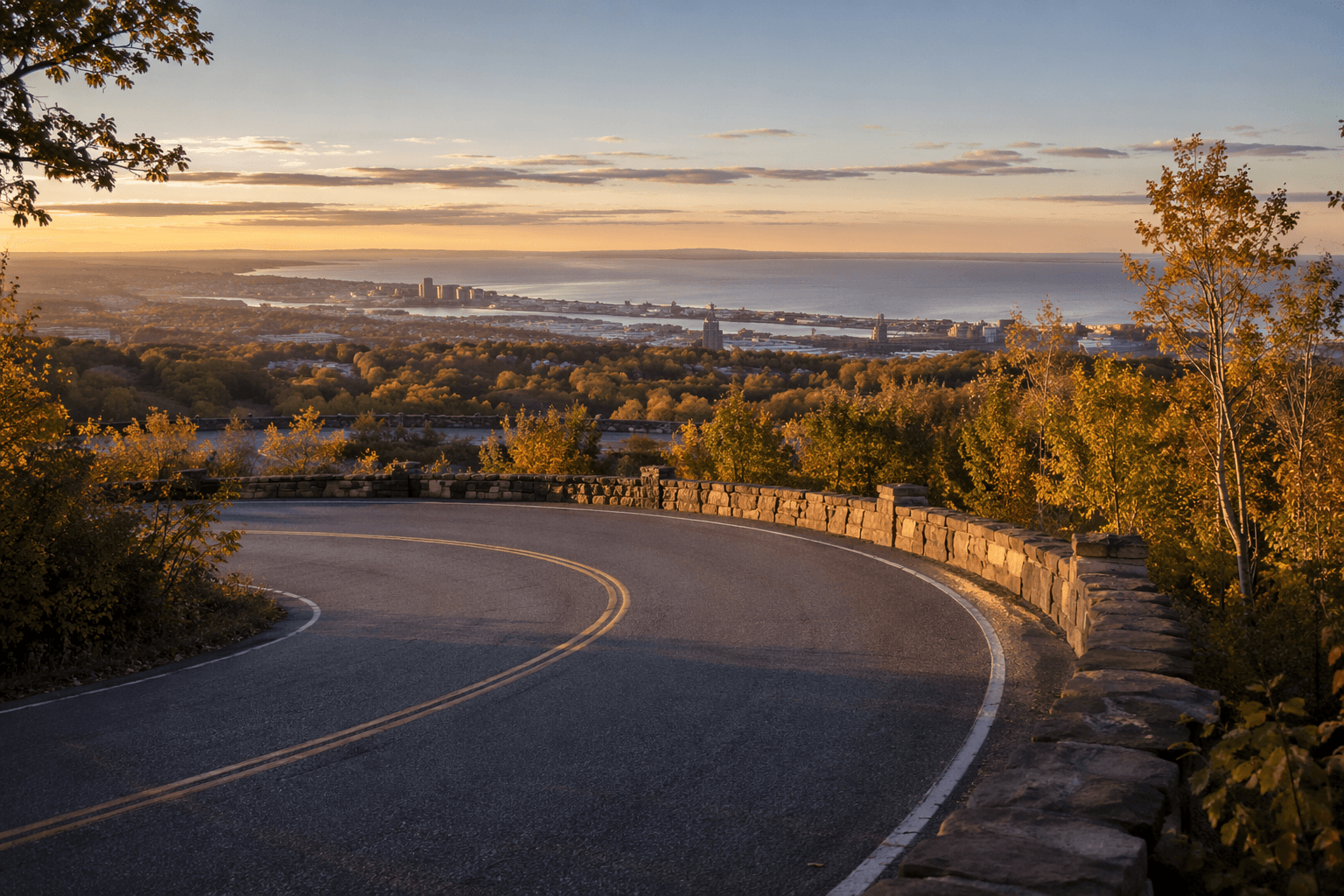
Giants Ridge’s most important feature is not just what it offers today, but where it sits. The Quarry course was built on the site of an old sand, gravel, and iron ore mining operation, which gives the resort a direct line from extraction to recreation. That change captures a bigger Iron Range pattern: land once defined by industry has been repurposed for tourism, outdoor use, and local pride without erasing its working history.
The golf side of the resort shows how far that evolution went. The Legend opened in 1997 and was named by Golf Digest to the 10 Best New Upscale Public Courses in the Nation. Giants Ridge says The Quarry is now the top public golf course in Minnesota, while the resort’s golf awards page shows both courses continuing to collect recognition. Together, they make Giants Ridge more than a ski area that happens to have summer operations. It is a dual-course destination built to draw visitors well beyond the snow season.
The mountain bike park reinforces that year-round shift. Giants Ridge says the park has 9.2 miles of purpose-built cross-country trails, adding another use to land that once carried mining infrastructure and then ski operations. In a county where seasonal swings can shape business, that kind of trail network helps keep the site active when the lifts stop turning.
A year-round resort in a four-season landscape
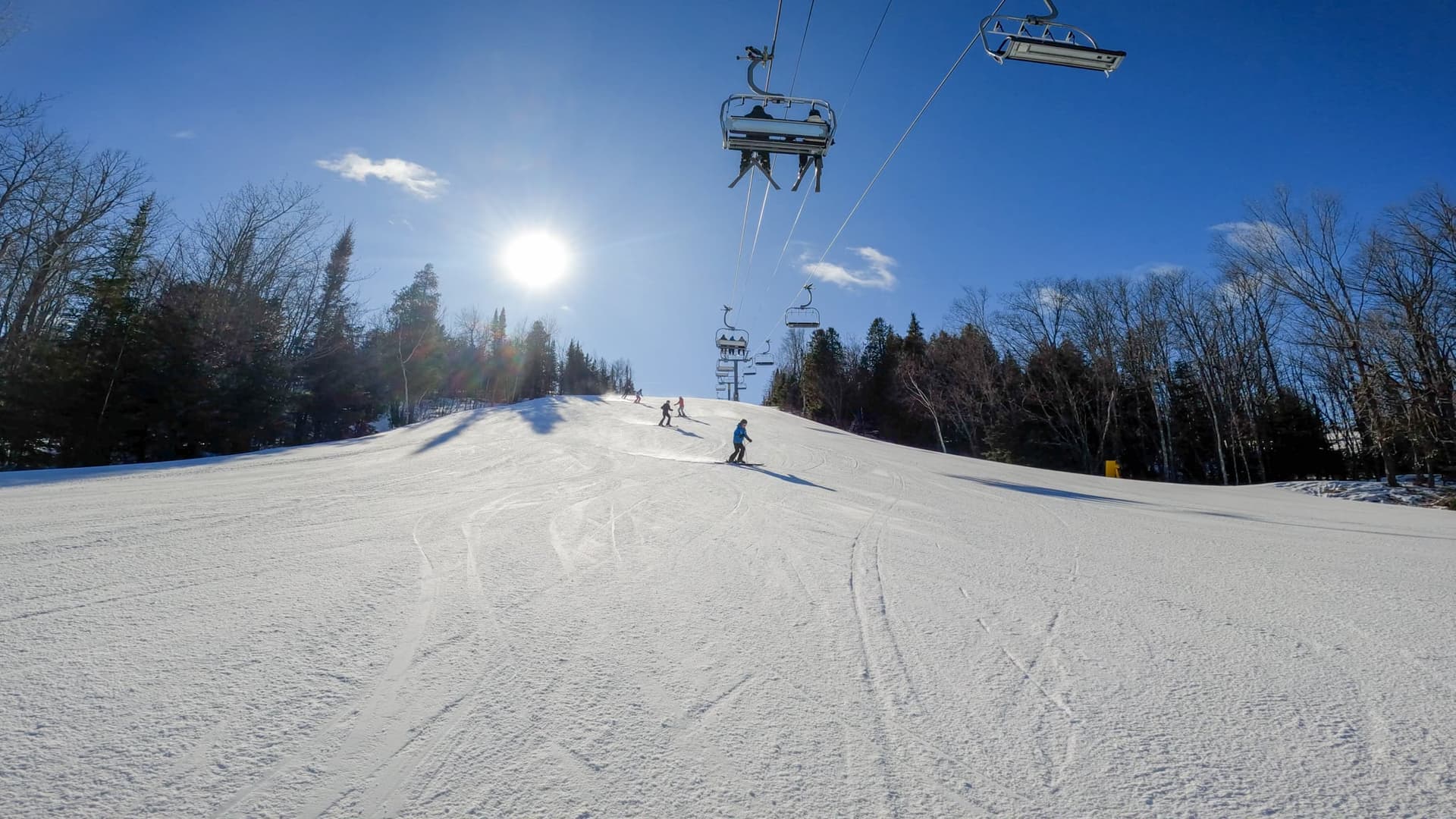
Giants Ridge now presents itself as a four-season resort in Biwabik, and the lineup is broad enough to make that claim real. Winter brings skiing, snowboarding, Nordic skiing, tubing, snowshoeing, fat tire biking, and adaptive skiing. Summer adds mountain biking, hiking, disc golf, chairlift rides, a climbing wall, and golf on The Legend and The Quarry. That mix matters in the Iron Range, where one-season destinations can leave businesses and workers exposed to the calendar; Giants Ridge spreads that activity across the year.
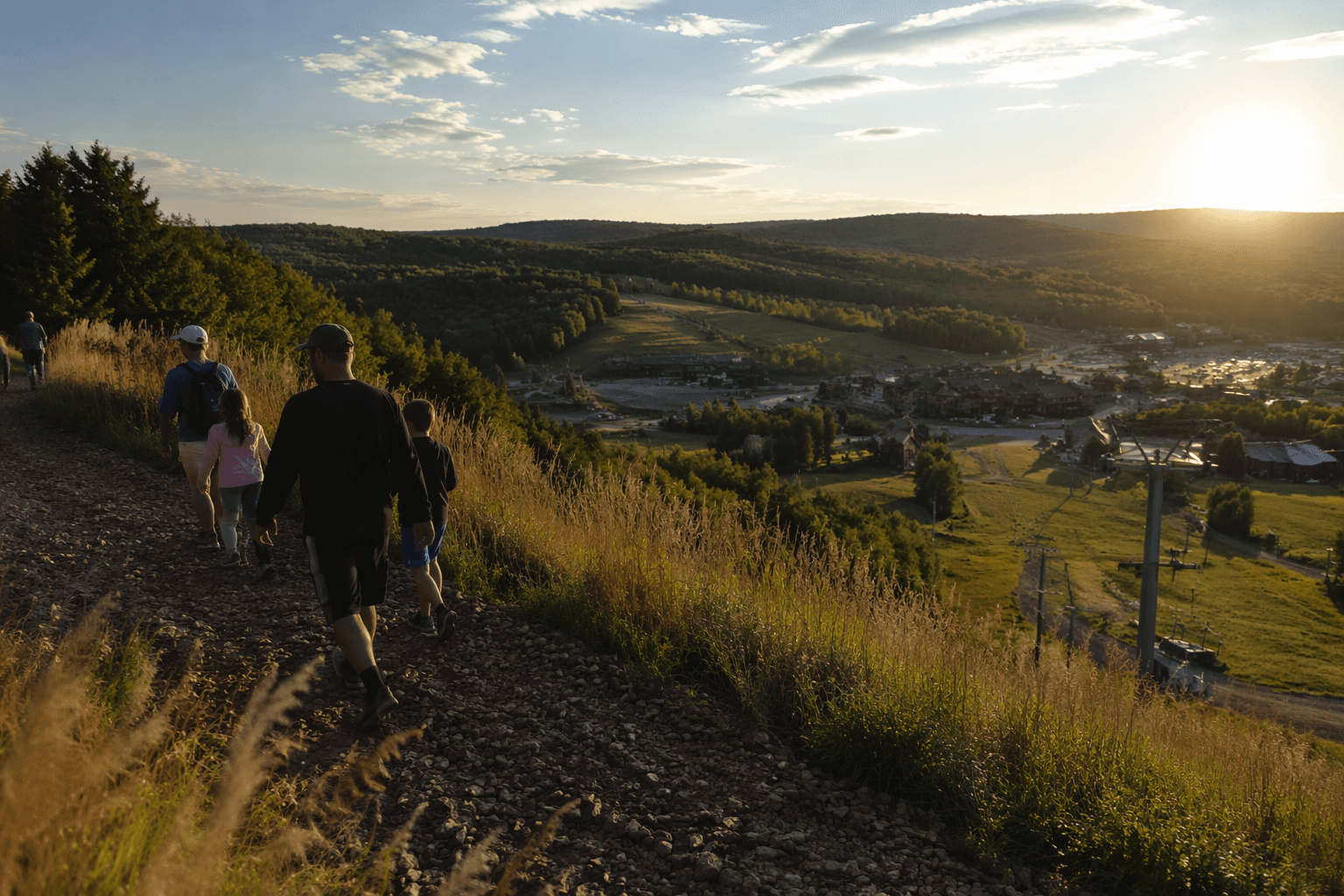
The resort’s setting helps explain why it fits the region so well. Surrounded by forests and lakes, and positioned in the Iron Range of St. Louis County, it feels distinctly northern Minnesota rather than interchangeable with a generic Midwestern ski hill. The Nordic side also gave the property a level of visibility that reached beyond local recreation when a World Cup cross-country event was held there in the late 1980s. That event put Biwabik on a much larger map and underscored how a regional recreation site can carry international attention.
Jobs, spending, and public investment
The case for Giants Ridge has always rested partly on economics. Iron Range Resources and Rehabilitation says the resort has an annual economic impact of more than $55 million, and a 2020 state capital budget document says Giants Ridge served over 129,000 people each year. Those numbers help explain why state support has continued across different eras of the resort’s life.
The same public purpose still shows up in current planning. A 2026 state capital request proposes a $6.4 million maintenance building at The Legend. The request says the existing building is 40 years old, was originally built for ski operations, and was later repurposed for golf maintenance. The project is framed as a way to improve safety, efficiency, and the guest arrival experience, which is another reminder that Giants Ridge remains an evolving public investment rather than a finished project.
Iron Range Resources and Rehabilitation describes its mission as diversifying the regional economy and reinvesting taconite-tax revenue in local communities. Giants Ridge fits that mandate neatly: it is one of the largest employers on the East Iron Range, it draws visitors into St. Louis County, and it gives the region a use for land that once supported a very different economy. The resort’s value is not just in ticket sales or tee times. It is in the fact that a mining landscape now helps sustain year-round work, visitor spending, and civic identity.
Access and community use
Giants Ridge also plays a public-service role that goes beyond tourism. The resort offers free adaptive skiing programs every Sunday in January in partnership with Northland Adaptive Recreation and the Miller-Dwan Foundation. The programs use bi-skis, dual-skis, and mono-skis for youth and adults of all abilities, including people with physical disabilities and people on the autism spectrum. Northland Adaptive Recreation also offers alpine ski-and-snowboard programming at Giants Ridge, extending that access through a broader regional network.
That matters because recreation on public or publicly supported land is not only about attracting outside dollars. It also determines who gets to use the landscape, who feels welcome in it, and who can access outdoor activity in a county where winter can be long and mobility can be uneven. Giants Ridge’s adaptive programs make the resort part of that conversation in a direct, practical way.
Giants Ridge is still growing out of the choices made by Iron Range residents more than 60 years ago, and those choices continue to shape St. Louis County today. The resort’s future rests on the same premise that kept it alive in the past: land once tied to mining can be remade into something that works for the whole region, not just for one season.
This article was produced by Prism’s automated news system from verified source data, official records, and press releases, then run through automated quality and moderation checks before publishing. The system is built and supervised by the people who set the standards it runs under. Read our full AI policy.
Did this article answer your question?