Olcott Park fountain still anchors Virginia’s New Deal-era civic pride
Olcott Park’s fountain and greenhouse still draw families, gardeners and winter visitors, proving Virginia’s WPA-era investment never stopped paying off.
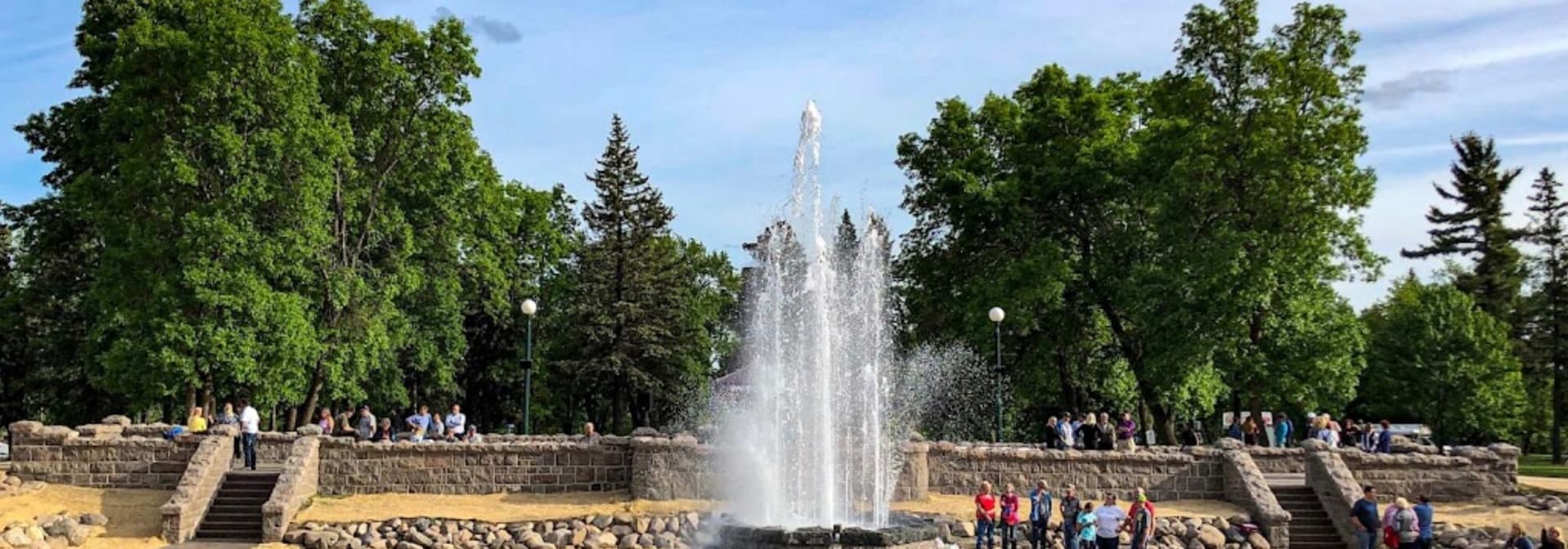
The fountain at Olcott Park is not just a relic from Virginia’s past. It is still the clearest sign that a Depression-era civic project can shape how a town gathers, gardens and returns to the same place across generations. In a city that grew as one of the Mesabi Range’s major commercial centers, the park remains a public space where New Deal ambition, local labor and family routine still meet.
The New Deal centerpiece at Olcott Park
Olcott Park’s fountain opened to the public on August 16, 1937, after construction began in the summer of 1935. The project was financed 70 percent by the Works Progress Administration and 30 percent by the City of Virginia, a split that made the fountain both a federal relief project and a local civic investment. More than 100 Virginians worked on the fountain and the surrounding rock garden, including 70 WPA workers, tying the landmark directly to local employment as well as public beautification.
The design details still tell the story of how seriously Virginia treated the project. The fountain pool measures 40 feet wide and 64 feet long, and the observation deck stretches about 120 feet by 12 feet. The structure was built with pink granite from Mt. Iron, Minnesota, and the city hired Charles Hanford, Jr., of Independence, Missouri, to design the fountain, the rock garden and the observation deck. The plan called for a General Electric Seven-Projector Novalux Electric Fountain with seven 1,500-watt lamps and 65 jets, a specification that made the attraction a showpiece rather than a simple pool.
That ambition fits Virginia’s place in the Iron Range. The city’s historical material describes Virginia as one of the largest towns on the Mesabi Range and a major commercial center for the entire Iron Range. Olcott Park rose in the same civic era when the city was investing in beautification, recreation and public pride, and the fountain became one of the most visible results.
Why the greenhouse still matters
The greenhouse gives Olcott Park a living present, not just a preserved past. The City of Virginia says it has been a local attraction since 1935, is city-owned, and is operated with support from Friends of the Greenhouse. It is open on Fridays and Saturdays from noon to 4 p.m. on a volunteer basis, which makes it one of the park’s most accessible places to visit in the colder months.
The attraction is especially useful in winter, when tropical plants draw people inside and the greenhouse offers something green while the rest of the park sits under snow. Public Gardens of Minnesota notes that the greenhouse dates from the period when Olcott Park was in its prime and when the park featured elaborate carpet-bedding displays made up of numbers, words and symbols. The greenhouse itself remains a three-room facility that supplies plants, including cacti, succulents, agave, ficus and screw pine specimens.
That mix of public access and volunteer care is part of why the greenhouse endures. It is owned by the city, supported by a nonprofit partner and maintained in a way that keeps it useful rather than ornamental only. For a park with a long history, that matters as much as the architecture.
A park built for repeat visits
Olcott Park has long been a destination trip for families, and its history explains why it still works that way. The city says the park has offered vegetable and flower gardens, a zoo with a monkey house, a traditional greenhouse, a rock garden feature, special garden events and winter sports. In other words, it was never just a lawn and a fountain. It was built as a place where people could spend time in different seasons and for different reasons.
The park’s zoo era was especially elaborate. Monkey Island was added in 1936, and the former zoo once held monkeys, black bears, deer, elk, mountain sheep, bison and peacocks. That range of animals helps explain why the park lodged itself so deeply in local memory. It was a public destination with enough variety to reward repeat visits, and that habit of returning has carried forward even as the animal exhibits disappeared.
The park superintendent’s report from April 1917 described the rearrangement of Olcott Park as the most noticeable feature of the previous year’s construction activity, showing that the park’s transformation was already a civic priority well before the WPA fountain arrived. The long arc matters: Olcott Park did not become important in one moment. It was built up through repeated public investment, and each generation inherited a different version of the same civic landscape.
What the revival looks like now
The most recent chapter in Olcott Park’s story is not nostalgia alone. Olcott Park BrewFest began in 2017 as a fundraiser to help rebuild the fountain, turning a public landmark into a community-backed restoration effort. The Virginia Community Foundation says the Olcott Park renovation was a $1 million project and its largest collaboration to date, with the foundation serving as fiscal sponsor to receive and disburse donations.
That funding structure is part of the modern story. The fountain that once blended federal relief dollars and local money now depends on a different civic model: nonprofit coordination, fundraising and shared stewardship. The result is not a museum piece. It is a park whose most important features remain active enough to justify repair, volunteer hours and public attention.
For St. Louis County readers, Olcott Park endures because it still does practical civic work. The fountain gives Virginia a visible New Deal landmark. The greenhouse keeps a year-round destination alive with volunteer help. The gardens, events and family traditions keep the park from becoming a dead historical site. In Virginia, public investment from the 1930s still shapes how people gather today.
This article was produced by Prism’s automated news system from verified source data, official records, and press releases, then run through automated quality and moderation checks before publishing. The system is built and supervised by the people who set the standards it runs under. Read our full AI policy.
Did this article answer your question?