Hawk Ridge draws fall migration crowds to Duluth overlook
Hawk Ridge turns Duluth’s highest overlook into a free, year-round birding destination, with fall migration peaking from mid-September to late October.
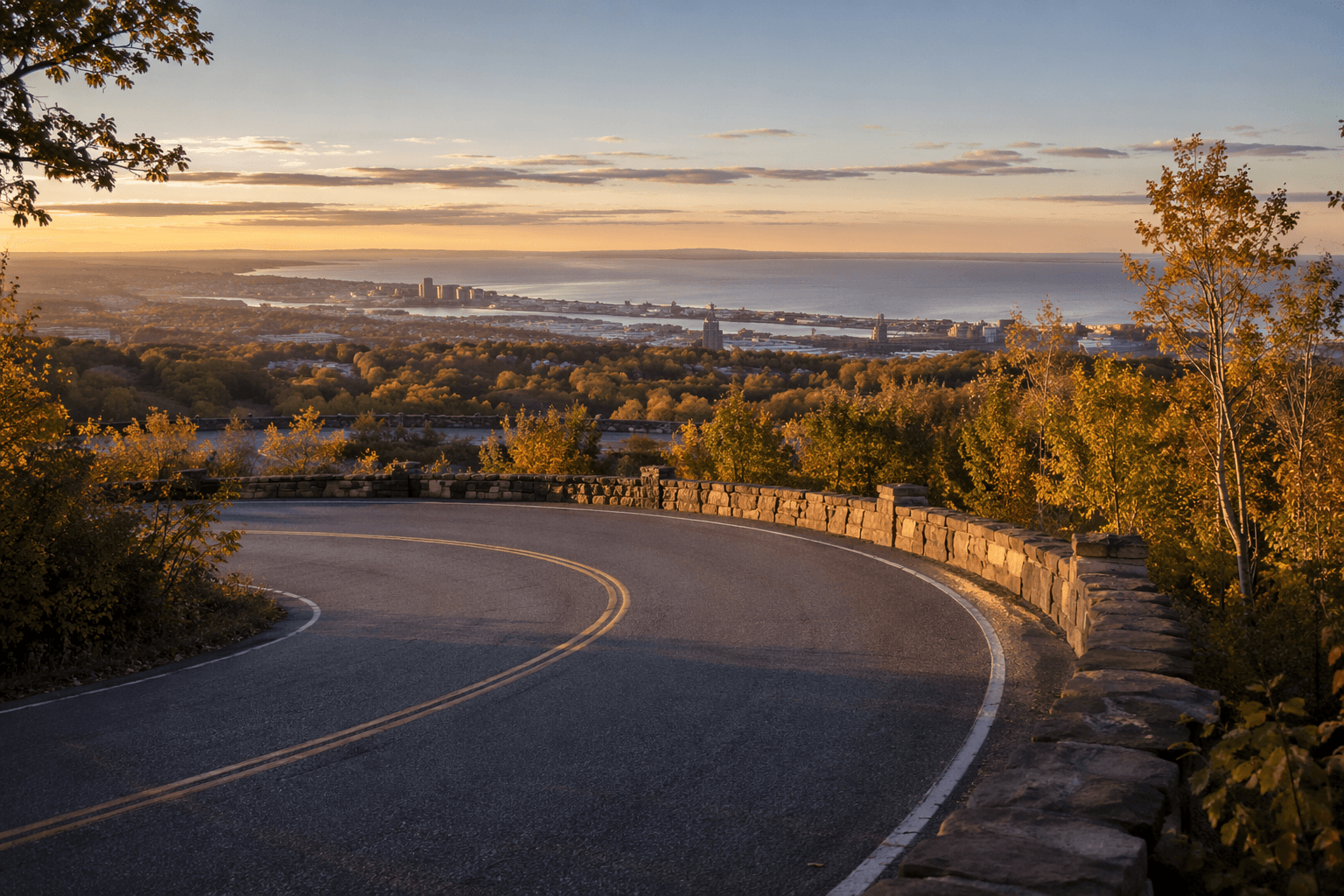
The 365-acre Hawk Ridge preserve sits on the highest point of East Skyline Parkway, about one mile from Lake Superior and roughly 550 feet above the lake, where the terrain naturally funnels raptors past the viewing area. It is one of Duluth’s most useful outdoor assets because it works on two levels at once: a major migration watch site in fall and a year-round overlook with more than 4 miles of trails the rest of the year.
A Duluth landmark with deep roots
Hawk Ridge did not appear overnight as a tourist stop. The reserve was established in 1972 with help from the Duluth Audubon Society, whose members had already been counting hawks there since the early 1950s. The first hawk watch was organized in 1951, and the city acquired about 250 adjacent acres in 1973 to create a buffer around the reserve.
Friends of Hawk Ridge was formed in 1979 to support research and education, and Hawk Ridge Bird Observatory became a 501(c)(3) nonprofit in 2004 to serve as the reserve’s management entity under a trust agreement with the City of Duluth.
Why fall is the season that defines the overlook
Hawk Ridge earns its reputation in a narrow window of the calendar, when migrating raptors concentrate over the western tip of Lake Superior. Migration typically begins in mid-August with American kestrels, sharp-shinned hawks, and broad-winged hawks, then peaks from mid-September to late October before continuing into December.
It is free to visit, always open, and one of Minnesota’s classic fall birding destinations, with the strongest movement generally running from mid-August into December.
What the numbers say about the migration
Hawk Ridge Bird Observatory has counted more than 1.5 million migrating raptors there since 1972. The site averaged about 76,000 migrating raptors each fall from 1991 to 2013, compared with about 39,000 annually from 1972 to 1990 under a different sampling procedure.
Broad-winged hawks are the most commonly observed migrating raptor at Hawk Ridge, and the ridge’s records show just how concentrated the movement can get. The record daily high for broad-winged hawks was 101,698 on Sept. 15, 2003, while the record seasonal high reached 160,703 in 2003. Other standout totals include 6,099 bald eagles in 2017 and a record daily high of 2,515 sharp-shinned hawks on Sept. 24, 2017.
The counts are tied to a specific topographic funnel, where migrating raptors can originate from breeding grounds as far north as the Arctic and winter as far south as South America.
When to go and what to expect on site
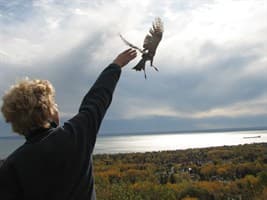
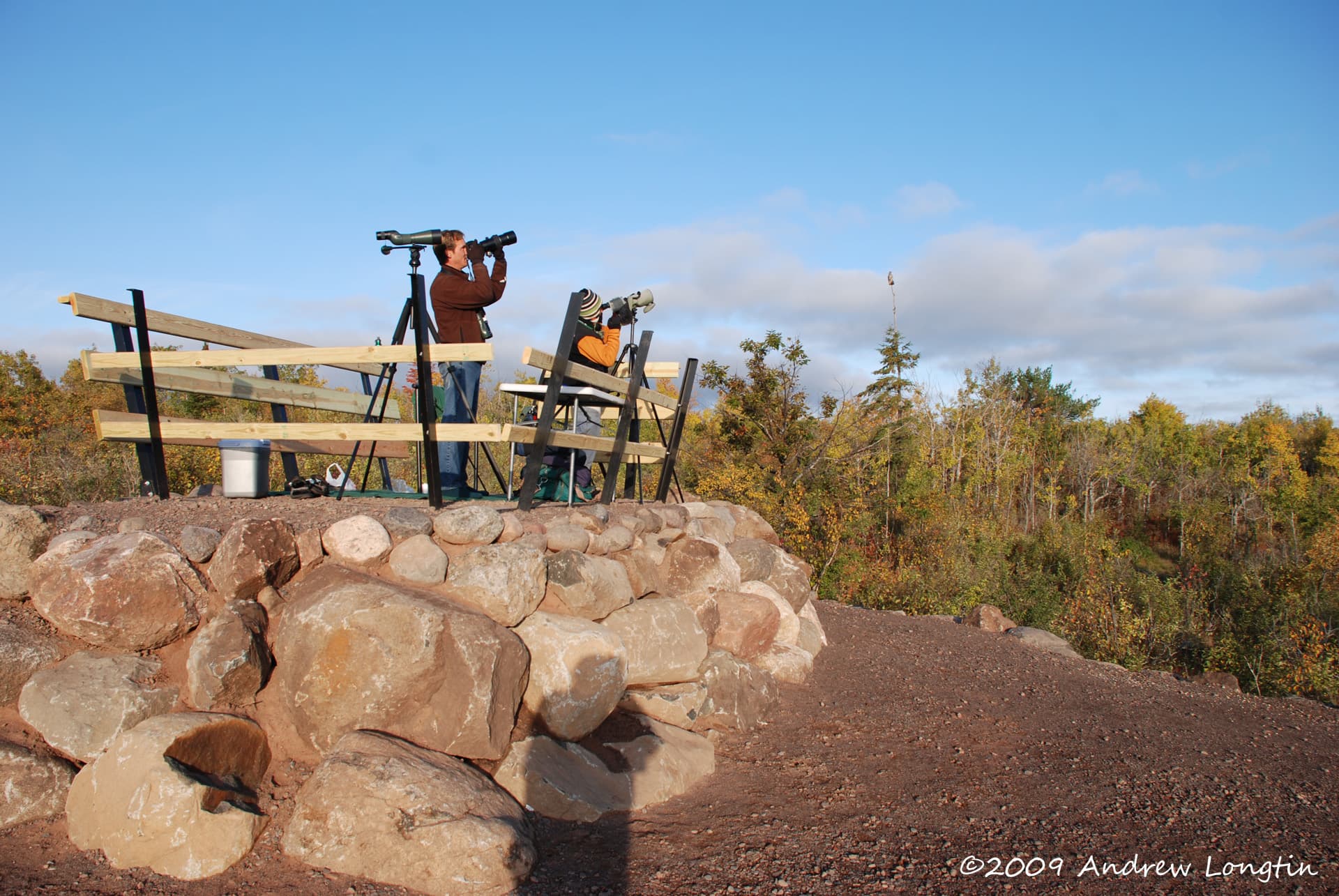
If fall migration is the goal, the easiest rule is to aim for the heart of the season rather than the edges. The prime stretch runs from mid-September to late October, with birds starting to move in mid-August and lingering into December. The most dependable visitor services are in place from Sept. 1 through Oct. 31, when naturalists are on-site every day from 9 a.m. to 4 p.m. offering live bird demos and interpretation.
The overlook can be overwhelming when kettles of broad-winged hawks, sharp-shinned hawks, or bald eagles are moving overhead, and the on-site naturalists help turn the flow into something readable. Hawk Ridge also offers weekend programs during fall migration.
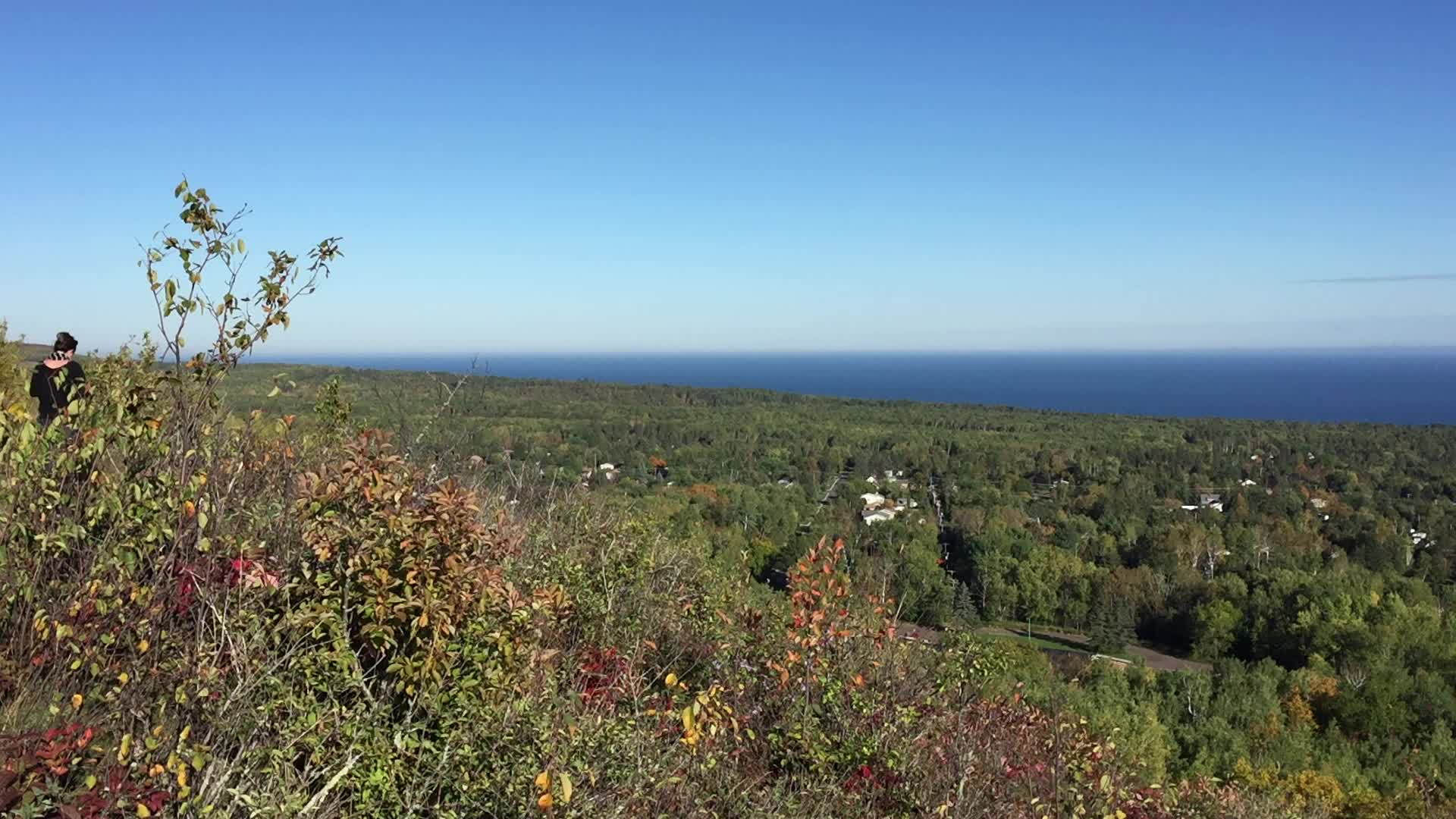
- Go during the Sept. 1 to Oct. 31 window if you want the strongest chance of catching active counting and interpretation.
- Build extra time into a visit, because the lookout is part of a larger preserve with hiking trails, geology, flora, and wildlife to explore.
- Expect the best migration days to cluster in the mid-September to late October peak, when broad-winged hawks dominate the count.
A practical visit usually works best with a little planning:
A year-round asset, not just a migration stop
Hawk Ridge’s year-round value is easy to miss if you only know it as a fall hawk watch. The reserve is open all year, making it a quiet place to walk even outside peak migration. The preserve spans more than 360 acres focused on geology, flora, and wildlife, which gives the site a broader identity than birding alone.
It connects the road up East Skyline Parkway to Lake Superior’s edge, and it gives residents a free, always-open place to use in every season.
This article was produced by Prism’s automated news system from verified source data, official records, and press releases, then run through automated quality and moderation checks before publishing. The system is built and supervised by the people who set the standards it runs under. Read our full AI policy.
Did this article answer your question?