Hibbing mine overlook reveals Mesabi Range history and scale
Hibbing’s mine overlook looks out over a pit, but the deeper story is the town that had to move for it. North Hibbing’s relocation still defines the city’s landscape and identity.
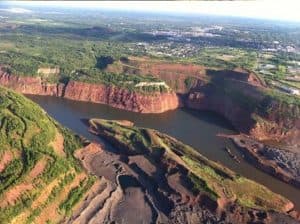
The Hull-Rust Mine View is not just a scenic stop above Hibbing. It is the place where the city’s most consequential decision becomes visible: North Hibbing was moved two miles south so iron ore could be dug out from underneath it, and the result is a landscape that still defines life on the Mesabi Range. From the overlook, the scale is hard to miss. So is the human cost that made it possible.
A town moved for the ore beneath it
Hibbing was founded in 1893 by Frank Hibbing after he recognized the region’s rich iron deposits, and mining at the Hull Rust site began in 1896. By 1918, the pressure of expansion had made the next chapter unavoidable. The northern section of town was relocated to make room for the mine, a process that took two years, cost about $16 million, and ultimately moved more than 180 houses and 20 businesses.
The relocation was not a simple matter of demolition and rebuilding. City history describes buildings being mounted on steel wheels and rolled south, while Minnesota Historical Society accounts describe nearly 200 structures moving from 1919 to 1921. The work relied on horses, logs, farm tractors, a steam crawler, steel cables, and human power. Some larger buildings had to be cut in half. Even today, signs around old Hibbing mark former building sites, a reminder that the city’s center of gravity was physically pushed elsewhere.
That move changed more than a map. It changed where people lived, where businesses opened, and how residents understood their own city. In Hibbing, industry did not merely grow at the edge of town. It rearranged the town itself.
What you see from the overlook
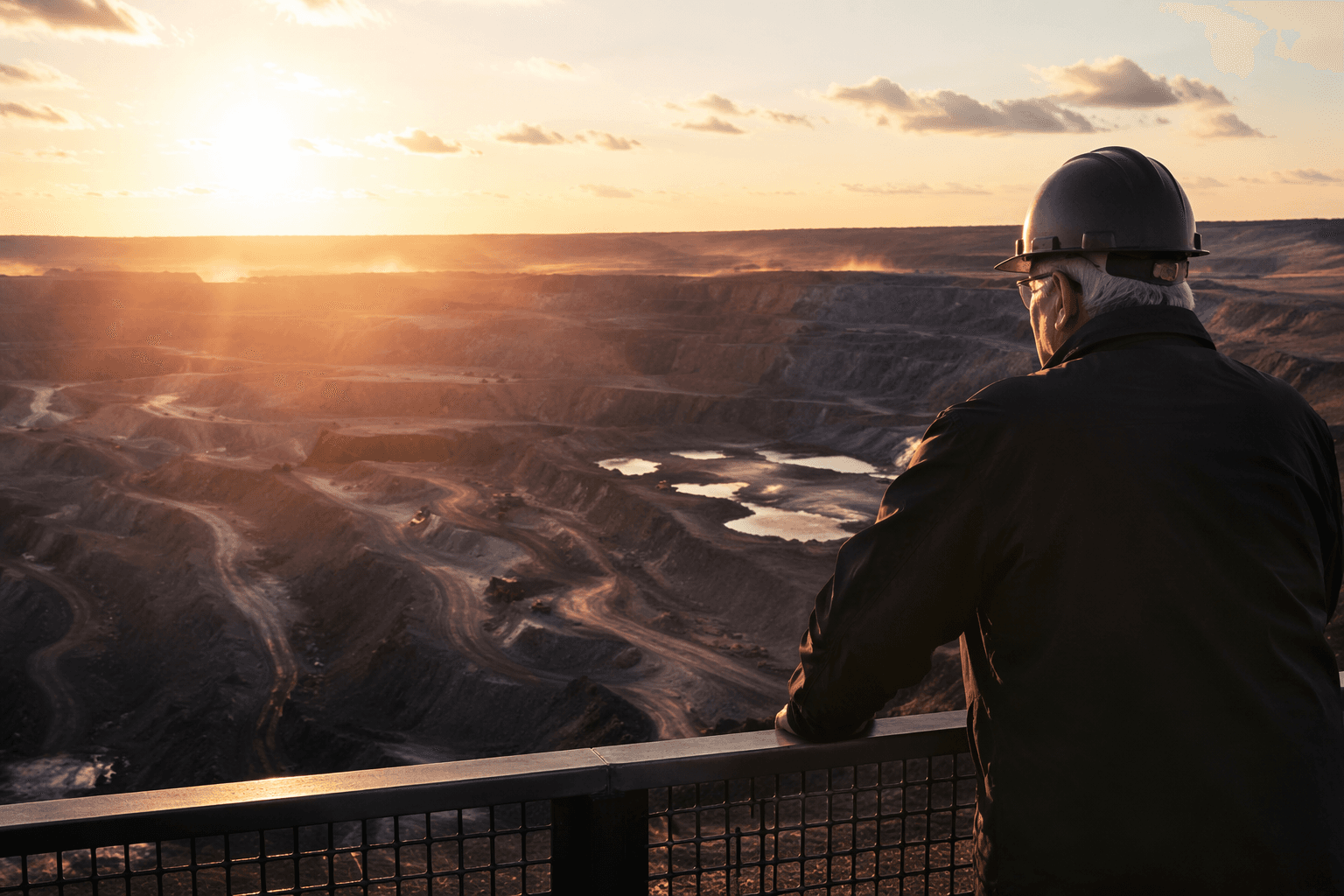
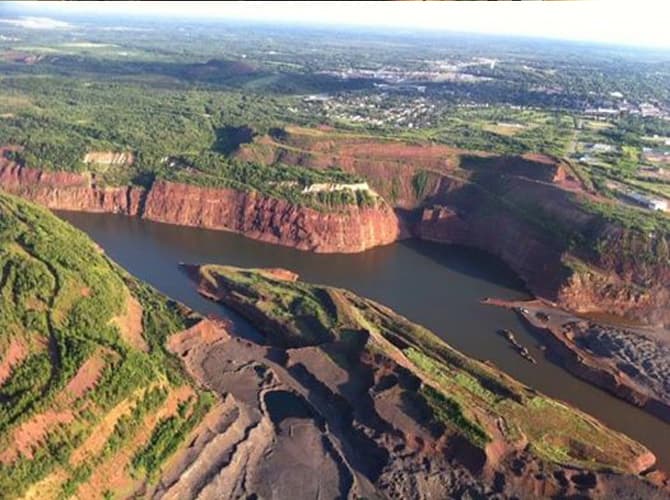
The Hull-Rust Mahoning Mine is billed as one of the largest open-pit mines in the world, and the overlook makes that claim concrete. The combined Hull-Rust Mahoning and Hibbing Taconite open pit covers 5,000 acres and stretches about 8 miles east to west and 3.5 miles north to south. More than 1.4 billion tons of earth have been moved here, and more than 800 million tons of iron ore have shipped out of the pit.
The site’s nickname, the “Grand Canyon of the North,” captures the visual shock, but the more meaningful story is what the view represents. It is a place where geology, industrial power, and local identity all collide in one frame. The overlook lets visitors see the shape of the Mesabi Range not as abstract history, but as a working landscape that was carved, hauled, and rebuilt by human labor.
At the peak of wartime production in the 1940s, as much as one-quarter of all the iron ore mined in the United States came from the Hull Rust pit. That number explains why the mine mattered far beyond St. Louis County. The scale of the pit reflects not only Hibbing’s role in iron mining, but also the national demands that turned this part of Minnesota into a strategic industrial center.
Why the site still matters now
The Hull-Rust Mine View is valuable because it is not frozen in the past. The Minnesota Historical Society says the complex was still being mined by Hibbing Taconite as of 2020, and the city notes that Hibbing Taconite works the area north, east and west of the Hull Rust Pit with shovels that hold 41 cubic yards at a time. That means the overlook looks out not only over history, but over ongoing extraction and reclamation.
That ongoing activity is part of the story of the Mesabi Range. The land has been mined for more than 125 years, and the view site frames that span in a way few places can. Visitors are not looking at a preserved relic. They are looking at a landscape that has been continuously remade by industrial work, then partially reclaimed, and then turned into a public vantage point where the region can examine its own past.
The city’s own history and the Minnesota Historical Society’s account line up on the essential point: Hibbing exists in its present form because the ore under North Hibbing was more valuable to the Oliver Iron Mining Company than the neighborhood above it. That fact can feel distant until you stand at the overlook and see how much earth, labor, and displacement went into making the current view possible.
How to visit the Hull Rust Mine View
The overlook and Red Ore Shoppe operate seasonally, with Explore Minnesota listing the site season as May 15 through September 30. The Hull Rust Mine View site also lists daily hours for the overlook and separate shop hours for the Red Ore Shoppe, with the attraction run by Hibbing Tourist Center Senior Citizens. Admission is free, and group tours can be arranged by request.
The site is more than a place to pull over and snap a photo. Visitors can climb the reclamation pile, browse the Red Ore Shoppe, and look across the open pit at the mine that reshaped North Hibbing. In 2022, more than 20,000 people visited, which shows how strong the draw remains for travelers, school groups, and anyone trying to understand the Iron Range in a single stop.
A visit works best when the overlook is treated as both scenery and evidence. The pit explains the scale of the mining operation; the move of North Hibbing explains the price paid to expand it. Together, they show how a city, a mine, and a region became inseparable, and why the Hull Rust overlook remains one of the clearest windows into the Mesabi Range’s past and present.
This article was produced by Prism’s automated news system from verified source data, official records, and press releases, then run through automated quality and moderation checks before publishing. The system is built and supervised by the people who set the standards it runs under. Read our full AI policy.
Did this article answer your question?