Jamestown sales rise, outpacing state as retail strength lifts local economy
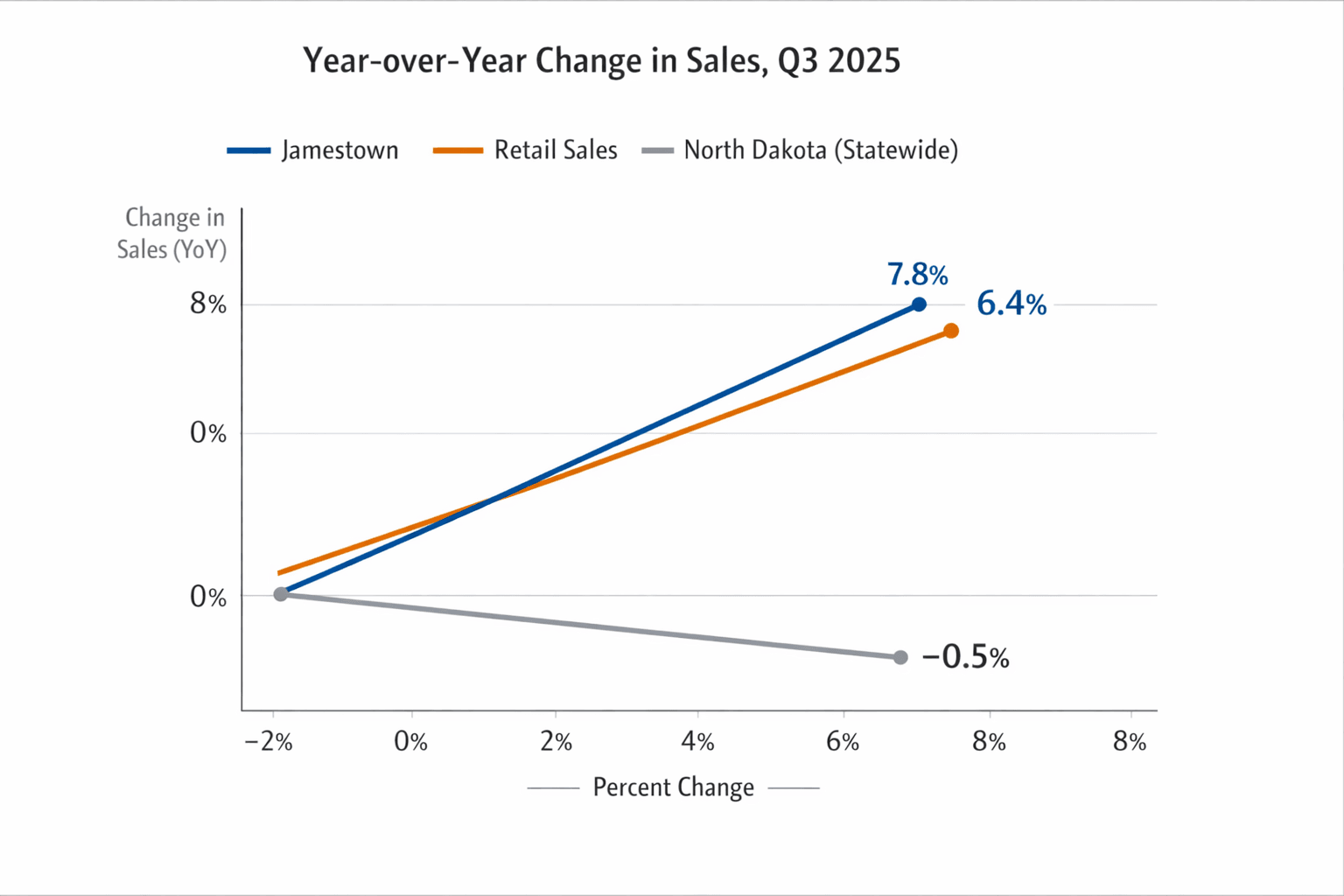
Jamestown taxable sales and purchases climbed 6.4 percent in the third quarter of 2025, while North Dakota as a whole saw a 0.5 percent decline. The gain was driven by a 7.8 percent increase in local retail trade, and it could bolster municipal revenues even as construction and hospitality categories slipped.

New figures from the North Dakota Office of the State Tax Commissioner showed Jamestown recorded stronger economic activity in the third quarter of 2025 than the state overall, a sign of resilience for local businesses and city finances. Taxable sales and purchases in Jamestown rose 6.4 percent from the same quarter in 2024, while statewide totals fell 0.5 percent.
Retail was the clearest driver of local growth. Jamestown retail sales increased 7.8 percent, rising from $44.4 million in the third quarter of 2024 to $47.9 million in 2025. By contrast retail sales across North Dakota were up 3 percent for the quarter. That concentration of strength in consumer purchases will likely translate into higher sales tax receipts for the city, supporting general fund services and one time needs tied to business activity.

Not all categories shared the gains. Construction related sales and use tax in Jamestown declined 4.2 percent in the third quarter, even as the same measure rose 4.5 percent statewide. Accommodations and food services in Jamestown showed a modest decline of 0.4 percent. Those local contractions suggest construction and hospitality employers may face uneven demand compared with the broader state economy.
Mayor Dwaine Heinrich noted the growth was broadly positive for the community and that there was no obvious single cause. He observed some home improvement retailers may still be seeing extra demand for storm related materials such as shingles, which would lift certain retail segments without signaling a broad based construction boom.
Year to date through the first nine months of 2025 Jamestown taxable sales and purchases were up roughly 2.4 percent from the same period in 2024, moving from $227.3 million to $232.8 million. The report also flagged that several categories are unreportable at the city level and are combined with miscellaneous businesses. That combined category jumped 15 percent for the quarter, increasing from $6.8 million to $7.8 million year over year, which can complicate interpretation of fine grained sector trends.
For residents and policymakers the mix matters. Strong retail sales can support local budgets and jobs, but declines in construction and hospitality point to areas needing attention if they persist. City leaders should monitor tax receipts through the coming quarters, account for volatility in unreportable categories, and consider targeted economic development measures to sustain broader based growth.
This article was produced by Prism’s automated news system from verified source data, official records, and press releases, then run through automated quality and moderation checks before publishing. The system is built and supervised by the people who set the standards it runs under. Read our full AI policy.
Did this article answer your question?