Jamestown tourism pitches history, trails and buffalo for summer visitors
Jamestown is turning its buffalo image into a real summer route, with courthouse history, river time and downtown stops that fit a day or weekend.
Why Jamestown works as a summer stop
Jamestown is asking people to treat it as more than a place to pass through on the way to somewhere else. That matters here because the city sits at the confluence of the James and Pipestem rivers, right on Interstate 94 and U.S. Highway 281 between Bismarck and Fargo, which makes it an easy stop to overlook and an easy place to return to once you know what is here.
The timing also helps. As Memorial Day weekend travel picks up and AAA projects a big wave of holiday travel, Jamestown tourism leaders are leaning into a summer message built around history, adventure and small-town charm. With the country heading toward its 250th anniversary in 2026, the city’s frontier and statehood landmarks feel especially well timed for families looking for a trip that is both easy and meaningful.
Start with the courthouse and the county’s oldest stories
A good Jamestown day can begin downtown at the 1883 Stutsman County Courthouse, one of the city’s most important and most overlooked stops. The State Historical Society of North Dakota says it is North Dakota’s oldest surviving courthouse, one of only two county courthouses in the state built in the Gothic Revival style, and the only remaining North Dakota building directly tied to the 1880s statehood movement.
That makes it more than a pretty old building. It is a place where the county’s civic history, the statehood era and the architecture of the period all come together, and the courthouse’s pressed tin work gives it a detail-heavy interior that rewards visitors who slow down long enough to notice it. The building also holds the most complete collection of pressed tin in North Dakota and perhaps the Midwest, which is the kind of fact that makes a quick stop feel like a true local discovery.
From there, the rest of the city’s heritage stops line up well for a morning or afternoon. The state tourism guide points visitors to Fort Seward Military Post, the Stutsman County Memorial Museum and Frontier Village as core places to understand pioneer life, military history and the people who shaped the James River Valley. For visitors with relatives in town, that mix makes for an easy itinerary that gives everyone a reason to talk about what they are seeing instead of just taking photos and moving on.
Make room for the buffalo, because that is still Jamestown’s signature
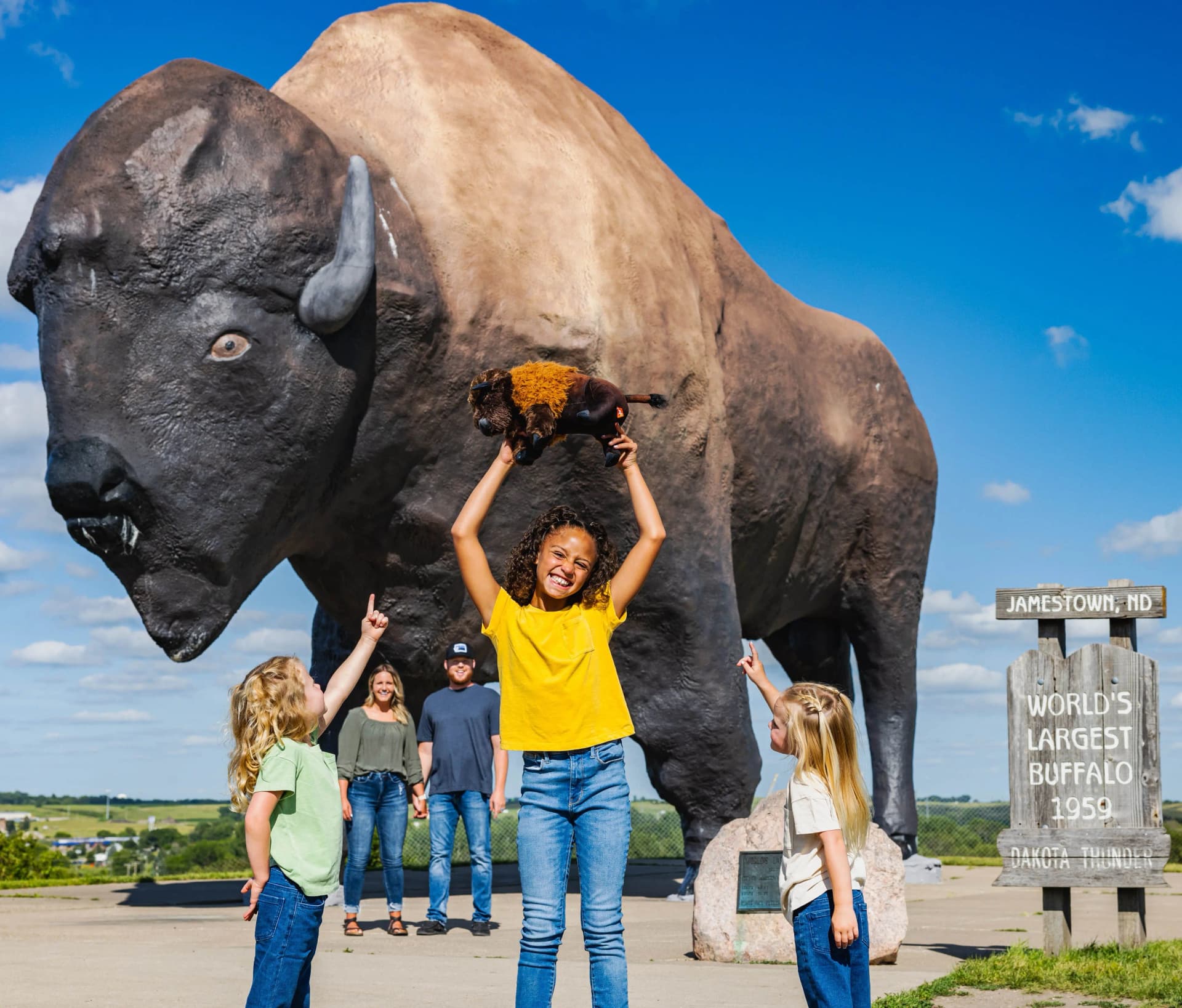
No summer visit to Jamestown really works without a buffalo stop. The World’s Largest Buffalo Monument still anchors the city’s roadside identity, and it does so with size that is hard to miss: the concrete sculpture stands 26 feet tall, weighs 60 tons and has watched over the hill in Jamestown since 1959.
It was created by sculptor Elmer Petersen and officially named Dakota Thunder in 2010, a detail that gives the landmark a more personal local identity than the generic “world’s largest” label might suggest. It also sits at the end of Louis L’Amour Lane, which makes the approach part of the experience rather than just a destination photo stop.
Just as important, the buffalo story is not only about a monument. The North American Bison Discovery Center, which continues the work once associated with the National Buffalo Museum name, is a nonprofit educational organization focused on the cultural and natural history of bison and prairie life. It also serves as a resource for understanding the restoration of the American bison, which gives the attraction a real educational purpose behind the family-friendly exhibits and live herd viewing.
For summer visitors, the logistics are simple enough to build into a full day. The center’s summer hours run from Memorial Day to Labor Day, 10 a.m. to 6 p.m. daily. That makes it one of the easiest places in town to anchor an afternoon, especially if you want to pair the exhibit space with the live buffalo herd and the city’s familiar landmark in the same visit.
A one-day Jamestown plan that feels like a real local outing
If you only have one day, Jamestown works best when you keep the pace loose. Start with the courthouse and one heritage stop, then move downtown for lunch, shopping or coffee before heading to the bison attractions in the afternoon. That gives you a route that touches the city’s civic history, its frontier story and its most recognizable image without feeling rushed.
From there, the outdoors does the rest of the work. Jamestown’s location at the rivers’ meeting point creates year-round recreation opportunities, and summer is when that becomes most useful for visitors who want to kayak on the James River, walk trails or spend time at the Jamestown Reservoir. The point is not to cram everything into a checklist. It is to build a day that moves naturally from history to water to dinner, with time left for downtown shopping, dining and, if needed, an overnight stay.
A two-day version gives the city more breathing room
With two days, Jamestown feels less like a stop and more like a base. Use the first day for the courthouse, Fort Seward, the museum and Frontier Village, then finish with Dakota Thunder and the bison center. On the second day, shift the focus to the James River, the reservoir and the trail system so the trip has both the built history and the outdoor side that Jamestown Tourism is trying to emphasize.
That split also works for families hosting visitors who want a mix of things to do without spending half the day in the car. The city’s central location between Bismarck and Fargo is one reason people pass through it so often; the tourism pitch is that the same location makes it easy to turn a drive-by into a weekend with enough variety to satisfy both history buffs and kids who came for the buffalo.
Jamestown’s summer identity is strongest when it uses both sides of the story at once. The courthouse and fort tell you where the county came from. The river, the reservoir and Dakota Thunder tell you why people still stop now.
Know something we missed? Have a correction or additional information?
Submit a Tip