Police respond to mental health crisis in Jamestown, outcome unclear
A large police response unfolded in Jamestown as officers handled a mental-health crisis, but officials had not said how it ended. The scene follows several recent high-stakes calls in town.
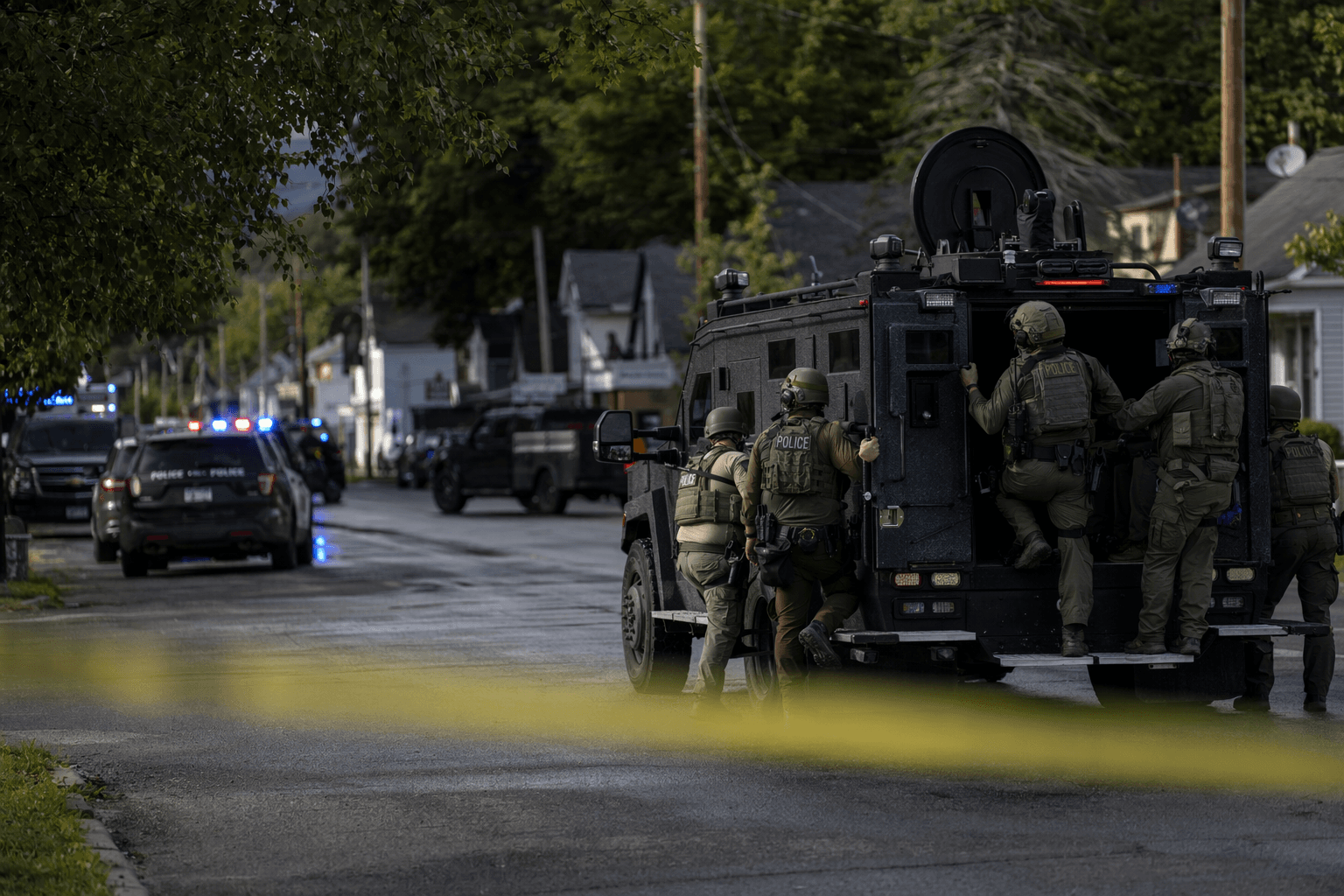
Residents in Jamestown saw a heavy police response Friday as officers handled a mental-health crisis, with video from the scene showing a significant law enforcement presence and the outcome still unclear. The call added to a pattern that has made crisis response a recurring public-safety issue in the city, where officers, ambulance crews and specialized teams have repeatedly been drawn into high-stakes behavioral health situations.
Jamestown police have been pulled into similar incidents before. On June 18, 2025, officers responded to a domestic violence call that turned into a 10-hour standoff involving Jacob Schmitt and a 2-year-old child. Police said they believed Schmitt had access to firearms, and the child was later found safe when the standoff ended and Schmitt was arrested.
More recently, on March 12, 2026, Jamestown police said officers were attacked while conducting a welfare check on Emily Leona Sather at an apartment in the 900 block of Thomas Avenue. Police chief Scott Edinger said officers had responded to her residence 14 times since October 2025. Sather was later taken to the North Dakota State Hospital.
The city also saw another fast-moving emergency on April 22, 2026, when police evacuated Walmart and briefly put Jamestown Public Schools in shelter-in-place status before the situation de-escalated. Officials later said there was no longer a police presence at Walmart.
Those episodes underscore the pressure on local response systems. Jamestown is home to the South Central Behavioral Health Clinic, which serves Barnes, Dickey, Foster, Griggs, LaMoure, Logan, McIntosh, Stutsman and Wells counties. North Dakota Health and Human Services says that region covers 10,801 square miles and about 61,500 people, with 988 available around the clock for behavioral health crisis help.
For Stutsman County, the repeated calls, standoffs and welfare checks point to a larger gap between emergency response and long-term behavioral health support. When officers are first on scene, the difference between a contained crisis and a wider public disruption can hinge on whether the system has enough crisis resources, enough beds and enough rapid intervention to keep a mental-health emergency from turning into a community-wide safety event.
This article was produced by Prism’s automated news system from verified source data, official records, and press releases, then run through automated quality and moderation checks before publishing. The system is built and supervised by the people who set the standards it runs under. Read our full AI policy.
Did this article answer your question?