Newport’s long skating tradition spans from roller rinks to outdoor ice
Newport’s skating history stretches from a July 1866 roller-skating boom to today’s weather-battered outdoor ice. The town’s rink survives through volunteers, adaptation, and a search for steady public space.
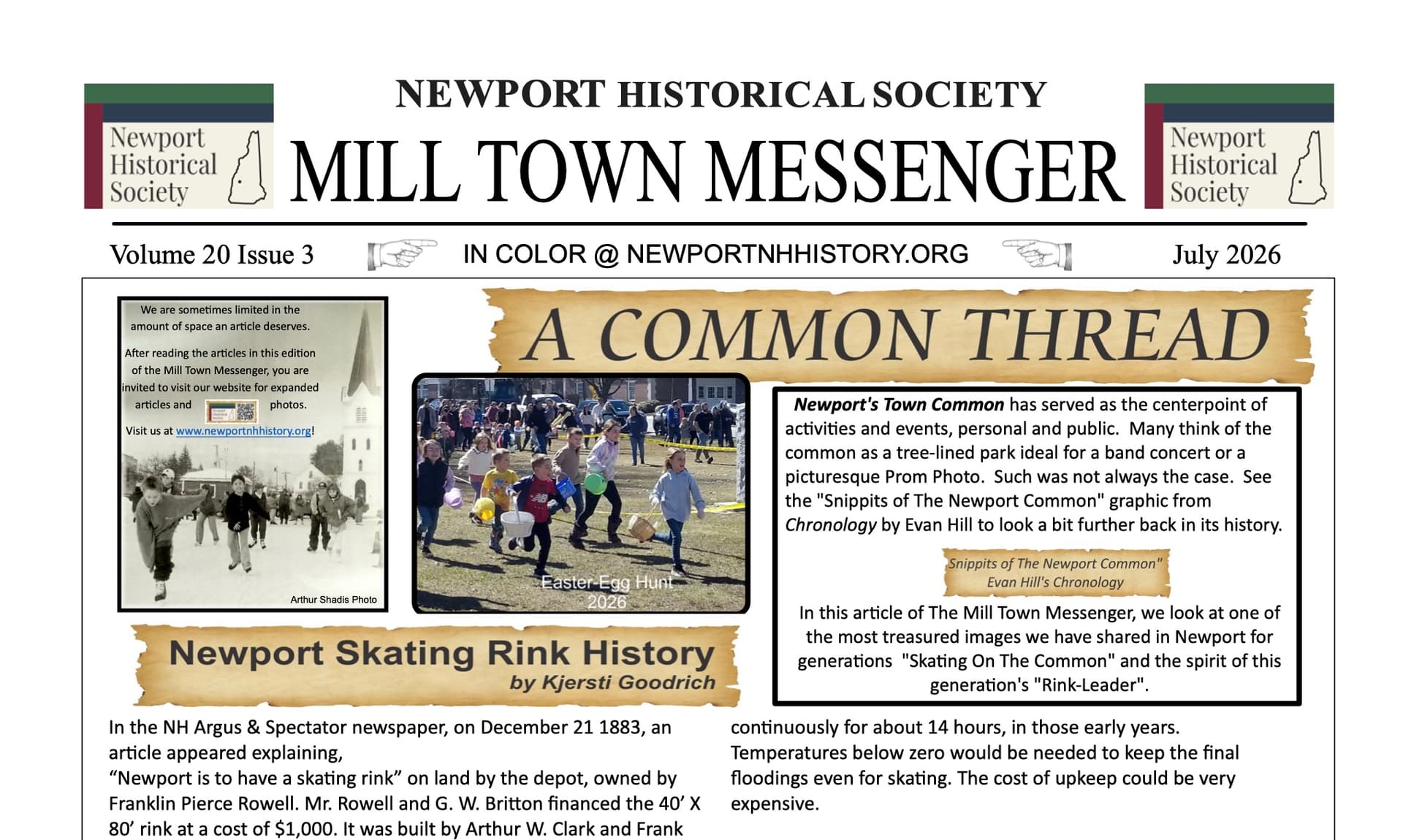
In July 1866, the Atlantic House Hotel on Bellevue and Pelham contracted with James L. Plimpton of New York and arranged for the New York Skating Association to bring roller skating to Newport. The tradition continues today in the ongoing effort to keep outdoor ice available for families in Newport, New Hampshire.
From roller rinks to public ice
The town embraced skating early as a public attraction. The Newport Historical Society’s account of “History Bytes: Roller Skating in Newport” places that moment in a larger skating culture known as “rinking,” with roots in European aristocratic parlors before Plimpton helped bring it to America in 1863.
A 2023 Newport Daily News feature on Newport as a city of firsts included the public roller rink among the city’s historic claims.
What the historical record shows about civic recreation
The Newport Historical Society’s July 2026 Mill Town Messenger newsletter chronicles the long history of public skating in town, including how the rink was created, where it has been located, the maintenance problems it has faced, and the community traditions built around it. Every rink requires land, labor, water, and a season that can actually hold ice.
Newport’s skating tradition has followed the same civic pattern that shapes many shared spaces in small New Hampshire towns: it depends on local institutions, informal labor, and repeated adaptation. When the weather cooperates, the rink becomes a commons. When it does not, the town has to decide whether to move, rebuild, or do without.
How Newport kept skating alive when conditions changed
The clearest example of that adaptation came in 2017, when the Town of Newport said volunteers, residents, and businesses came together to support a “Plan B” skating rink after the town lost access to a local water source. It was a practical test of whether Newport could still provide public skating when one of the basic ingredients for outdoor ice disappeared.

The same pressure has returned in more recent winters. A January 2026 water shortage forced Newport to relocate ice skating to a golf course pond; Valley News and WMUR both covered the drought-related threat to the rink. A winter tradition can quickly become an infrastructure problem when water supply and temperature stop cooperating.
Outdoor skating is only as durable as the town’s ability to secure water, safe ice, and a location that can handle public use. In Newport, the rink has become a small example of how local governments manage recreational space under changing climate conditions, where a cold spell can be welcome news and a dry spell can wipe out a season.
Where to look for skating in Newport now
Newport Recreation maintains a page titled “Ice Skating on the Common.” The town still treats skating as part of its public recreation system rather than as an ad hoc private effort. Newport Parks & Recreation also promotes a winter “Family Skate Date” and lists a Gardener Park Ice Rink page. The town’s skating identity now lives in more than one place and can be organized through multiple recreation channels.

The Common, Gardener Park, and the golf course pond each represent a different way of holding public ice in a town where winter conditions can shift quickly. For Newport families, that means skating is still tied to local geography, but the exact location can change when weather or water forces a change in plans.
Why the tradition still carries weight in Sullivan County
Richards Free Library offers Newport’s historic newspapers online through an archival newspaper database, giving residents a path into the town’s skating past without relying only on memory. The archive records rink creation, repairs, weather closures, and the volunteers who kept showing up.
This article was produced by Prism’s automated news system from verified source data, official records, and press releases, then run through automated quality and moderation checks before publishing. The system is built and supervised by the people who set the standards it runs under. Read our full AI policy.
Did this article answer your question?