UNH Extension highlights Newport office as Sullivan County service hub
Newport’s Main Street office is the place to start for Sullivan County residents seeking 4-H, forestry, farm and food help. Some services are free, and the rest are county- and university-supported.
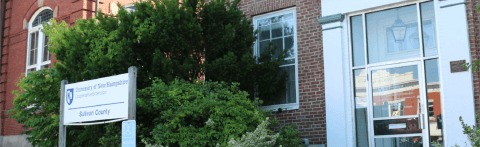
The Sullivan County Office of UNH Extension at 24 Main Street in Newport is the county's practical front door for youth, farm, forest and related community help. The office says staff provide “trusted information, practical education and high-quality services” that improve residents’ lives, the economy and county communities. For a county seat with 6,375 residents in a town covering 43.6 square miles, that makes the Newport hub the place to start before driving farther afield.
What the Newport hub is set up to do
Newport is the county seat of Sullivan County, a county established on July 5, 1827 and named after Brigadier General John Sullivan. The town’s population estimate was 6,417 on July 1, 2025, according to U.S. Census Bureau QuickFacts, which underscores how central the office is to a relatively small service area. UNH Cooperative Extension has worked with New Hampshire residents for more than a century, and the Sullivan County office is where that statewide mission turns into local access.
The public-facing message is broad, but it is also concrete. The office page points residents toward 4-H in Sullivan County and frames the Newport location as more than a classroom or meeting room. In practice, it functions as the local entry point to university-backed assistance that can touch youth development, land stewardship, food safety, agriculture, and community problem-solving.
Youth help starts with 4-H
For families looking for youth programming, the clearest path is 4-H. The Sullivan County 4-H page says the program helps young people acquire knowledge, develop life skills, and become self-directed, productive, contributing members of society. That is the county’s most visible youth pipeline, and the contact trail is specific: Robin Luther is listed as the 4-H Program Manager, reachable at 603-863-9200 or Robin.Luther@unh.edu.
The county’s youth programming also includes Youth CAN, which UNH Extension announced in January 2021 as a youth empowerment effort in Claremont and Newport. The initiative was described as a coalition of community members, partners and organizations working to build a culture of positive choices and youth-led strategies, activities, and programs. That matters locally because it ties the Newport office not just to club enrollment, but to a broader effort in the county’s two most closely linked service centers, Newport and Claremont.
A county 4-H event page adds one more layer of usefulness for families: Laurie Field hosts the “Moo Crew,” a special-interest project group built around the Discover Dairy curriculum from the Center for Dairy Excellence. That kind of hands-on project shows how the office connects youth work to food and agriculture, not just meetings and paperwork.
Farm, forest and land-use help are part of the package
Sullivan County has the largest proportion of farm and forest open-space land in current use in New Hampshire, so agriculture and forestry guidance are not side issues here. UNH Extension’s 2019 county highlights say forestry staff provided forest management consultation to 185 landowners during woodlot visits, while agriculture staff worked with farmers on financial analysis, benchmarking, labor management, succession planning and record keeping. Those are the kinds of services that matter when land is both a family asset and a working business.
For landowners with woods to manage, Extension’s county forester program is a free resource for New Hampshire forestland owners with approximately 10 acres or more. County foresters visit the property, answer questions and identify stewardship opportunities through site visits, workshops, educational materials, woods forums and field days. That makes the Newport office a practical starting point for residents trying to decide whether to harvest timber, improve habitat, or simply understand what a woodlot can support.
The county’s public records also show that Extension has already been used as a bridge in hard years. In its 2020 year in review, Sullivan County Extension said staff helped develop a program with the N.H. Department of Agriculture to spend CARES Act funds for farms hurt by the pandemic. That is a reminder that the office is not just advisory in normal times; it has been part of the county’s emergency response when agriculture took a hit.
Food and home-based business questions can start here too
Residents looking for food-related guidance can lean on UNH Extension’s broader agriculture and food resources, including a five-part fact sheet series on selling homemade food products in New Hampshire. The material says starting small in a primary home kitchen, with shelf-stable baked goods and other approved foods, is a practical way to test a homestead food business. For people in Sullivan County wondering whether a kitchen side business can be done legally and safely, that is the kind of state university help the Newport office is meant to surface.
The broader UNH Extension site organizes its work around agriculture and gardens, New Hampshire 4-H, events and other resources, while a county-level Extension page in New Hampshire describes four broad topic areas: Youth and Family Development, Community and Economic Development, Natural Resources, and Food and Agriculture. Even though the Sullivan County office page itself does not spell out every program line by line, it points residents into that wider network, which is where home, food and land questions are actually answered.
How to get there, and what the public pays for it
The Newport office is at 24 Main Street, Newport, NH 03773. A Sullivan County office instructions sheet says parking is available on the street and in the lot behind the building, and that visitors should enter through the back door. That makes the office straightforward to reach once you know the building, but it also means first-time visitors need the extra directions rather than relying on the street address alone.
The funding picture is public, not private. A 2018 Sullivan County year-in-review report said there were 55 Extension staff and 250 volunteers who worked 12,275 hours, with volunteer time valued at $303,070. It also said that for every $1.00 Sullivan County contributed, UNH provided $1.97 of statewide resources. A 2020 county highlights report put the county contribution at $282,319 and state contributions at $542,190, with a total Extension value to Sullivan County of $987,000 and a return of $1.92 in statewide resources for every county dollar.
That is the core of the Newport hub’s value proposition: county funding, university support, and volunteer labor combined to make the office a local service point, with some resources, like county forester visits, explicitly free and other services supported through the public system. For Sullivan County residents, the practical answer is simple: if the problem touches youth, woods, food, farming or community life, Newport is the place to start before looking elsewhere.
This article was produced by Prism’s automated news system from verified source data, official records, and press releases, then run through automated quality and moderation checks before publishing. The system is built and supervised by the people who set the standards it runs under. Read our full AI policy.
Did this article answer your question?