Anchor D Ranch shows Texas County’s shift from open range
Anchor D's 30,000-head empire still shows up in Texas County's roads, town sites and livestock-heavy economy long after open range ended.
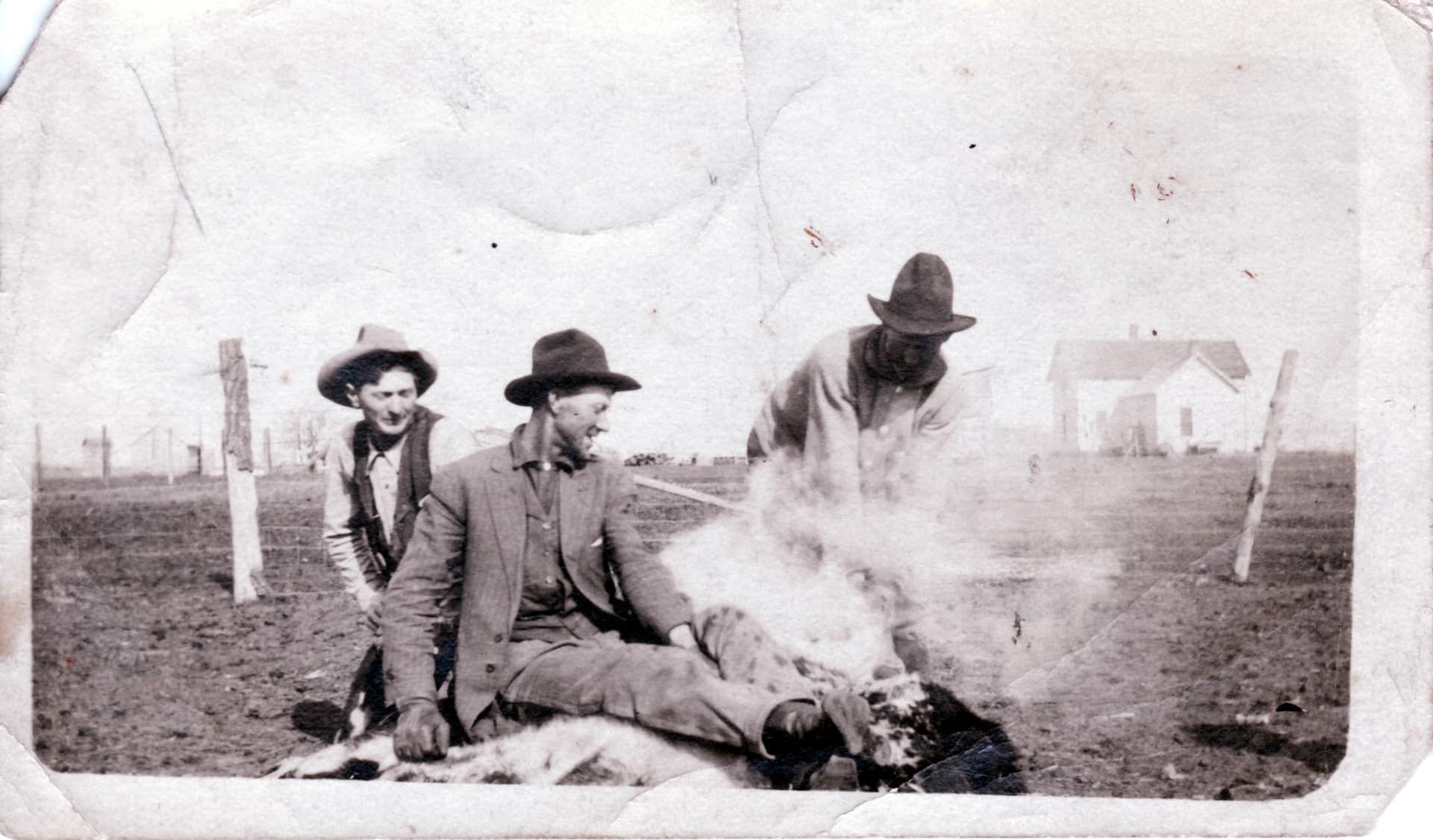
Built around 1878 by Ezra C. Dudley and his son John on the Beaver River, Anchor D Ranch spread across what is now Texas County and, at its peak, carried 30,000 head on an estimated 960,000 acres. It shows how Texas County moved from open range to organized farm-and-town country. That scale only made sense in the Public Land Strip, where grazing was open and lightly regulated before statehood and settlement rewrote the rules.
How the open-range economy worked
Dudley did not build a small local outfit. He eventually controlled a range from Kansas to Texas across the central Oklahoma Panhandle, hired experienced cowboys, and turned Anchor D into one of the region’s largest cattle operations. The ranch’s size reflected an economy built on movement rather than ownership: cattle could roam, water and grass were the limiting factors, and a single outfit could cover almost a million acres before homesteaders and territorial government forced a different model.
After the region became part of Oklahoma Territory in 1890 and settlers pressed in for homesteads, Dudley sold his rights to T. C. Schumaker and returned to Massachusetts. Schumaker enlarged the ranch, then handed off to Howard M. Stonebraker and Edwin Zea, and the operation gradually shrank. By 1918 and 1919, severe winters had killed large numbers of cattle, land was platted into small farms, and by 1937 the Anchor D had fallen to about 65,000 acres before another sale followed in 1939.
Hardesty, the trail map, and the first town pattern
The first Hardesty site stood at the confluence of Coldwater Creek and the Beaver River in 1886, and the old town flourished because trail herds crossed the area. The historic marker for Old Hardesty sits on U.S. 412 west of 6th Street, while the old cemetery is on Prairie Dog Point Road, a small but very real reminder that the county’s present road grid still overlays the cattle corridor that made the town work in the first place.
In the 1880s, two cattle trails ran from Texas to Kansas near Hardesty: one north-south route that carried herds from Hansford County, Texas, and an east-west route known as the Montana Trail or the National Trail, which emerged after Kansas banned Texas cattle over fever-tick concerns. The Jones and Plummer Trail stretched 168 miles from Dodge City to Mobeetie, crossed the Beaver River near present-day Beaver, and helped define the movement of cattle, freighters, and settlers across the Panhandle.
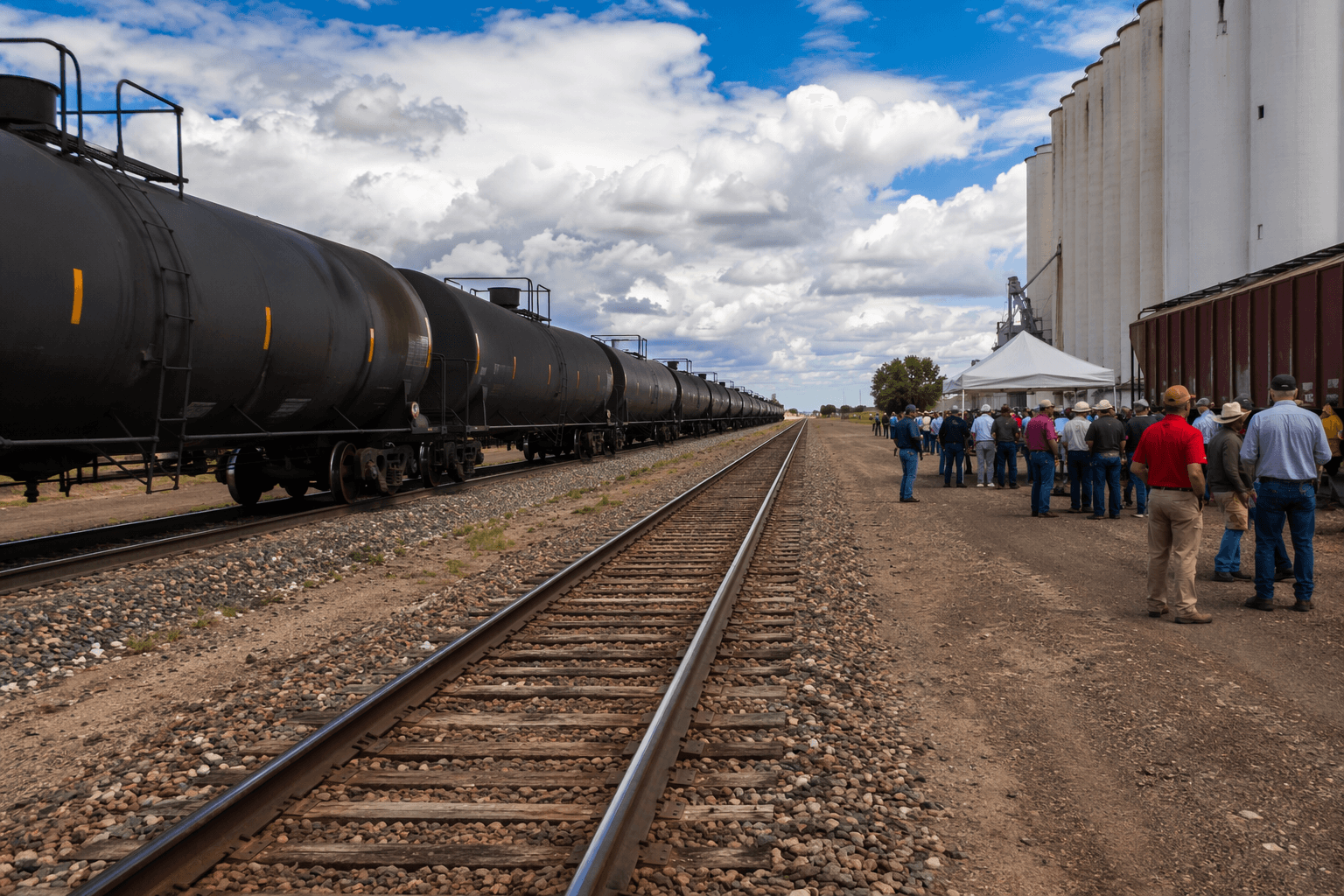
The trail network shaped where towns survived. Old Hardesty was named for Col. Jack Hardesty, a prominent rancher in the area, and the marker calls it a trade center that drew early cowboys. It prospered while trail herds passed through, then faded when the Rock Island Railroad bypassed it and the town moved several miles south.
What Texas County still looks like on the ground
Since 1907, Guymon has been the county seat, and incorporated towns now include Goodwell, Hardesty, Hooker, Optima, Texhoma and Tyrone. The county lies on the High Plains, where the land is mostly flat with some rolling hills, the North Canadian River still drains the region, and the original short-grass landscape is now split between farmland and rangeland.
In the 2022 Census of Agriculture, Texas County had 866 farms covering 1,264,084 acres, with an average farm size of 1,460 acres. Livestock, poultry and products accounted for 87 percent of agricultural sales, while cropland totaled 678,557 acres and pastureland 552,785 acres. The county also held 90,099 irrigated acres, showing how ranch country has become a mixed system of grazing, feed production and irrigated cropping rather than a return to open range in the old sense.
The 2022 county profile lists 196,160 cattle and calves, and the county’s current farm-bureau profile names wheat, corn, milo, cattle and hogs as the principal products. Texas County Farm Bureau operates from 121 NW 9th in Guymon, with local officers from Turpin, Optima, Keyes, Guymon and Texhoma, and it continues to center youth livestock through the Bucket Calf competition and the Texas County Junior Livestock Show.
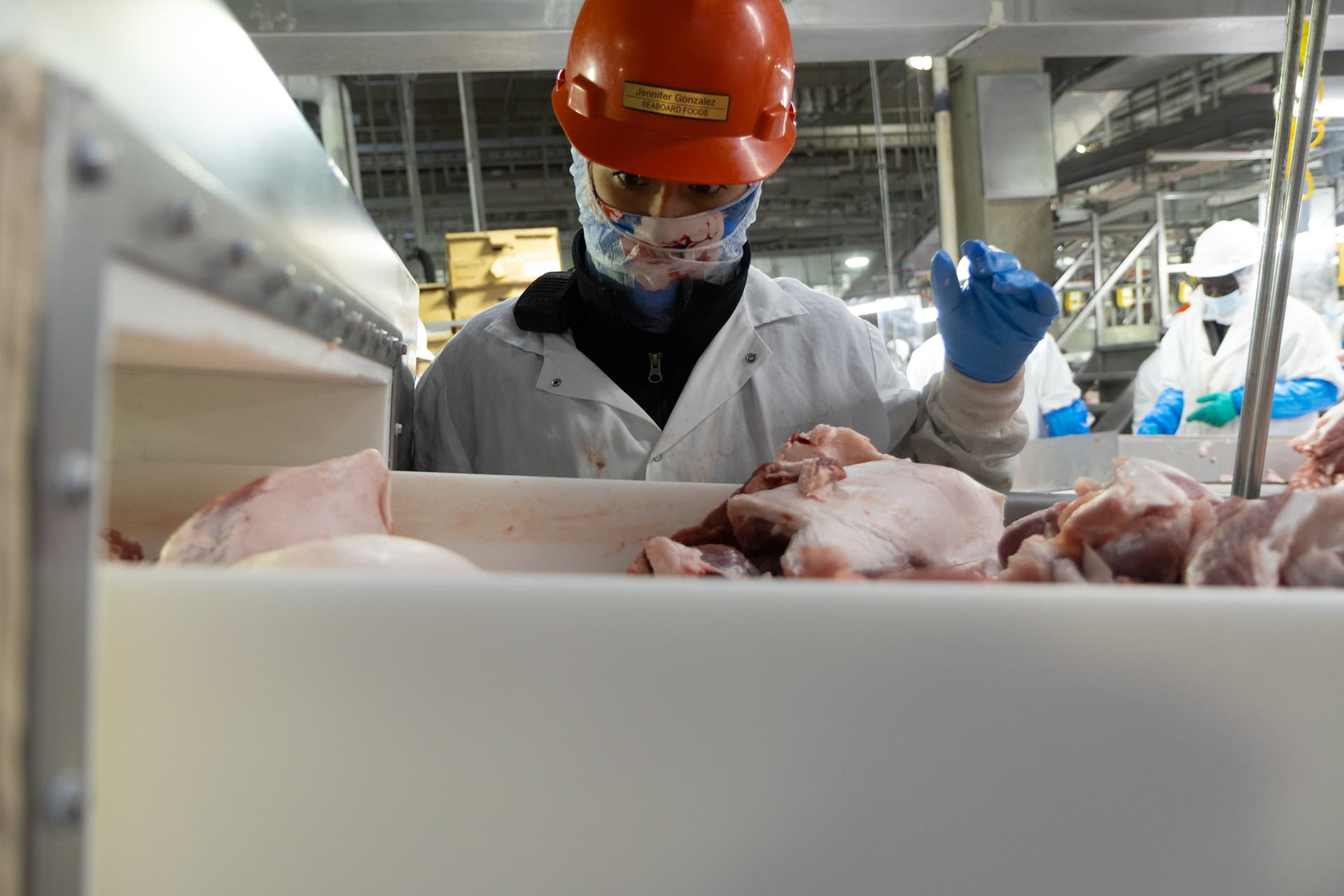
A Texas Historical Society analysis of Panhandle ranching found that ranching stayed the most important economic activity in Texas County, then moved from open-range cow-calf operations toward irrigated grain, feed processing, meatpacking and, later, a pork industry built on the same livestock base. Goodwell’s Oklahoma Panhandle State University and the No Man’s Land Historical Museum sit inside that same agricultural corridor.
This article was produced by Prism’s automated news system from verified source data, official records, and press releases, then run through automated quality and moderation checks before publishing. The system is built and supervised by the people who set the standards it runs under. Read our full AI policy.
Did this article answer your question?